
How LotGuard Protects Investor Reporting Across Commercial Property Portfolios
Discover how LotGuard supports investor reporting across commercial property portfolios with reliable video evidence, visibility, and incident documentation.
A commercial property portfolio can look strong on financial statements while investors, lenders, and internal stakeholders still have unanswered questions about what's actually happening across assets.
During value-add projects, properties may sit vacant or partially occupied, undergo construction or renovation, see increased contractor activity, or stand for extended periods before reaching stabilization. Each phase can increase exposure to trespassing, theft, vandalism, and other property crimes, with incidents potentially affecting the property's condition, operating expenses, or business operations.
While not all incidents are avoidable, security data is an often-overlooked part of asset reporting. For investment and property managers, the challenge is having a consistent, evidence-backed record of what happened across the portfolio when reporting to investment committees and stakeholders.
LotGuard helps provide that record by combining rapid deployment surveillance with a centralized cloud-based platform for monitoring site activity and documenting incidents. This gives CRE managers security data and video evidence to support portfolio reports and show how issues are being managed.
Why Security Evidence Matters in CRE Investor Reporting
Financial metrics tell investors what a property is worth, but they rarely tell the full story of what's happening at the asset level; this is the gap where security evidence adds real value.
Financial performance alone doesn't show everything
An investor reviewing occupancy, net operating income (NOI), CapEx spend, income statements, and valuation gets a clear idea of investment performance on paper.
What those metrics don't necessarily reveal is repeated trespassing, vandalism, copper theft, illegal dumping, loitering, or any other security-related disruption during renovation. The only way this shows up on a cash flow statement is when the real estate investment is already affected by unexpected costs or when lease-up dates slip past schedule.
Real-time security data gives stakeholders and investors another layer of evidence about asset condition and its risk profile, completely separate from the financial reporting they already have.
Evidence makes portfolio updates more defensible
Incident reports and video evidence give commercial investment managers something concrete to refer back to when reporting on asset management initiatives. If a property experiences theft or unauthorized access, for example, a timestamped record can show what happened, when it happened, and how the issue was handled.
Consistent records and reports also make it easier to identify recurring issues across a portfolio. For instance, managers may spot repeated vehicle activity at one site or similar incidents across several properties, rather than treating each event as a once-off.
That evidence can support investor reporting, investment committee discussions, lender reviews, and insurance claims. It also means managers don't have to rely on fragmented emails or manual reporting processes when they need to explain an incident quickly.
Read more:
- How Video Documentation Supports Insurance Claims in Commercial Properties
- How Crime Affects Internal Rate of Return on Value-Add Property Deals
- How Theft Disrupts Construction Timelines in Value-Add Properties
- Commonly Asked Security Questions From Property Managers
Why Fragmented Security Data Weakens CRE Reporting
Many firms still manage security information the way they did it years ago: exporting data into spreadsheets, combining footage from different security sources, and rebuilding incident timelines from email threads and memory. That may have worked for one site, but for modern-day portfolio management (as portfolios grow), manual reporting processes and manual data transfers create delays, inconsistency, and added risk.
The bigger problem with traditional reporting methods is what gets lost in the process. A spreadsheet may record that an incident occurred, but not necessarily show what happened on-site or how it was handled. Without clear supporting proof, managers may struggle to substantiate insurance claims, answer investor questions, or provide a complete account of an incident when it's needed.
A reporting accuracy issue at one asset becomes a reputational problem at the portfolio level, and repeated inconsistencies in how updates are delivered erode the trust investor relations depends on.
Reporting workflows built on fragmented systems don't scale. As portfolios grow, consistent reporting gets harder, and the risk of delays and errors increases.
Security Reporting Across Commercial Value-Add Lifecycles
Security reporting for property investments makes a lot more sense when asset managers know what information each stage of the value-add lifecycle needs.
Acquisition
After acquiring an asset, investment managers need a clear picture of existing security vulnerabilities, site access and perimeter controls, any previous incidents at the property, planned construction/renovation work, and areas that may need additional security or monitoring.
Identifying these risks early (including those in parking and outdoor areas) means a security strategy is built around the asset, not bolted on after a problem surfaces. A risk assessment is the best way to pinpoint these weak points and figure out where extra visibility is needed.
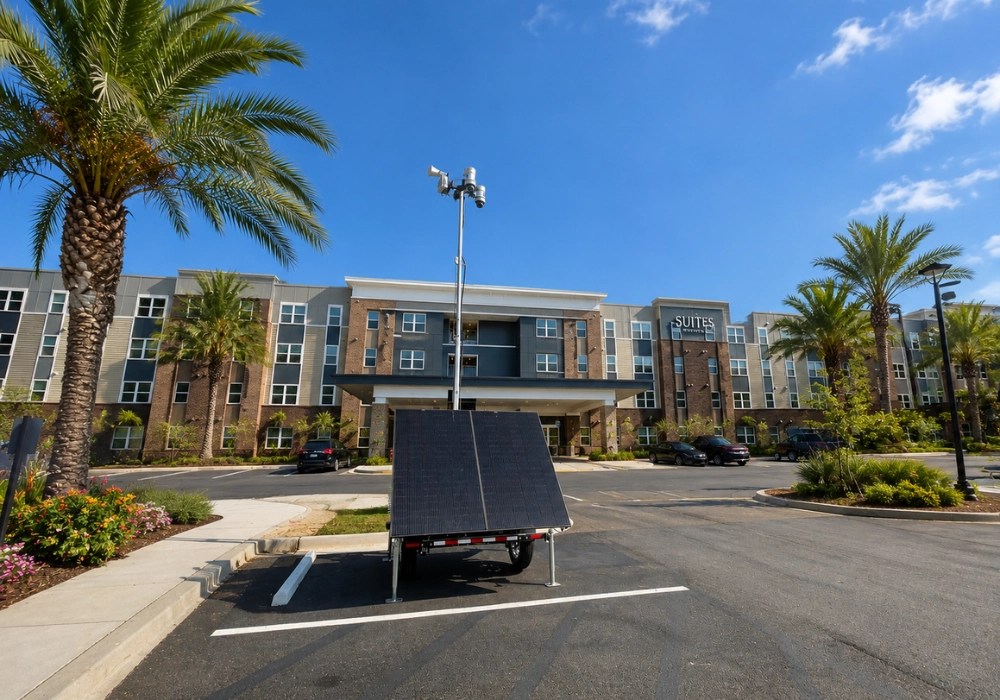
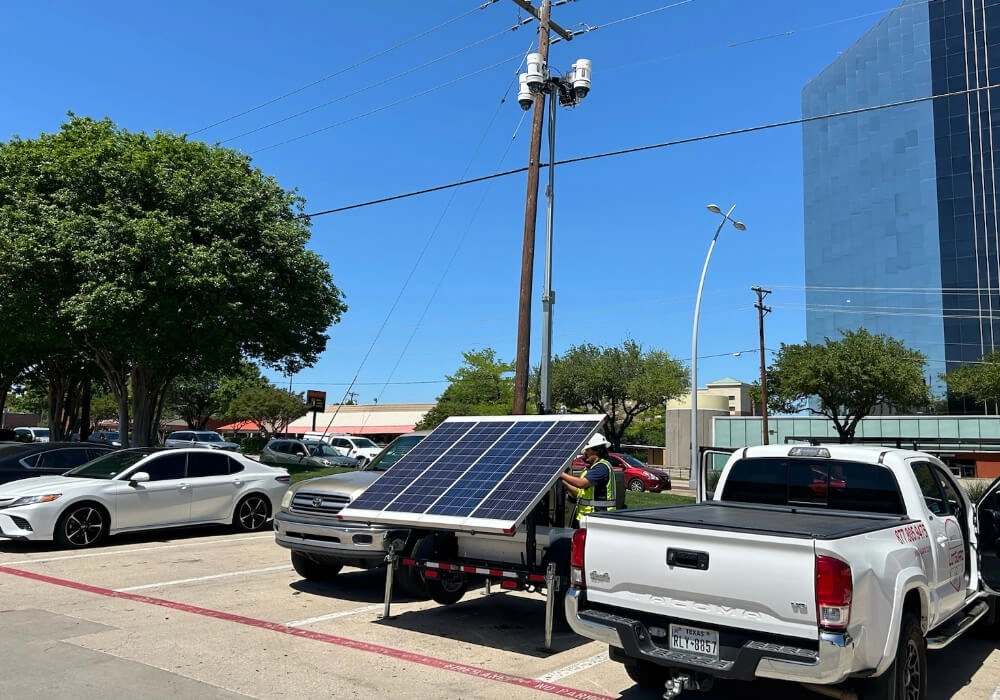
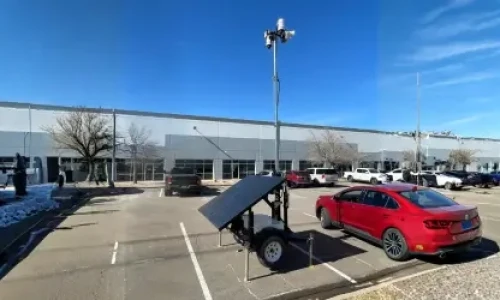
This is where LotGuard's mobile parking lot surveillance solutions, like the LotGuard PRO, can help. Fitted with wide-angle PTZ (Pan-Tilt-Zoom) security cameras, remote monitoring, and AI analytics, these systems provide 24/7 oversight across commercial properties and timestamp events for live and later review.
Add-on License Plate Recognition (LPR) technology can provide another source of evidence by documenting vehicle activity across commercial real estate portfolios. Security data is transferred via secure 5G networks to our cloud-based platform, supporting structured reporting without the hassle of manual input or managing multiple vendors.
What to include in investor reports: A summary of identified security risks, any planned security spend, and baseline incident data to show how risk will be managed after close.
Read more:
- Post-Acquisition Security Planning for Commercial Real Estate
- Safeguarding Newly Won Commercial Listings with LotGuard
Renovation
Renovation phases can leave a property more exposed to crime and trespassing because there are generally fewer people around to notice suspicious behavior. During this period, contractors come and go, valuable equipment and materials are left on-site, temporary access points may be left unsecured, and parts of the building can remain vacant and unmonitored while work is underway.
Fire and arson are also risks to consider, as an incident can damage the property, add unexpected costs, and delay stabilization. For investment managers, having reliable information about site activity and incidents while the project is in progress is essential.
Mobile surveillance and live video monitoring help deter crime and allow managers to monitor activity and respond to incidents. Video footage and incident records also provide a clearer account of what happened, when and where it happened, how it was handled, and whether it affected the value-add project. With security information available through our centralized cloud-based platform, managers can review incidents alongside activity at other properties in the portfolio, without chasing separate vendors.
What to include in investor reports: Incident summaries, recurring security issues, and supporting evidence when an incident affects the value-add project's schedule or budget.
Read more:
- Why Property Managers Shouldn't Overlook Remote Monitoring
- Why Vacant Commercial Properties Face Elevated Fire Risk During Transition
Lease-up and stabilization
As a property moves toward stabilization, the focus shifts from construction activity to daily operations. Vacant units, unauthorized access, after-hours activity, and changing tenant and visitor traffic can all create new security concerns.
Once renovations are complete, vacant properties may contain valuable fixtures, new HVAC systems, copper wiring, and other equipment. If the property stands empty for too long while awaiting tenants or new leases, these assets may attract opportunistic thieves or organized crime groups, increasing the risk of theft, damage, and costly delays to leasing and marketing strategies.
For investment managers, this stage is about showing that oversight continues as the property becomes operational. Monitoring activity around the building, access points, and parking areas helps managers identify emerging issues and keep track of conditions across portfolios. Including this information in investor updates gives stakeholders a clearer picture of how the property is being managed as it moves toward stabilization.
What to include in investor reports: Ongoing security activity, emerging trends/risks, and examples of how they've been addressed as the property moves toward occupancy and stabilization.
Read more:
- Understanding Portfolio-Level Risk Management in Commercial Real Estate
- Protecting Value-Add Property Investments During the Acquisition-to-Lease-Up Phase
- The Complete Guide to Securing Vacant Commercial Listings During Marketing and Lease-Up
Centralized Portfolio-Wide Security Reporting with LotGuard
Without centralized property management software, security information can end up scattered across a portfolio. Property A keeps separate incident records, Property B runs a different camera system, and Property C relies on manual guard patrols and handwritten reports.
The problem with this setup is that reconstructing events, maintaining data accuracy, and getting a consistent view of portfolio performance is virtually impossible.
Our cloud platform consolidates data from multiple assets into one place, giving investment and property managers a central view of incident reports, live video access, data-driven evidence, security events, and vehicle and site data. This makes real estate investor reporting a lot clearer, showing everything that happens across the portfolio in a single dashboard.
Rather than waiting for performance metrics from siloed systems, property management teams can generate reports on demand in a few clicks, saving time and making it easier to access key metrics and investment data when needed most.
Read more:
- How Brokers Use LotGuard to Share Security Reports with Owners
- Centralizing Risk Reporting Across Multi-Site Property Portfolios
LotGuard Security Solutions for Commercial Property Portfolios
In commercial real estate investing, every property has different security needs depending on its condition, location, and role in the investment strategy. We provide a layered approach to portfolio security, combining surveillance, remote monitoring, incident documentation, and vehicle identification to address risks across different property phases and investment stages:
|
Portfolio need |
LotGuard solution |
|
Multi-property security visibility |
A cloud-based monitoring platform brings security activity from multiple properties together, giving investment managers portfolio-wide oversight. |
|
Remote surveillance |
24/7 Live Video Monitoring provides remote oversight of vacant/transitional/value-add assets. |
|
Active incident response |
Live Video Monitoring supports real-time threat verification, while timestamped audit trails provide a record of incidents and response activity. |
|
Vehicle identification |
LPR technology helps monitor vehicle activity and identify repeat offenders across portfolios. |
|
Theft/vandalism |
Video surveillance and remote monitoring help detect and deter suspicious activity across acquisition, renovation, and lease-up. |
The value for investment managers goes beyond the cameras and monitoring systems. By layering these capabilities and bringing security information and video evidence together across properties, managers can access a clearer record of site activity to support portfolio reviews and investor confidence.
Smarter Portfolio Reporting with LotGuard
Smarter investor reporting means shifting away from fragmented, manual processes. While cash flow management and capital account statements show investors how assets are performing on paper, they don't capture the security issues that can delay stabilization schedules or erode investor trust.
LotGuard's centralized cloud platform gives investment managers a single, evidence-backed view of incidents and risk across every asset in the portfolio. The result is clearer, more defensible investor reporting with timestamped records showing what happened, when it happened, and how the issue was handled from acquisition through lease-up.
If you're looking for a smarter way to share reports with commercial investors without the time-consuming manual workflow, talk to our team of security experts today.

Contents
[hide]Related news
How Brokers Use LotGuard to Share Security Reports with Owners
Learn how brokers use LotGuard to share security reports with property owners, improving transparency, communication, and confidence. Read more
Post-Acquisition Security Planning for Commercial Real Estate
Learn how to build a post-acquisition security plan for commercial real estate to reduce risk, protect assets, and support a smooth property transition. Read more
Understanding Portfolio-Level Risk Management in Commercial Real Estate
Learn how portfolio-level risk management helps commercial real estate owners improve visibility, reduce risk, and protect assets across multiple properties. Read more
FAQs
What is investor reporting in commercial real estate (CRE)?
Investor reporting is the ongoing process of updating investors, lenders, and internal stakeholders on a property's performance and condition. It typically covers financial metrics like NOI, cash flow, and occupancy, alongside portfolio and asset-level updates.
How does security data support CRE investor reporting?
Security data adds a layer of evidence that financial metrics don't capture, documenting incidents, site conditions, and activity that can affect asset value, project timelines, and risk exposure across a portfolio.
Can security reporting help with insurance claims?
Timestamped incident records and video evidence give investment managers a documented account to support insurance claims and any other situation where proof of what happened (and when) matters.
Contact Us
Request a Quote for LotGuard
Ready to learn more about how LotGuard can protect your Parking Lots and Properties? Get in touch today for a free quote.