5 Reasons Every Property Investment Group Needs Mobile Surveillance Cameras
Discover 5 reasons property investment groups use mobile surveillance cameras to protect assets, manage security risks, and improve portfolio visibility.
Real estate investment groups often manage properties at different stages simultaneously. One property is being leased, another is undergoing renovations, and a third is in the lease-up phase. Each stage brings different security needs.
Mobile surveillance offers a flexible solution, with rapid-deployment units that can be installed in minutes, moved between projects, and hired for as long as needed without long-term fixed contracts.
Many of the assets are value-add or transitional commercial real estate (CRE) properties that spend months moving between owners, contractors, property managers, and tenants.
Low occupancy and high-value materials on-site can make them attractive targets for property crimes like theft, vandalism, and trespassing, and every incident adds unplanned cost and delay to the business plan. Capital keeps flowing into these buildings regardless: CBRE's 2026 midyear review expects U.S. CRE investment volume to increase 16% year-over-year to roughly $605 billion. Each new acquisition starts a fresh transition period with fewer people around to spot suspicious activity.
This article covers 5 ways mobile surveillance supports property investment groups through acquisition, renovation, lease-up, and stabilization, along with the LotGuard solutions available for each stage.
5 Reasons Property Investment Groups Rely on Mobile Surveillance
Transitional assets have security problems stabilized properties don’t: no active utilities at closing, low occupancy, layouts that change during renovation, and incidents that have to be explained to investors.
Mobile surveillance addresses each of these problems directly, which is why it has become part of the value-add business plan rather than an afterthought.
Reason #1: Protection starts on day one without permanent infrastructure
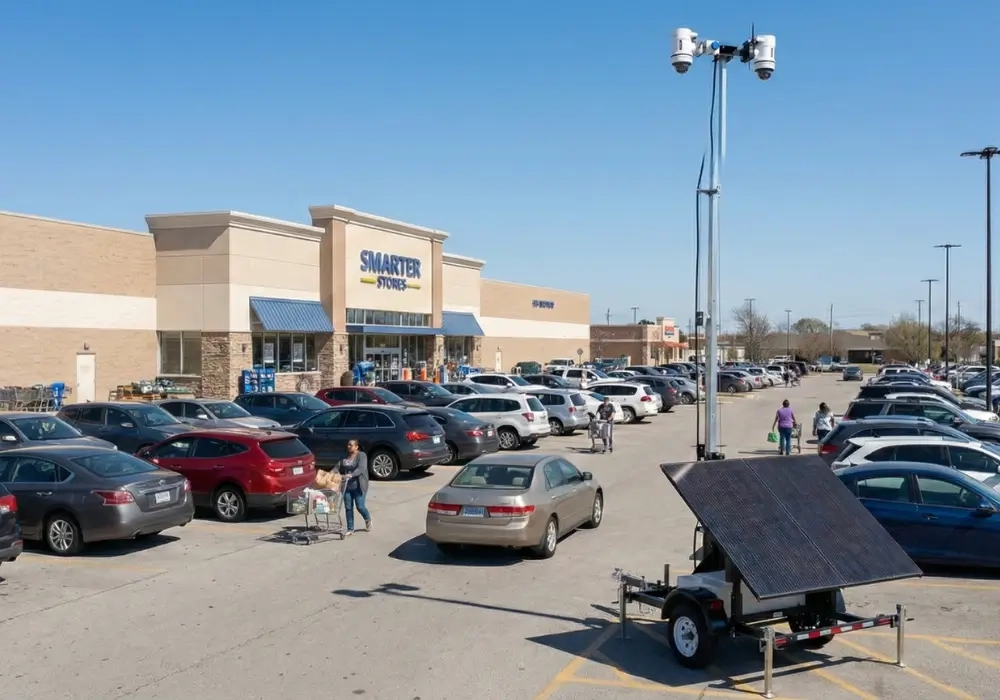
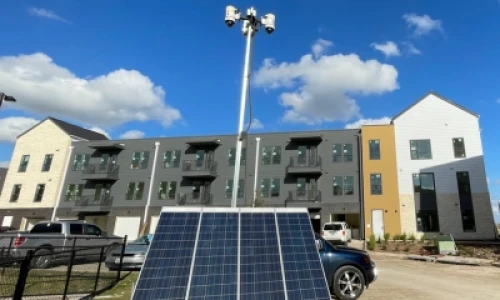
Mobile surveillance units start protecting a property as soon as they are deployed, because they don’t depend on trenching, cabling, site power, or internet access. Mobile security trailers, like the LotGuard PRO, provide coverage for parking lots and other exposed commercial sites from day one.
Standing up to 20-feet tall and equipped with near-360° PTZ (Pan-Tilt-Zoom) security cameras, they run on solar power and battery backup, providing weeks of protection between charges, all without permanent infrastructure. property
They monitor sites 24/7, stream live footage across secure 5G networks in real-time, and timestamp events in a cloud monitoring platform so managers overseeing multiple property development projects, construction sites, and remote locations know exactly what's happening across their assets without routine site visits.
Fixed systems take longer to put in place, since permanent installations such as building-mounted dome cameras depend on site power and network connections, and installation work also adds upfront cost at a property the renovation plan will reshape.
Mobile surveillance units close that gap by putting coverage in place before the first contractor arrives on-site, protecting the period when an asset is most exposed. Cloud storage and remote monitoring access provide multi-site coverage from one dashboard, so teams are always up to date with the latest site activity.
Read more:
- Mobile Surveillance vs Fixed Install Systems for Commercial Property Construction
- Immediate Risk Mitigation Strategies for Newly Acquired Industrial Properties
- Post-Acquisition Security Planning for Commercial Real Estate
Reason #2: Visible deterrence backed by real-time response
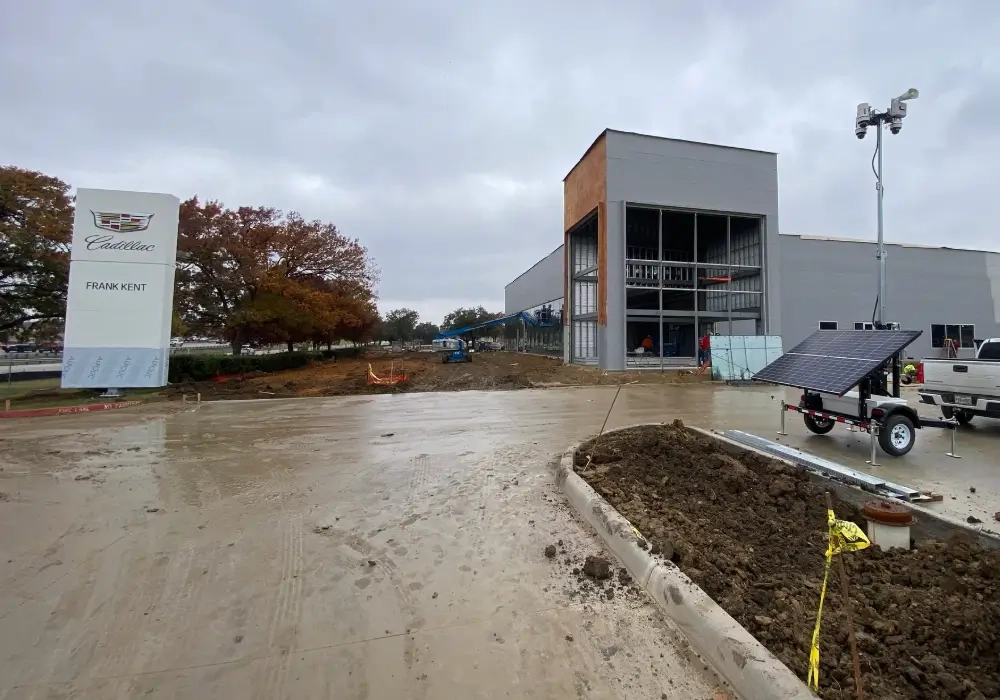
Mobile security trailers give a property an immediate and visible security presence. Each highly visible surveillance unit comes with active deterrents: flashing lights, sirens, audio alerts, and live voice-down challenges to deter crime before it escalates. That visibility matters at vacant and transitional assets, where copper theft, illegal dumping, vandalism, trespassing, and loitering tend to target sites nobody is watching, especially after hours.
Built-in AI detection identifies intruders in high-risk zones, so alerts focus on genuine risks rather than harmless movement from weather and shadows. Connected to live remote monitoring, trained operators at an Alarm Receiving Center (ARC) verify threats as they unfold and can initiate near-instant response actions and escalate verified incidents to site contacts or local law enforcement agencies when needed.
This real-time monitoring shortens response time while an incident is still unfolding, before theft or damage can turn into contractor delays and unbudgeted repair costs.
Read more:
- Nighttime: The Biggest Security Threat for Property Managers
- Why Property Managers Shouldn’t Overlook Remote Monitoring
- Benefits of Remote Video Monitoring for Surveillance Cameras
Reason #3: Flexible coverage that moves with assets
Security needs change as commercial real estate moves from acquisition to stabilization, and mobile units can be repositioned to match or easily scaled to support this.
Once renovation turns the property into an active construction site, a trailer can be moved to watch over material storage and loading docks. During lease-up, the same unit can shift across commercial assets, from parking lots and perimeter boundaries to building entrances as tenants and visitors begin using the site. When an asset stabilizes, trailers can either remain on-site to support ongoing risk management or be redeployed to another acquisition in the portfolio. This is particularly useful for retail properties, where surveillance can shift to areas such as loading bags or customer parking to help deter crime.
The LotGuard PRO supports License Plate Recognition (LPR) thermal camera options, giving teams better visibility across large commercial parking lots and properties. LPR helps remotely monitor vehicle movements and capture details such as make, model, and color, while thermal imagery provides nighttime coverage, detecting unusual behavior even in low-light conditions. This is particularly useful for protecting assets such as copper and equipment when sites are unattended after hours.
Our flexible, fully-managed service covers delivery, installation, connectivity, remote diagnostics, and expert support for the length of deployment, so site teams can focus on their projects instead of managing a security system on their own.
Read more:
- Protecting Value-Add Property Investments During the Acquisition-to-Lease-Up Phase
- How Theft Disrupts Construction Timelines in Value-Add Properties
Reason #4: Centralized oversight across a multi-site portfolio
A commercial investment portfolio can include a newly acquired industrial site, an office building in the middle of renovation, a retail center in lease-up, and a vacant lot awaiting redevelopment, with each asset facing different risks, often at the same time. Managing a handful of assets may be straightforward, but oversight becomes a real challenge across a portfolio of 10, 20, or 50 sites.
Our cloud-based platform brings the camera feeds from every deployment into one dashboard, so CRE managers can review footage and alerts from any connected device instead of traveling between properties to check on them. This is one of the benefits of an all-in-one surveillance platform for CRE investors, giving them a centralized view of security from afar.
Adding License Plate Recognition (LPR) to a deployment creates a searchable record of every vehicle at a monitored site, including its plate number, make, model, and color. When investment groups roll LPR out across multiple sites, they can quickly identify suspicious vehicles appearing at different locations and spot potential patterns. Timestamped records can also help property groups investigate vehicle theft and other unauthorized access.
Traditional security measures, like security guards, still have a role, but maintaining oversight consistently across multiple sites can be costly and difficult. Guarding is typically priced per hour, so 24/7 protection across several sites can quickly add up. Guards also cannot be in multiple places at once, and their ability to deter criminal activity depends on being "in the right place at the right time".
A single mobile security trailer covers much more ground for a fraction of the cost, logs incidents uniformly in the cloud, and generates reports with a click or two.
Read more:
- Understanding Portfolio-Level Risk Management in Commercial Real Estate
- Centralizing Risk Reporting Across Multi-Site Property Portfolios
- 7 Key Risk Factors to Monitor in Transitional Commercial Properties
Reason #5: Evidence that strengthens investor reporting and insurance claims
With mobile surveillance, every alert and incident is recorded with timestamped footage in the cloud, giving investment groups a clear account of what happened at each property and how the response was handled. That record helps support insurance claims when an incident leads to loss or damage, and it gives law enforcement agencies usable, reliable evidence when an investigation follows.
The same evidence strengthens investor reporting across commercial property portfolios, because investment committees can review security activity alongside net operating income (NOI) and occupancy, putting the incident record in the same conversation as the financials. When investors or stakeholders ask how an incident was handled, CRE managers can point to a consistent, timestamped audit trail, which helps protect investor confidence through stabilization.
Read more:
- How Video Documentation Supports Insurance Claims in Commercial Properties
- How Crime Affects Internal Rate of Return on Value-Add Property Deals
- How Brokers Use LotGuard to Share Security Reports with Owners
Matching Mobile Surveillance Coverage to Each Stage of the Investment
Each stage of a value-add deal carries its own security exposure, and the coverage that fits changes with it. The table below maps each stage, from acquisition to stabilization, to what needs assessment and which surveillance options to consider:
|
Stage |
What to assess |
Surveillance consideration |
|
Acquisition |
Is the property vacant? Are utilities active? Are there existing security measures? |
Consider visible mobile surveillance from day one to deter trespassing, theft, and vandalism, particularly when permanent infrastructure isn't available. |
|
Renovation |
Where are contractors working? Are equipment, copper, and building materials being stored on-site? |
Assess changing coverage needs as work progresses. Mobile surveillance can be repositioned around high-risk areas, while LPR and live monitoring help track vehicle activity and detect suspicious behavior. |
|
Lease-up |
Are tenants, employees, and visitors starting to use the property? Have access points and traffic patterns changed? |
Review coverage across parking areas, perimeter boundaries, loading bays, and building entrances. Adjust camera positions to reflect how the property is actually being used. |
|
Stabilization |
Which security risks remain? Are utilities connected? Has the property layout settled? |
Review whether mobile surveillance should remain in place to cover ongoing risk areas, transition to fixed cameras for long-term coverage, or be redeployed to another acquisition. |
Coverage works best when it's planned in advance. The renovation setup can be scoped during acquisition, and the lease-up setup while the building is still under construction, so protection is ready when the stage changes.
As a property's needs change, review which security setup makes the most sense for the asset. Options include keeping mobile surveillance in place to cover ongoing risk areas, such as retail loading bays or customer parking lots, transitioning to fixed cameras for long-term coverage, or redeploying mobile units to the next acquisition in the portfolio.
Protecting Asset Value at Every Stage of the Investment
The period between closing and stabilization carries the highest security exposure in property lifecycles because it's when a property has the least natural oversight from tenants and staff. Theft or damage during that window costs more than the replacement value, since it pushes back renovation milestones and lease-up dates and erodes the returns the investment case was built on.
Our mobile surveillance solutions give investment groups control over that window, with protection that arrives quickly, moves as the asset changes, and leaves an evidence trail that every stakeholder can review. With systems that are "Always Awake and Always on Guard", investment groups can keep each asset covered from acquisition to stabilization from day one.
If you're planning coverage for your next acquisition or portfolio review, contact our team of security experts today.

Contents
[hide]Related news
A Comprehensive Property Management Risk Mitigation Framework
Build a 4-step risk mitigation framework for property management, covering physical security, liability, and exterior monitoring. Read more

External Security Options for Fast-Moving Property Listings
Explore external security options for fast-moving property listings and how they help protect assets, visitors, and property value. Read more
Why Vacant Commercial Properties Face Elevated Fire Risk During Transition
Learn why vacant commercial properties face a higher fire risk during ownership transitions and how proactive monitoring helps protect assets and investments. Read more
FAQs
Do privacy laws limit surveillance at commercial properties?
Commercial security cameras are generally lawful in exterior spaces like parking lots and perimeters. The Reporters Committee for Freedom of the Press explains that consent requirements usually apply only where people have a reasonable expectation of privacy, while any sound captured alongside video falls under each state's own law. Property owners planning to capture audio should check those state rules with legal counsel before the system goes live.
Can mobile surveillance work with existing fixed systems?
Mobile surveillance units are able to extend existing fixed systems rather than replacing them. Fixed security cameras stay tied to their installed positions, so as a property changes, they leave blind spots across parking lots, outdoor storage, temporary work zones, and service roads.
A mobile trailer placed where those gaps are adds coverage and remote monitoring capabilities without new cabling, then assessed once a permanent system is in place.
What determines the cost of a mobile surveillance deployment?
Pricing depends on the deployment, with the main factors being the number of units, camera configuration, deployment length, monitoring requirements, and the risks each property faces. A vacant industrial site with a history of vehicle theft that needs live monitoring and LPR requires a larger setup than a single trailer covering one parking lot.
Contact Us
Request a Quote for LotGuard
Ready to learn more about how LotGuard can protect your Parking Lots and Properties? Get in touch today for a free quote.