
Immediate Risk Mitigation Strategies for Newly Acquired Industrial Properties
Explore immediate risk mitigation strategies for newly acquired industrial properties, from securing vacant areas to improving visibility and site control.
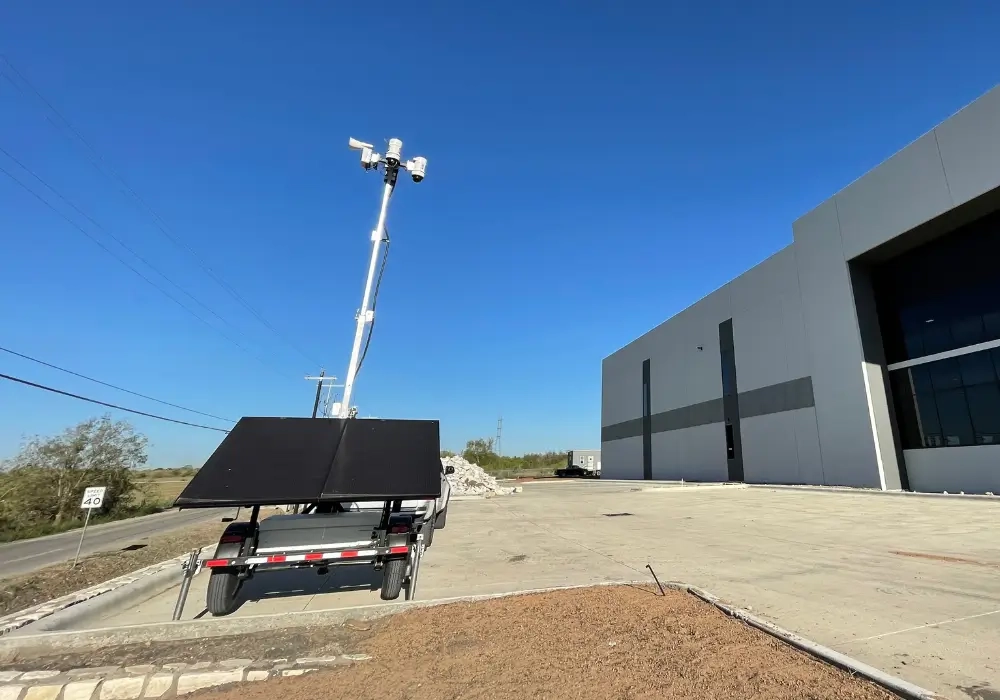
Newly acquired industrial assets face higher security risks the moment ownership changes hands, whether it's a warehouse, manufacturing plant, cold storage facility, distribution center, or other commercial property.
Vacant space, unclear access controls, contractors coming and going, tenant turnover, and gaps in oversight can all create opportunities for theft, vandalism, and trespassing. If these risks aren't addressed early, commercial real estate (CRE) investment managers can face unexpected costs, property damage, and delays to construction and lease-up schedules.
However, many of these vulnerabilities can be identified and mitigated with the right risk management strategy. Taking proactive steps during the acquisition stage can help protect assets and keep stabilization efforts on track.
This article explores why newly owned premises are more vulnerable, what to include in a comprehensive risk management plan, and 5 practical risk mitigation strategies for newly acquired industrial properties.
Why Newly Acquired Industrial Properties Are Crime Magnets
Newly acquired commercial real estate can be particularly vulnerable to crime during the transition between property owners. The property may be in a state of "limbo," with changes to ownership, occupancy, contractors, property management, and security responsibilities creating gaps in oversight.
Industrial assets bought as value-add, Real Estate Owned (REO), or transitional investments commonly go through a period of:
- Low or no occupancy
- Limited property oversight
- Minimal upkeep and maintenance
- Construction or renovation activity
With fewer "eyes and ears" around and limited oversight, suspicious activity can go unnoticed for a long time. What makes this particularly concerning is that it's been reported that vacant properties are 3-5X more likely to experience property crime than occupied buildings.
Large footprints, multiple access points, and high volumes of inventory, vehicles, and freight across large outdoor areas can make industrial properties attractive targets for both opportunistic and organized criminals. For perspective, organized crime groups have been linked to roughly 25% of large-scale industrial copper thefts, contributing to around $1 billion in annual copper theft losses nationwide.
Common crimes at industrial facilities include:
- Theft of equipment, inventory, materials, and copper
- Vandalism and arson
- Trespassing and unauthorized access, including loiterers, squatters, and illegal dumping
- Cargo, trailer, and vehicle theft
What's more, certain environmental risk factors can further increase a property's exposure right after acquisition:
- Poor perimeter lighting: Around 70% of parking lot and property crimes occur under the cover of darkness, with some police reports stating most copper thefts occur between the hours of 10 PM and 4 AM.
- No visible security: Properties without active monitoring or visible deterrents can be more appealing to criminals.
- Unsecured access points: Gaps in fencing, gates, doors, or other access controls can make it easier for intruders to enter and move around the site undetected.
- Predictable vacancy patterns: Regular periods of low activity can make it easier for criminals to identify when a property is unattended.
- Visible signs of neglect: Overgrown landscaping, broken windows, and poor property upkeep signal no one is actively managing the property.
Read more:
- Understanding and Preventing Commercial Theft
- Commonly Asked Security Questions From Property Managers
- Nighttime: The Biggest Security Threat for Property Managers
- Top Security Challenges for Property Managers and How to Overcome Them
Financial exposure when left unaddressed
For new owners and asset managers, crime exposure shows up as higher insurance costs, unexpected CapEx, and delayed lease‑up timelines:
|
Risk |
Potential financial risk |
|
Theft (copper, equipment, vehicle, materials, etc) |
Replacement costs, insurance claims, higher premiums |
|
Vandalism |
Repair and clean-up costs, operational and lease-up delays |
|
Trespassing and illegal dumping |
Property damage, risk of arson, liability exposure, environmental and regulatory risks |
|
Property development incidents |
Lost time, damaged materials and contractor delays |
|
Tenant disruption |
Complaints, downtime and potential impact on tenant retention |
|
Delayed lease-up |
Extended vacancy, delayed marketing, lost rental income/reduced cash flow |
Understanding where a newly acquired property is most vulnerable makes it easier to prioritize security measures and implement risk reduction strategies to reduce losses during the acquisition-to-lease-up phase.
How to Build a Post-Acquisition CRE Security Plan
For those in the commercial real estate market, knowing that a property has security risks is one thing; knowing what to address first and when to act is another. The roadmap below briefly outlines the key steps to take after acquiring an industrial property:
|
Priority level |
Action |
Recommended timeframe |
|
Critical |
Conduct property risk assessment |
First 24-48 hours |
|
Critical |
Secure gates, doors and other access points |
First 24-48 hours |
|
High |
Review existing surveillance and identify coverage gaps |
First week |
|
High |
Deploy surveillance to high-risk exterior areas |
First week |
|
High |
Establish ongoing monitoring and real-time alerts |
First week |
|
High |
Establish portfolio-wide reporting |
First 30 days |
|
Ongoing |
Review incidents, coverage, and changing site risks |
Monthly/ongoing |
Read more:
- 7 Key Risk Factors to Monitor in Transitional Commercial Properties
- A Comprehensive Property Management Risk Mitigation Framework
5 Risk Mitigation Strategies for Newly Acquired Industrial Properties
These 5 strategies translate the roadmap above into specific, actionable steps for mitigating risks after acquisition:
1. Conduct an immediate risk assessment
Within the first few days of acquisition, conduct a thorough risk assessment of the entire property and its exterior areas. Physically walk the site and focus on perimeter condition, gates and access points, doors, existing security systems (if any), parking areas, lighting, blind spots, equipment and material storage areas, loading bays, truck/trailer lots, and after-hours activity in the surrounding area.
This comprehensive property inspection should also help identify any immediate structural hazards or maintenance needs to ensure compliance with building codes and other regulations.
Here are a few questions to help guide this assessment:
- Has the property had theft, vandalism, trespassing, or other incidents in the past?
- What is the condition of the structure, HVAC systems, roofs, perimeters, etc?
- Are there gaps in fencing, gates, doors, or loading docks?
- Are there areas that are poorly lit or hard to monitor?
2. Secure every access point
A change in ownership can mean previous owners, tenants, contractors, or employees still have access to the property. Review and update access permissions as soon as possible to prevent unauthorized entry and reduce potential legal liability.
Once access controls are covered, secure every access point across the property, including pedestrian entrances, warehouse doors, loading docks, and distribution center entries.
License Plate Recognition (LPR) technology can also help monitor vehicle activity across large industrial sites. Systems can flag unauthorized or repeat vehicles while automatically capturing details such as license plate numbers, vehicle make, and model. This can be particularly useful during the transition period, when 24/7 security oversight may not yet be fully established.
3. Increase monitoring in exterior areas
Exterior areas such as parking areas, loading bays, and property boundaries are often where criminal activity begins. If these areas aren't secured, intruders can gain access to your site with little resistance.
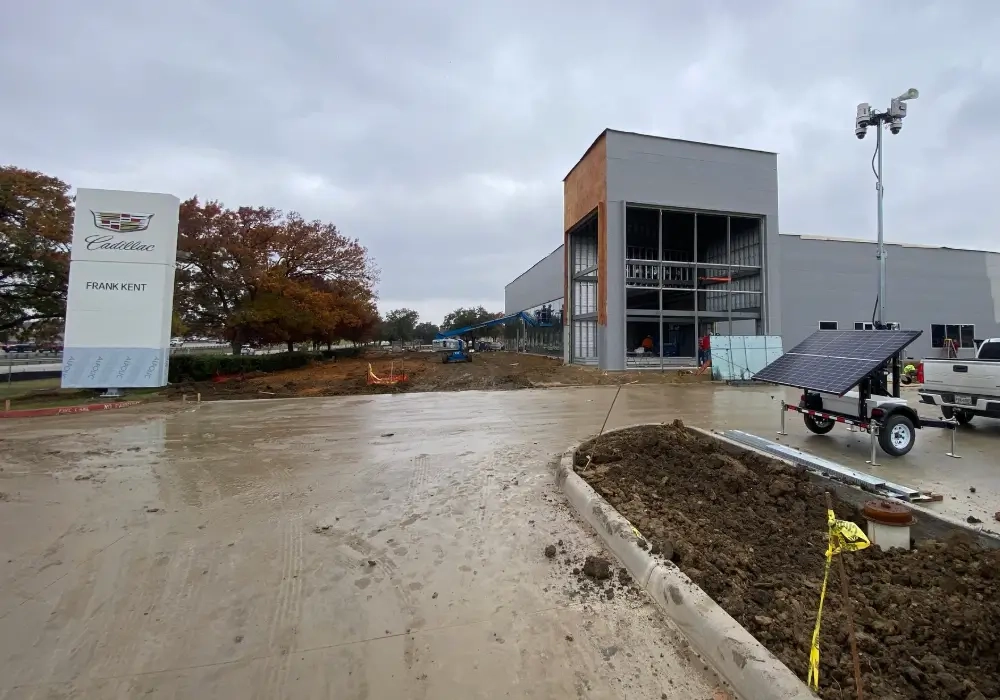
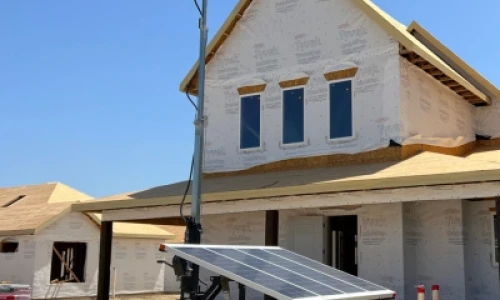
For industrial sites without permanent infrastructure, temporary mobile surveillance, like the LotGuard PRO, can provide immediate coverage without the delays of cabling and trenching. Equipped with wide-angle HD cameras, AI analytics, and remote monitoring, they monitor industrial sites 24/7.
These solar-powered surveillance trailers stand up to 20-feet tall, creating a highly visible deterrent against trespassers and thieves without relying on mains power or Wi-Fi. Live footage is transmitted over secure 4G/5G networks to a centralized cloud platform, where incidents are timestamped, logged, and available for review from any connected device.
4. Establish real-time visibility across the property
Remote monitoring, real-time alerts, AI analytics, and centralized security management give investment managers greater visibility across their properties and help them respond to potential threats as they happen.
The LotGuard PRO includes remote monitoring through Interactive Surveillance Operations Centers (ISOC) as part of its fully-managed service. Trained operators verify potential risks in real-time and can initiate various responses almost immediately, including issuing live audio-voice down challenges to deter criminal activity.
For CRE investment managers, smarter, portfolio-wide risk management through cloud-based platforms is like having a virtual security guard proactively protecting your projects.
5. Portfolio-wide reporting
When managing multiple industrial and commercial real estate transactions, staying on top of everything isn't easy. Cloud-based consolidation helps close that gap by bringing live footage, real-time alerts, LPR data, and incident history into one dashboard.
When incidents are consistently logged and stored in the cloud, investment managers can identify patterns and trends across the portfolio rather than treating each event as an isolated, one-off event. For example, if the same suspicious vehicle repeatedly appears at multiple properties, this activity can be identified as a potential portfolio-wide security concern rather than a series of unrelated incidents.
These insights can help investment managers identify emerging risks, adjust security measures, and make more informed decisions about where additional monitoring or resources are needed
Read more:
Safeguard Newly Acquired Industrial Properties the Smart Way
The time between acquisition and stabilization is when industrial assets are most exposed, but is often the period most overlooked in the wider investment plan.
CRE investment managers need to understand that higher-than-normal vacancy, changing access requirements, contractor activity, and limited onsite oversight can all increase the risk of theft, vandalism, and trespassing. Addressing those risks early is the only way to protect assets and avoid unnecessary disruption and costs.
LotGuard's mobile parking lot surveillance solutions help close the gap straight after acquisition, giving CRE managers the visibility and 24/7 oversight they need to identify risks and respond to threats. Using the risk mitigation framework outlined above and systems that are "Always Awake and Always on Guard", you can keep industrial properties secure from day one.

Contents
[hide]Related news
Why Vacant Retail Listings Lose Value Faster
Learn why vacant retail listings lose value faster and how factors like security, perception, and inactivity impact property performance. Read more
7 Proven Ways to Reduce Squatting Risk While Marketing Vacant Properties
Discover 7 proven ways to reduce squatting risk while marketing vacant properties and protect assets during vacancy periods. Read more
Comparing LotGuard to Alternative Surveillance Options for Vacant Listings
Compare LotGuard with alternative surveillance options for vacant listings and discover which solution offers the best protection and visibility. Read more
FAQs
What are the biggest security risks for newly acquired industrial properties?
Theft (especially copper and equipment), vandalism, trespassing, and illegal dumping are among the biggest security risks for newly acquired industrial properties when going through transition phases.
How can investors protect vacant industrial properties?
Investors can protect vacant industrial premises by conducting an immediate risk assessment, securing access points, and deploying rapid deployment exterior surveillance in high-risk areas like loading docks and storage yards before incidents occur.
Is temporary surveillance suitable for newly acquired industrial properties?
Mobile, solar-powered surveillance solutions can be particularly well suited to newly acquired industrial properties because they can operate using solar power and 4G/5G connectivity without relying on fixed infrastructure. They can also be relocated as security needs change throughout the acquisition, renovation, marketing, and lease-up process.
Fixed surveillance systems, on the other hand, are tied to specific locations and typically require permanent infrastructure. For properties still transitioning toward stabilization, mobile surveillance can provide greater flexibility while security requirements and site layouts continue to evolve.
What are the market risks of industrial and commercial real estate?
Market risks of commercial real estate are external factors that can impact the performance of your investment, such as recessions (economic), inflation/interest rate fluctuations, political instability, crime rates, and changes in supply and demand.
Contact Us
Request a Quote for LotGuard
Ready to learn more about how LotGuard can protect your Parking Lots and Properties? Get in touch today for a free quote.