
Comparing LotGuard to Alternative Surveillance Options for Vacant Listings
Compare LotGuard with alternative surveillance options for vacant listings and discover which solution offers the best protection and visibility.
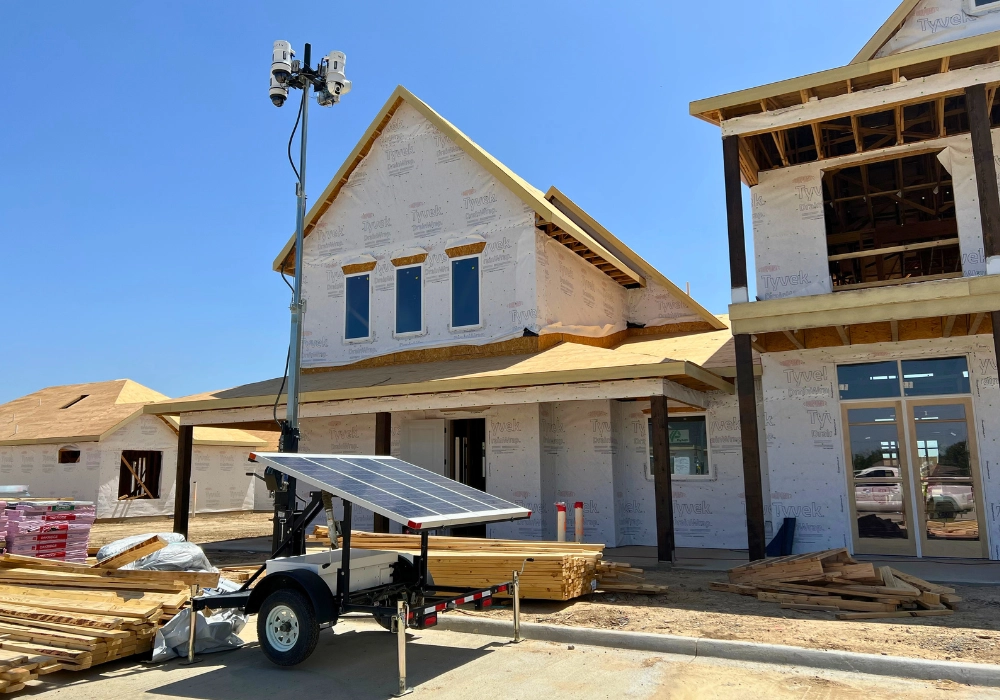
If you're looking for security options at a vacant listing, you're probably already aware that leaving it unmonitored isn't the question; the question is which solution is worth committing to.
For commercial property brokers, owners, leasing agents, and managers overseeing vacant or transitional sites, the options generally come down to traditional security guards, fixed camera systems, or mobile surveillance systems. Each comes with different trade-offs on cost, coverage, and how quickly it can be deployed against an active listing timeline.
It's worth mentioning that not all surveillance is created equal, and committing to the wrong option (especially for a longer vacancy) can mean months of inadequate coverage that leaves a premises exposed at exactly the wrong moment.
In this article, we're comparing LotGuard to alternative surveillance options for vacant commercial listings, so you can see which option fits your specific situation before making a decision.
Why Surveillance Matters for Vacant Commercial Listings
Surveillance matters because vacant properties are 3 to 5X more likely to experience theft and other property crimes than occupied buildings. Without regular oversight, issues often go unnoticed until the damage is done, resulting in knock-on effects for the brokers managing them.
Here's what drives that exposure:
Copper and metal theft
Rising copper prices have made vacant residential/commercial properties prime targets for theft. Empty listings (including Real Estate Owned (REO) and foreclosed premises) offer little resistance, making them attractive to both opportunistic thieves and organized crime groups (OCGs).
Common targets include copper wiring, HVAC coils, and plumbing fixtures, which are quickly stripped and resold through black market channels. Properties with disconnected utilities or irregular site visits are particularly vulnerable. Even a single incident can result in thousands of dollars in repair and replacement costs.
Read more:
Vandals, squatters, and trespassers
Buildings that look unmonitored or rundown often invite unwanted activity. Once a property is perceived as "empty", it becomes a magnet for behavior that creates safety risks and legal exposure.
Vandalism, graffiti, and intentional property damage are criminal offenses that lower curb appeal, signal neglect, deter prospective tenants or buyers, and potentially invite further criminal activity if left unaddressed.
Squatting, once established, can be difficult and expensive to resolve, often requiring lengthy legal action and resulting in property damage and prolonged vacancies.
Trespassers, loiterers, and any unauthorized entry create premise liability risks, as owners/brokers may be held responsible for injuries that occur on-site.
Read more:
-
Environmental Risk Factors that Increase Property Crime Exposure
-
7 Proven Ways to Reduce Squatting Risk While Marketing Vacant Properties
Illegal dumping and arson
Unmonitored outdoor areas, such as parking lots and perimeters, can quickly become dumping grounds when nobody is around to notice. Illegal dumping can create public health concerns, trigger fines or violations for the property owner/broker, and increase clean-up costs ($500 to $5,000+ per incident) while degrading the property's value.
Deliberately set fires can escalate quickly, putting nearby properties and infrastructure at risk. Arson-related incidents often cause prolonged site closures and increase insurance premiums after a claim, placing additional (and unnecessary) financial and operational strain on owners and brokers alike.
Read more:
Insurance risk and liability
Vacant property insurance costs are typically based on whether security technology is in place, such as smart systems with remote monitoring or on-site security personnel. Insurers often view actively monitored properties as lower risk, which can lead to more favorable premiums and policy terms.
Documented surveillance also plays a major role if something happens, as video surveillance can support claims and reduce disputes. Without proper security systems, property owners and brokers have to cover repair and liability expenses out of pocket.
Read more:
Other
-
Reputational damage: When a vacant listing is damaged or experiences unauthorized occupancy, the broker's reputation is at risk. Without a documented security strategy (and comprehensive coverage), there's very little evidence of what oversight was in place.
-
Leasing/sale delays: A property that's been vandalized or impacted by crime is harder to lease and takes longer to close. Proactive security measures help maintain the property's condition and marketability throughout the vacancy period.
Common Surveillance Options for Vacant Properties
Here's how 3 surveillance options for vacant listings measure up:
|
Feature |
Traditional guards |
Fixed security cameras |
Mobile surveillance systems (LotGuard) |
|
Coverage |
Limited to patrol routes or shift hours |
Fixed field of view |
Near-360° |
|
Response |
On-site only |
Basic record-only function |
Remote monitoring with access control and instant alerts |
|
Deployment time |
Hours or days |
Days to weeks |
20-minutes (basic setups) |
|
Power |
[[NO]] |
Yes, mains power |
No, solar-powered with 4G/5G connectivity |
|
Evidence trail |
Eyewitness accounts |
Video footage only |
Footage, artificial intelligence (AI) alerts, plus optional vehicle data with precise timestamps |
|
Scalability |
Expensive across multiple locations |
Costly due to additional infrastructure |
Rapid deployment and easily relocatable |
|
Cost |
$30-$70+/guard/per hour |
High upfront installation |
Monthly rental |
Traditional security guards
On-site personnel provide a physical presence by patrolling routes and monitoring access points. For properties needing immediate human intervention, they make a decent option.
That said, they do have limitations, particularly for vacant or transitional listings. A guard can't realistically monitor 360° simultaneously, which means blind spots and coverage gaps are inevitable. Fatigue, illness, no-shows, shift changes, and annual leave also need to be considered.
While visible security personnel can reduce crime by 20-30%, maintaining 24/7 coverage at $30-$70+ per guard per hour quickly becomes a major financial overhead. When security needs to be scaled across multiple locations, those costs stack up to unsustainable levels.
Fixed surveillance cameras
Fixed security cameras supply continuous monitoring from a single location; useful for monitoring specific target areas or entrances within a defined field of view. Once installed, they rely on mains power but typically come with no staffing costs.
For vacant sites, however, fixed security systems are generally impractical. Many sites lack permanent power or network infrastructure, making installation costly and time-consuming. What's more, fixed cameras provide a single viewing angle and often only have "record-only" capabilities. While incidents are captured, there's no real-time intervention, leaving brokers to manually review footage after the fact.
Scalability is also an issue, as securing new listings or locations requires extensive cabling and infrastructure at each site, further adding to the cost.
Mobile surveillance systems
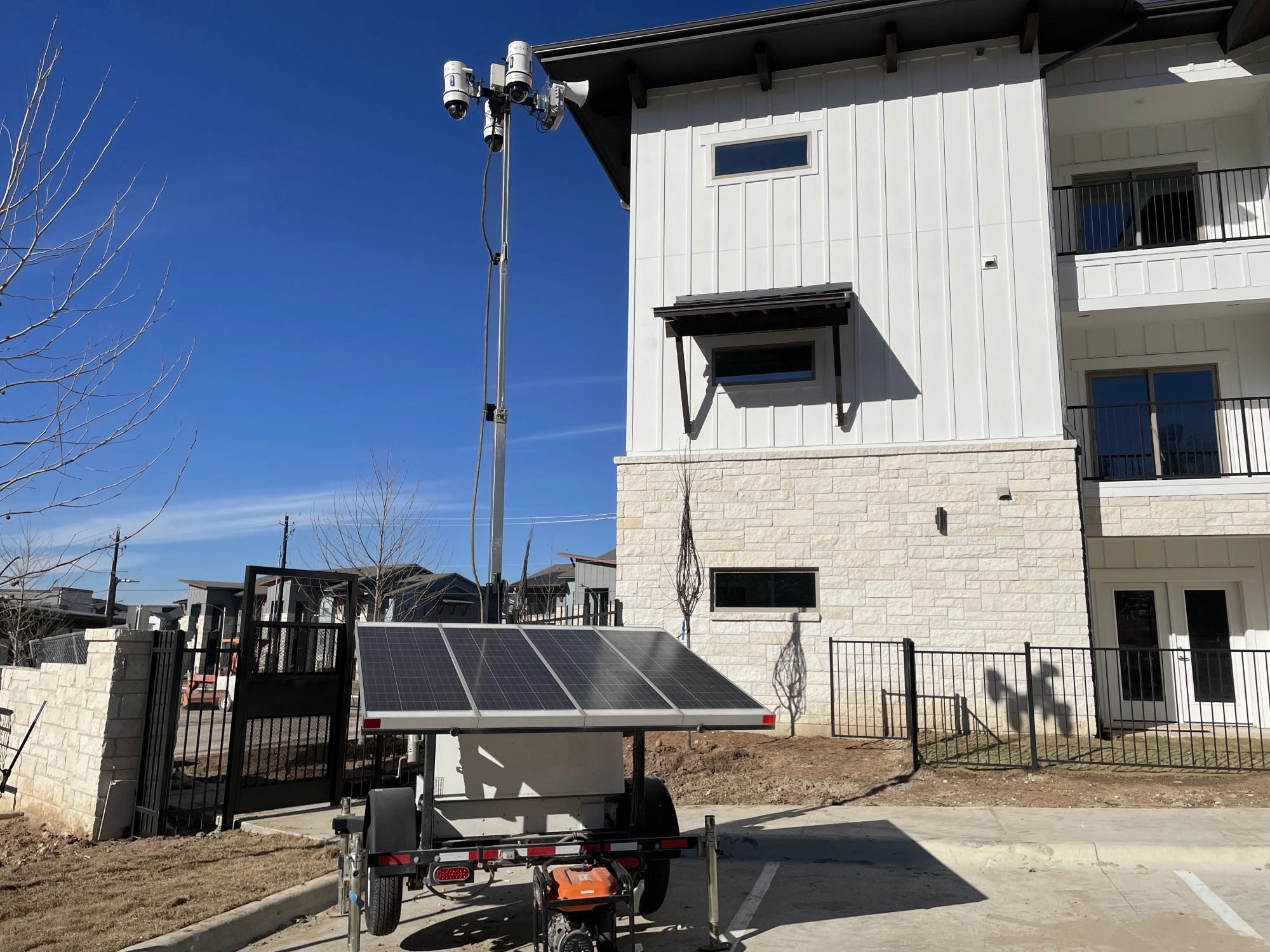
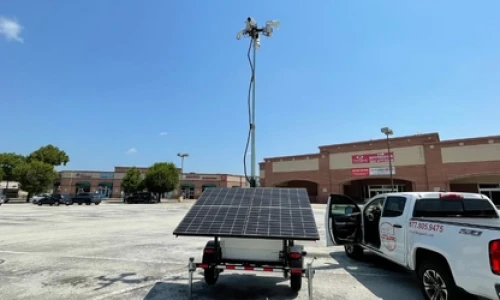
Modern systems, like the LotGuard PRO, combine near-360° PTZ (Pan-Tilt-Zoom) cameras, advanced technology, and remote monitoring into self-contained units that deploy without permanent infrastructure.
They operate autonomously (solar power, battery backup, 4G/5G connectivity), making them a sensible option for vacant sites where utilities may be disconnected.
AI-powered analytics detect and flag suspicious activity as it unfolds, including in low-light conditions and adverse weather. This is done across large areas simultaneously without human input. When an alert is activated, trained operators at an Interactive Surveillance Operations Center (ISOC) verify threats remotely and initiate rapid responses without anyone being physically on-site.
License Plate Recognition cameras (LPR) can be installed as add-ons to monitor access control points across commercial parking lots and entrances. These units track vehicle movements, flag repeat visits, and capture images while building a timestamped audit trail for internal reviews and law enforcement investigations.
Every event is logged and timestamped through a centralized cloud-based monitoring platform. This means brokers and property professionals have 24/7 remote access, can generate reports on demand, and have verifiable evidence of all site activity in one place.
Because mobile surveillance parking lot cameras run continuously without fatigue, AI filtering reduces false alarms to prevent unnecessary responses. Sites monitored by modern security systems, like ours, have reported up to an 87% reduction in crime.
Read more:
LotGuard vs Alternative Surveillance Options
LotGuard is a mobile parking lot security provider, headquartered in Texas, with a wide deployment network. Our solutions are purpose-built for vacant properties, commercial parking lots, and large exterior areas. With basic setups deploying in under 20-minutes, our systems combine AI, PTZ cameras, add-on LPR technology, and remote ISOC monitoring into solar-powered units without fixed infrastructure.
What sets LotGuard apart from other alternative options
- AI-driven proactive crime deterrence: AI-powered analytics continually monitor for unusual activity (loitering, perimeter breaches, trespass) and flag it as it happens before problems escalate.
- Near-360° surveillance camera coverage: PTZ cameras with infrared (IR) night vision and 23X optic zoom maintain clear visibility across large exterior areas simultaneously, reducing blind spots and filtering false alarms.
- Automated vehicle tracking: Our add-on License Plate Recognition (LPR) technology tracks and logs all vehicle movements, with each interaction timestamped and stored in the cloud.
- Integrated visual deterrents: Systems feature strobe lights, live audio voice-down challenges through loudspeakers, and are linked to ISOCs where security risks are verified in real-time.
- Centralized cloud-based reporting: All video surveillance footage, AI detection alerts, and additional vehicle data feed into a centralized dashboard that's accessible from any device with on-demand exportable reports.
- Autonomous operation: Solar powered with 4G/5G connectivity, our mobile surveillance units deploy without fixed infrastructure and relocate as listing needs change.
Where LotGuard stands out
- Large exterior areas with multiple access points, parking lots, and perimeter boundaries
- Long-term vacancies, lease-up periods, and REO or transitional properties
- Multi-site portfolios where centralized visibility and risk reporting across all listings matter
- Sites without fixed power or internet infrastructure (including remote locations)
- Listings needing rapid deployment exterior security against fast-moving timelines
- Where timestamped evidence is needed for insurance, legal, and owner reporting purposes
Where additional security layers may be required
- Certain insurance policies may specifically require on-site security personnel in addition to remote or mobile monitoring
- Properties with existing security measures may benefit from supplementary coverage in key zones or newly exposed areas
- Sites with extended vacancy periods may need long-term security coverage, supported by our flexible contracts
- Locations where human verification is required at access control points may require layered oversight alongside automated surveillance
Read more:
Choosing the Right Surveillance Option for Your Vacant Listing
There’s no one-size-fits-all solution for protecting uninhabited listings. The right choice depends on how long the site stands empty, its risk level, and the availability of infrastructure at the property.
Here are 4 factors to help guide your decision:
- Speed: If a listing needs coverage immediately, mobile surveillance is the only option that deploys in minutes without extensive site preparation. Fixed cameras take days or weeks, while uniformed security guards may be sourced faster, but can't provide 360° visibility.
- Coverage: For sites with parking areas or several access points, fixed-view cameras create blind spots, and guards can only be at one place at a time. Mobile surveillance solutions with PTZ cameras provide near-360° coverage of the full exterior.
- Cost: Guard services are expensive to scale across multiple locations. Fixed security cameras carry high upfront costs. Rented mobile surveillance is the most predictable option when price matters.
- Risk reduction: Documented evidence is important for insurance, legal protection, and broker accountability. A system that automatically timestamps and logs every interaction (mobile surveillance) presents a stronger case than eyewitness accounts or "record only" footage.
Secure Vacant Listings Without Delays with LotGuard
Real estate brokers already know they need to protect vacant listings, but deciding which surveillance option is best needs careful consideration.
While each of the security options above provides some level of protection, some options are more limited than others. Guards provide a physical human presence on-site, but only flag threats when they're "at the right place at the right time". Fixed parking lot security cameras capture evidence after the fact and provide no real-time deterrence value.
But if you're looking for reliable 24/7 surveillance that deploys as quickly as your listings and gives you a credible evidence trail of everything that happens on-site, LotGuard's mobile parking lot surveillance solutions are built for exactly that.

Contents
[hide]Related news
How Much Does Vacant Property Security Cost?
Discover the true cost of vacant property security and how different solutions compare in price, coverage, and effectiveness. Read more
Using LPR to Track Suspicious Vehicles at Vacant Property Listings
Learn how license plate recognition (LPR) helps track suspicious vehicles at vacant property listings and improve site security. Read more
Why Vacant Retail Listings Lose Value Faster
Learn why vacant retail listings lose value faster and how factors like security, perception, and inactivity impact property performance. Read more
FAQs
Is LotGuard more effective than security guards for vacant sites?
In most vacant property scenarios, particularly those with large parking lots and multiple access points, LotGuard is a better fit. Our security systems provide near-360° coverage, AI-powered detection, and ISOC-verified responses without fatigue, blind spots, and high staffing costs. Sites monitored by LotGuard have seen up to an 87% reduction in crime.
What are the main types of surveillance?
The 3 most common types of surveillance include:
- Static surveillance: Fixed camera systems that record without active monitoring
- Mobile surveillance: Self-contained units with AI detection and live video monitoring
- Manned surveillance: On-site security personnel who provide a physical presence
What security options are best for vacant properties in the USA?
The best security option for vacant properties in the United States depends on the site's risk level, size, and length of vacancy. For most commercial listings with large parking areas and expansive perimeters, mobile surveillance with live video monitoring offers the best combination of coverage, cost, and deployment speed.
Contact Us
Request a Quote for LotGuard
Ready to learn more about how LotGuard can protect your Parking Lots and Properties? Get in touch today for a free quote.