
7 Proven Ways to Reduce Squatting Risk While Marketing Vacant Properties
Discover 7 proven ways to reduce squatting risk while marketing vacant properties and protect assets during vacancy periods.
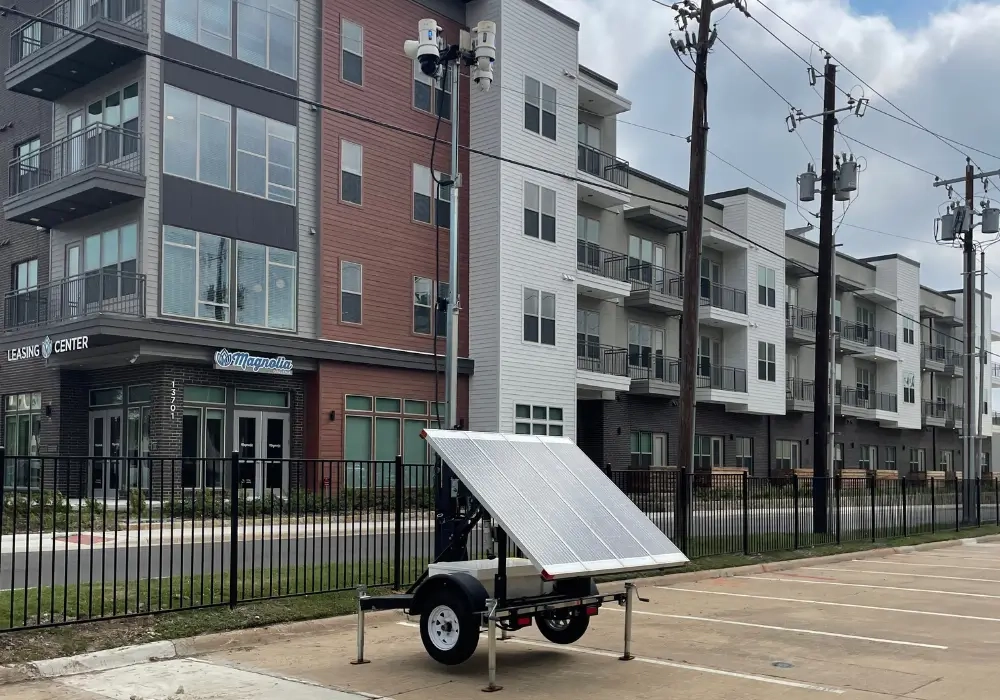
Squatting is more common than most real estate brokers expect, especially when a premise sits vacant. For brokers marketing vacant listings, the risk is very real. Unmonitored buildings, whether mixed-use, residential, or commercial portfolios, are far more likely to attract unauthorized entry than sites with visible oversight and security in place.
For brokers and property managers responsible for vacant listings, the risk is very real. Once unauthorized occupants enter, the risk of damage and costly delays increases drastically during an already time-sensitive marketing window.
The good news is that most squatting incidents are preventable. Below, we outline the 7 ways to reduce squatting risk while marketing vacant properties, so you can protect your assets and keep listings on track.
Why Squatter Prevention Matters During the Marketing Window
Vacant properties are 3 to 5X more vulnerable during the period between ownership transitions and/or lease renewals, the exact time when marketing activity ramps up, and brokers' attention is often focused elsewhere. With fewer site visits, limited maintenance, and long stretches with no one around, these properties (including parking areas and exterior spaces) can quickly appear abandoned.
That combination sends a very clear message to squatters, vandals, and trespassers: nobody is actively watching the premises. Without regular oversight, the property appears low-risk, making it an attractive target for potential squatters to move in.
Preventing squatters is important because once unauthorized occupants move into a residential or commercial property, the consequences extend far beyond simply removing them. Brokers are often left managing a chain reaction of issues, including:
|
Issue |
Description |
|
Property damage |
Broken locks, stolen fixtures, copper theft, vandalism, graffiti, and interior damage can cause significant repair costs for vacant property owners, managers, and brokers before a listing goes live. |
|
Increased maintenance costs |
Cleanup, repairs, and emergency services add unexpected expenses to the listing. Unaddressed issues can quickly erode the property value and impact leasing timelines. |
|
Safety and liability exposure |
In some cases, property ownership professionals can be held liable if a squatter is injured on-site. The presence of squatters and loiterers also increases the perceived risk of a property, making marketing efforts much harder. |
|
Long-term decline |
Open fires (including arson), makeshift electrical connections, illegal dumping, and poor sanitation are common at long-term squatter sites. |
|
Delayed listing timelines |
The legal eviction process and repair work can disrupt marketing plans, stall property tours, and throw active listings off track. |
|
Reputational damage |
Vacant properties associated with squatting may be perceived as neglected or high-risk, making them harder to market. |
Read more:
7 Ways to Reduce Squatting Risk at Vacant Properties
Preventing squatting is almost always cheaper than fixing the damage unauthorized occupants can cause at vacant properties.
Here's how to keep your vacant listings protected:
Secure access points
Walk the vacant property and identify all entry points, including side gates, windows, and perimeter fencing. Focus first on areas that are hidden from view or show signs of wear and tear or prior forced entry, as these are the most likely targets for unauthorized entry.
Secure these vulnerabilities early by repairing locks, boarding up broken windows, and reinforcing doors and fencing. This helps remove the appearance of abandonment and makes the property far less attractive to squatters.
Read more:
Upgrade lighting
Poor lighting is one of the most common factors that make a vacant property an attractive target. Squatters prefer sites where they can move around without being seen, particularly during evening and overnight hours.
Improving exterior lighting around entrances, parking areas, side gates, and alleyways reduces that risk. Where on-site utilities have been disconnected, solar-powered lighting and motion detectors are a practical alternative that keeps areas visible without requiring permanent infrastructure.
Read more:
Maintain property management
A property that looks neglected and uncared for signals to squatters that it's unmonitored. Overgrown landscaping, piles of trash, structural damage, and heaps of uncollected mail all suggest nobody is paying attention, which is exactly what opportunistic and organized criminals exploit.
Keeping the property's exterior in reasonable condition throughout the marketing period helps counter that impression. Regular maintenance and active property management also make a property seem occupied, even when it's not.
Read more:
Regularly inspect the premises
Routine inspections help catch early signs of unauthorized access before a situation becomes harder to resolve. A property that's checked frequently appears to have more oversight to anyone scouting the area and considering it as a target.
Regularly inspect the premises before and during the marketing window, including perimeter entry points. Keep detailed records of each visit and note any findings or actions taken. This kind of documentation is particularly useful if you ever need to establish a timeline for law enforcement or insurance purposes.
Keeping legal ownership and lease records up to date is equally important, as clear proof of ownership speeds up the legal eviction process if it does become necessary.
Read more:
Invest in smart security systems
Basic alarm systems and on-site guards can help deter squatters, but at a vacant property, they don't provide much visibility into what's actually happening. Without 24/7 oversight, brokers are left reacting after the fact, often once damage has already been done.
Smart security systems (with remote monitoring, AI-video analytics, and high-definition cameras), on the other hand, give real estate brokers a much clearer picture and the ability to respond before a situation escalates.
When linked to Interactive Surveillance Operations Centers (ISOC), suspicious activity is flagged and verified by trained operators who initiate various response actions. Every incident (from the initial alert to the action taken) is logged automatically, keeping property managers in the loop at all times. As a result, brokers/managers don't need to be physically on-site during short-term listing windows to stay aware of potential threats.
Read more:
Increase exterior visibility
Parking lots, entrances, and boundary lines are often the least monitored parts of a vacant property and the first places unauthorized visitors tend to test. When these areas lack security, intruders can map out weak points over time with little to no chance of being caught.
The good news is that increasing visibility across external spaces makes it much harder for squatters, vandals, and thieves to operate undetected.
Advanced technologies like License Plate Recognition (LPR) cameras positioned at property entry/exit points create a timestamped audit trail of all vehicle movements, capturing details such as make, model, and color. This documentation is invaluable should anything go wrong during marketing periods, as it supplies verifiable evidence for police investigations and insurance claims.
Read more:
Take prompt action against squatters
Squatting laws (known as "adverse possession laws") exist across America, but differ from state to state. In California, for example, a squatter can file for legal property ownership after just 5 years. In states like Ohio and Pennsylvania, that timeframe extends to 21 years, but only if strict legal conditions are met throughout the statutory period.
The key to reducing the risk of a legal claim developing? Catching and addressing unauthorized occupancy early. In states with recent anti-squatter legislation (California, Florida, Texas), you may be able to file a sworn complaint and have the sheriff remove unauthorized occupants within days if no adverse possession claim has been established.
However, when unauthorized occupation isn't dealt with quickly, situations often escalate to formal evictions, increasing legal costs, prolonging timelines, and putting marketing plans on hold.
Read more:
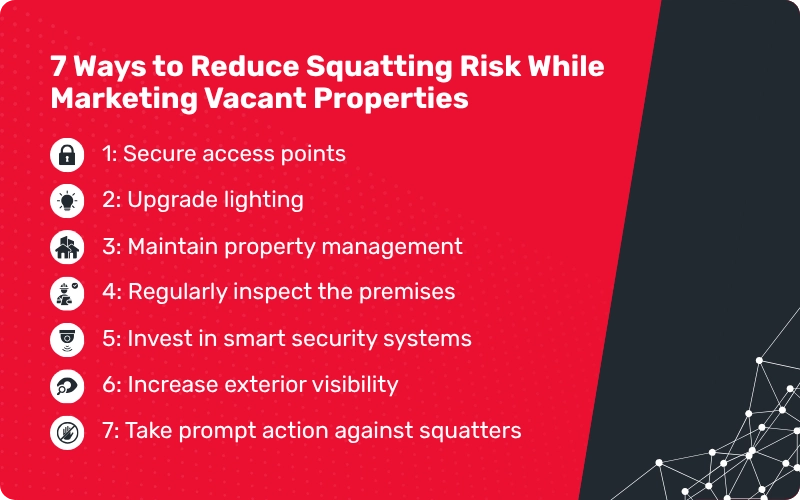
Mobile Surveillance Solutions for Vacant Properties
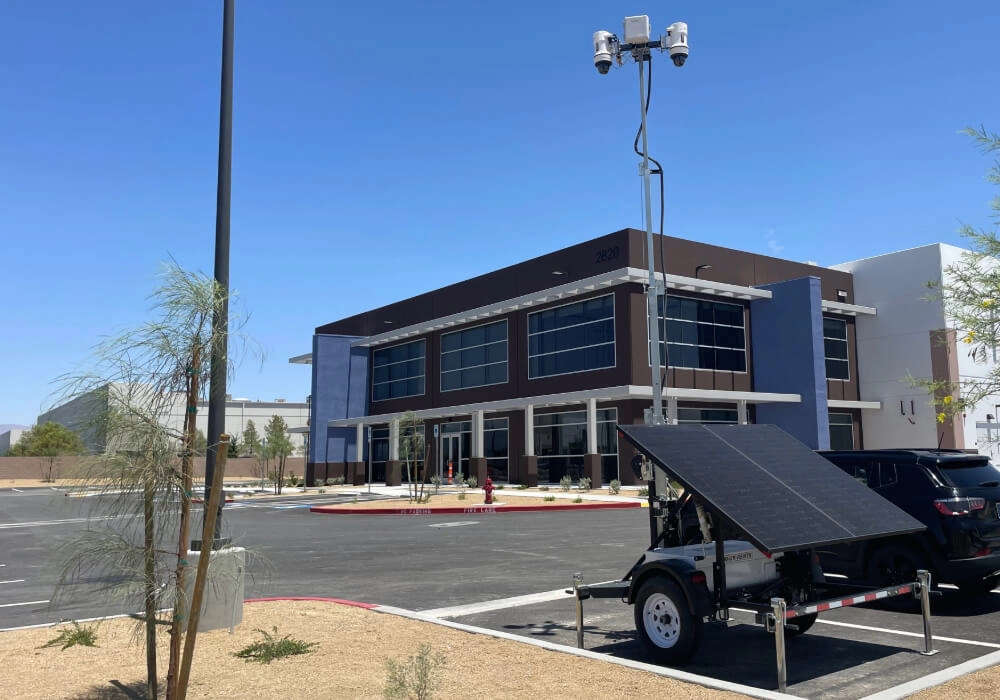
For brokers managing vacant commercial property and those who need security in place quickly, LotGuard offers a range of rapid deployment mobile parking lot surveillance solutions designed for vacant and transitional listings. All units operate autonomously, run on solar power and 4G/5G connectivity, and provide immediate coverage from day one of the marketing period.
|
Product |
Description |
|
Solar-powered surveillance trailer standing up to 20-feet tall with PTZ (Pan-Tilt-Zoom) cameras that rotate nearly 360°. Equipped with AI-video analytics, 4G/5G networks, and remote monitoring, providing 24/7 coverage throughout marketing periods. |
|
|
A compact 4-camera security system that easily mounts to existing poles or buildings. Featuring near-360° infrared (IR) cameras, remote monitoring, and smart analytics, they detect and deter squatters in real-time. |
|
|
Featuring 4 HD PTZ cameras, remote live monitoring, and AI analytics, the LotGuard MULTI covers multiple viewpoints across large commercial listings from a single installation. Remote access and instant alerts notify property professionals of intrusions early, preventing squatting before it begins. |
|
|
License Plate Recognition (LPR) |
LPR cameras can be added to all LotGuard products where vehicle tracking is needed. Capturing vehicle details (make, model, color) and creating timestamps logs of all activity, LPR technology helps secure vacant properties from day one. |
All of our mobile surveillance solutions are available on a temporary rental basis and can be relocated easily between property listings.
Our cloud-based platform helps connect every deployed unit across one or multiple listings, supporting up to 81 camera feeds from a centralized dashboard. The system consolidates all site footage, AI alerts, and vehicle data, making it easier for brokers and property owners to see exactly what's happening on-site during marketing windows.
Reports can be generated on demand, providing credible evidence for law enforcement investigations and internal reviews.
Read more: Why Property Managers are Turning to LotGuard for Security
Legal Considerations for Unauthorized Occupancy at Your Vacant Property
While proactive security and early detection significantly reduce the risk of squatting, it's still important for property owners, managers, and brokers to understand the legal process if unauthorized occupation occurs. Squatter laws vary by state, and removal must follow formal legal steps.
Below is a quick overview of what to do if squatters have established occupancy at your commercial or residential property in the United States:
- Document the situation: Photograph and record evidence of the unauthorized occupation before taking any action (entry points, damage found, date/time, location, etc.). This is the foundation for any legal or insurance action.
- Confirm ownership: Have the property deed and title documents on hand to verify its legal ownership. This should also confirm that squatters are there without the owner's permission.
- Get legal advice: Consider contacting a real estate attorney familiar with squatter and property laws in your state. Self-removal, such as changing locks or physically removing squatters, is illegal in most states and may expose you to liability.
- Contact local law enforcement: In states like California, Florida, and Texas (with anti-squatter legislation), it's possible to submit a sworn statement and have law enforcement remove squatters within days.
- Serve formal notice: Your attorney will advise on the correct notice type for your situation. Most times, a written notice must be sent via certified mail to inform squatters about the eviction process.
- Court order: If squatters don't leave after the eviction notice, your attorney can assist with filing an "unlawful detainer" lawsuit through the housing court.
- Secure the property: Once the property is clear, change locks and install surveillance systems to avoid repeat scenarios.
Reduce Squatting Risk with LotGuard Today
Squatting situations become difficult and expensive to resolve once unauthorized individuals occupy a property. The most cost-effective ways to reduce squatting risk during marketing vacant properties are through secured access, regular inspections, and visible surveillance that clearly signals a property is actively monitored.
LotGuard's rapid deployment parking lot surveillance solutions are "Always Awake and Always Guard", delivering 24/7 oversight during the most vulnerable stages of the marketing process. Whether you're managing a single vacant listing or an entire portfolio, our solutions help detect and deter squatters early, before it escalates into costly delays, damage, or legal action.

Contents
[hide]Related news
A Comprehensive Property Management Risk Mitigation Framework
Build a 4-step risk mitigation framework for property management, covering physical security, liability, and exterior monitoring. Read more
How Crime Impacts Cap Rates and Valuation for Commercial Property
High crime rates can quietly erode millions in property value. Learn how crime impacts cap rates and what it means for CRE investors. Read more
The Role of Mobile Surveillance in Modern Property Management
Learn how mobile surveillance supports modern property management by improving security, visibility, and response across sites. Read more
FAQs
What is squatting?
Squatting happens when unauthorized persons or groups move into vacant properties without the owner's permission, often aiming to stay long-term to claim some form of occupancy rights.
Why are vacant homes more susceptible to squatting?
Vacant sites are more susceptible to squatting because they lack regular oversight and visible signs of occupation, making them appear unmonitored and easy to access for extended periods.
How do I know if a squatter has entered my vacant property?
Common signs of squatting include:
- Forced or damaged entry
- Evidence of habitation (bedding, clothing, food, waste)
- Utility tampering (and/or changes in utility bills)
- Lights on at odd hours
- Graffiti, vandalism, and property damage
- Neighbor/community reports
What deters squatters?
Several factors help deter squatters, such as making the property look occupied, securing access points, and visible security measures (surveillance cameras, motion sensors, perimeter reinforcement).
How can I stop squatters from gaining access to my commercial property?
You need a layered approach to stop squatters from gaining access to your commercial property. This includes securing access points (doors, windows, perimeters), installing security measures (surveillance cameras, motion sensors, alarms), hiring security guards, and conducting regular inspections to catch issues early.
Contact Us
Request a Quote for LotGuard
Ready to learn more about how LotGuard can protect your Parking Lots and Properties? Get in touch today for a free quote.