
How Loitering Impacts Property Tour Conversion Rates
Learn how loitering affects property tour conversion rates by influencing first impressions, safety perception, and tenant decision-making.
Commercial real-estate (CRE) brokers already understand that vacant and transitional US commercial properties are magnets for loitering, graffiti, property theft, and squatting. What isn't as clear is just how much loitering impacts property tour conversion rates, and how fast a single incident can unravel a deal you've spent weeks putting together.
A prospective tenant who encounters a group of loiterers near an entrance, in the parking lot, or around the building's perimeter forms an instant impression of the site. That first impression shapes everything that follows: the questions they ask, the offer they make, or whether they bother to follow up at all.
In this article, we look at why addressing loitering should be a top priority for every US commercial broker managing vacant or transitional listings, the hidden costs it creates, and how visible security helps maintain a tour-ready environment from day one.
Why Loitering Should Be a Top Concern for Real Estate Brokers
Loitering means individuals or groups linger on or around commercial property without a legitimate reason. In the grand scheme of things, a few people hanging around a surface lot entrance might appear harmless, but left unchecked, it signals that no one's actively monitoring the area, and that impacts property tour conversion rates more than most realize.
Simply put, loitering creates safety concerns that make visitors and prospects uneasy about entering a space. What's more, seeing groups of unauthorized persons, squatters, and/or homeless encampments might cause potential tenants to skip property tours entirely to avoid a risky situation.
This matters for commercial real estate brokers as industry experience suggests that roughly 1 in 3 property tours should result in some form of conversion, whether that's a follow-up, an offer, or a signed deal. When loitering negatively impacts that first impression, real estate brokers feel the impact where it hurts most: commissions and conversion rates.
Successful conversions translate to real value and money, as seen in your commissions and performance. Every property tour that ends with a prospect walking away unconvinced is ultimately a deal that didn't close and an owner who's starting to question your management of their asset.
On top of this, brokers conducting property tours only to find the parking lot occupied by loiterers isn't just inconvenient; it's embarrassing. Property owners get frustrated when their listings deteriorate under your watch, and the reputational damage it causes takes far more effort to repair than preventing loitering issues in the first place.
For these reasons, loitering isn’t just a property issue; it’s a top concern for brokers responsible for protecting value and closing deals.
Read more: How Squatting Impacts Vacant Properties
5 Hidden Costs of Loitering at Commercial Properties
Loitering costs a lot more than it meets the eye. Beyond the obvious discomfort during property tours, persistent loitering at commercial properties creates a chain reaction that directly erodes leasing opportunities and the property's market value.
1. Vandalism and property damage
Loitering and vandalism tend to go hand in hand. Graffiti on entrances, broken signage, and damage to fixtures all send the same message that the site isn't cared for. Prospective tenants often make immediate judgments about safety and property management quality during tour visits, and when there's visible property damage, that message isn't a good one.
Over and above, vandalism repairs often cost far more than preventing trespassing to begin with, and that doesn't include the time lost coordinating contractors and the postponement of property tours.
For vacant properties in particular, copper theft and illegal dumping are other major risk factors. Opportunistic and organized crime groups often target unoccupied buildings under the presumption that there's a minimal chance of being caught. Severe property damage from crimes like these can quickly eat into a property management company's bottom line and cause market values to plummet.
2. Lost customers and revenue
When potential tenants feel unsafe during a tour (whether due to loiterers in the parking lot or unsecured perimeters), it directly impacts business outcomes. In reality, prospects rarely voice those concerns. Instead, they disengage quietly, resulting in no follow-up, no signed agreement, and zero commission earnings for leasing agents.
In short, the perception of parking lot crime and the presence of unwelcome groups create an uneasy environment that drives away customers and reduces foot traffic. For a broker managing multiple listings, even a modest drop in tour-to-conversion rates creates a significant gap in projected earnings.
Read more: Why Parking Lot Safety Is Critical to Tenant Retention in Commercial Properties
3. Liability risks
If a loiterer is injured on your property, or if a prospective tenant is accosted during a viewing by one, the property owner (and property management company) may face premises liability claims under negligent security laws.
US courts have ruled against property owners who've ignored repeated loitering incidents, finding that failure to act constituted a foreseeable risk. Brokers and management teams are often pulled into these disputes for not documenting, reporting, and/or addressing safety concerns promptly.
In simpler terms, this means if brokers know (or should know) that unauthorized persons regularly loiter on or around their listed properties, and fail to take reasonable steps to prevent it, courts may find them negligent if injury, assault, or other property crime occurs.
Read more: The State of Property Crime in the US (And How to Protect Yours)
4. Operational disruptions
Loitering creates major operational disruption for commercial real estate brokers by interfering with property tours and client engagement. Every viewing disrupted by a loitering situation takes time away from higher-priority activities and slows down conversion momentum.
When leasing specialists are forced to address client concerns about site safety, they spend considerable time reassuring prospects while coordinating with owners to arrange surveillance camera coverage during open viewings.
Unresolved loitering can also trigger negative reviews on online platforms, indirectly harming a broker's reputation and the listing's marketing potential. Plus, brokers lose billable hours dealing with police reports, property preparation (e.g., clearing debris), and/or liability disputes, especially for vacant commercial sites prone to repeat incidents.
Read more: The Hidden Cost of Vacancy in Commercial Real Estate (Beyond Lost Rent)
5. Squatting and encampments
Continuous, unmanaged loitering around vacant commercial buildings can escalate into encampments and squatting. With extended vacancy periods and limited security, vacant sites are particularly vulnerable to many types of property crimes.
Once squatters occupy a property, removal in the United States typically follows a legal process that takes time and money. Some eviction cases can take months to resolve and cost thousands in legal expenses before brokers can get a property fully "tour-ready". This means even the most effective marketing strategies won't work, and brokers cannot maximize occupancy rates until the issue is resolved, delaying viewings and directly impacting conversion rates.
Read more: How Squatting Laws Differ by State
How Commercial Real Estate Brokers Can Prevent Loitering
Responding to loitering incidents after they occur is reactive. What real estate brokers need instead are effective strategies that prevent loitering before it becomes a problem. When leasing agents can identify trends early and protect sites ahead of viewings, they stay in control of the entire tour experience from start to finish.
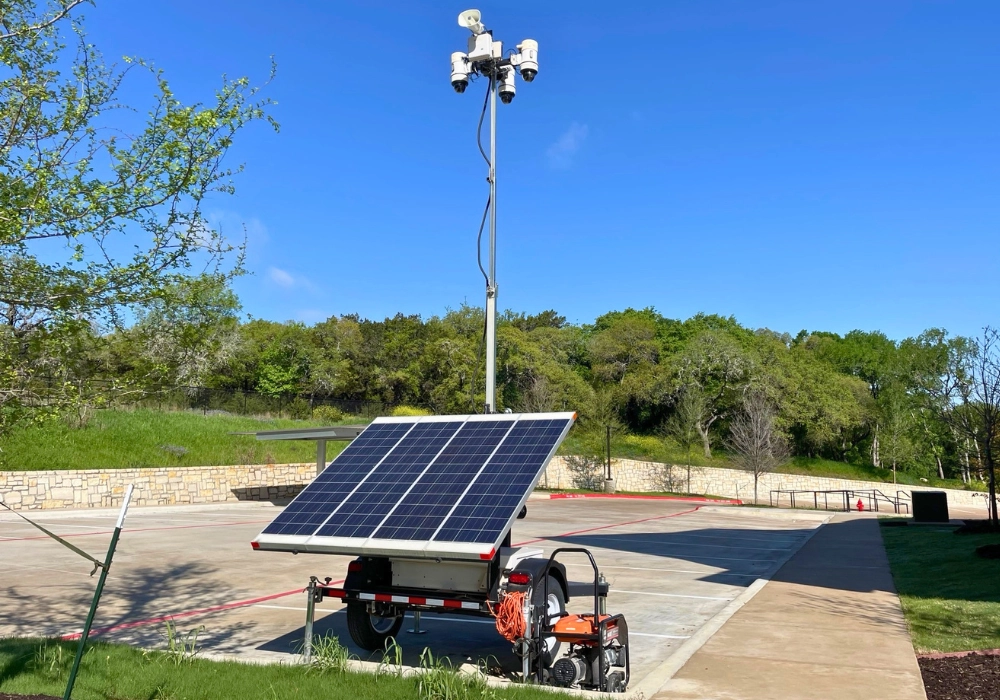
Simple tactics such as maintaining parking lots/exterior areas and securing commercial parking spaces with active monitoring solutions from LotGuard prevent loiterers from settling in, helping you improve tour-to-conversion rates with minimal ongoing effort.
|
Surveillance solution |
Feature/s |
How it helps deter loiterers |
|
LotGuard PRO Ideal for:
|
|
|
|
LotGuard MINI Ideal for:
|
|
|
|
LotGuard MULTI Ideal for:
|
|
|
|
License Plate Recognition (LPR) cameras Ideal for:
|
|
|
For brokers managing multiple commercial property listings, our cloud-based platform connects all surveillance cameras, AI alerts, and vehicle data into a single dashboard. As an enhancement to your security strategy, our platform syncs multiple footage streams in one place, which can be accessed remotely from any device, from anywhere.
This gives real estate brokers a "bird's eye view" of active listings in a single interface, allowing leasing agents to identify loitering trends early and take quick corrective action. What's more, you can generate reports on demand to prove properties are actively monitored for internal audits, investigations, and insurance claims.
Read more:
Improve Property Conversion Rates the Smart Way
Loitering won't fix itself, and hoping the problem resolves before the next property viewing is a strategy with a poor track record.
With vacant and transitional commercial properties being 3 to 5X more likely to experience theft, vandalism, squatting, and other property crimes than occupied premises, even the slightest sign of neglect can invite loiterers and make the next tour harder to convert.
The real estate brokers focused on actively monitoring and maintaining their rentals see better conversion rates and tend to have stronger broker-owner relations.
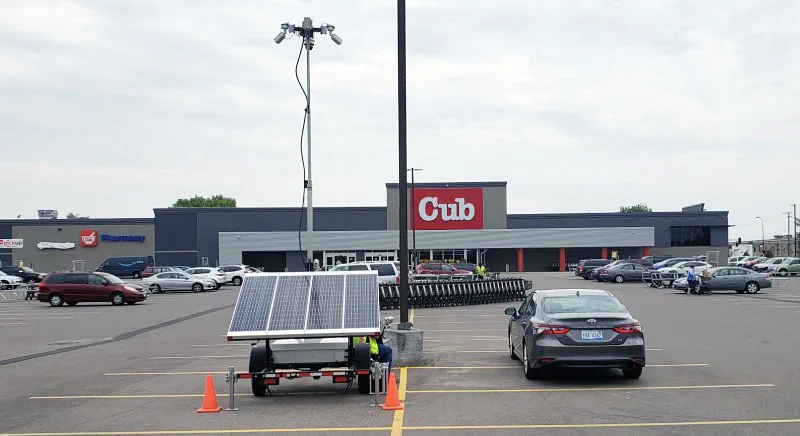
With over 3,000 active deployments across the United States, LotGuard provides rapid, short-term mobile parking lot surveillance rentals that keep listings show-ready and incident-free from day one.
Get in touch with our security specialists for a free quotation today.

Contents
[hide]Related news

How Squatting Laws Differ by State
Find out all 50 states' squatter laws in the US. See how LotGuard's mobile parking lot surveillance can protect your vacant properties. Read more
The State of Property Crime in the US (And How to Protect Yours)
Explore the current state of property crime in the US and learn how smarter security solutions can help protect your property. Read more
Why Parking Lot Safety Is Critical to Tenant Retention in Commercial Properties
Parking lots are a key touchpoint for tenants. Here’s how improving safety can reduce churn and boost retention. Read more
FAQs
What does loitering mean?
Loitering means remaining on or around public or private property without a clear lawful reason.
How does loitering impact property tours?
Loitering creates an immediate safety perception problem. Prospective tenants who encounter loiterers during a property viewing are generally put off the property/location and, as expected, are less likely to convert.
How do loiterers influence occupancy rates in US commercial property?
Persistent loitering signals poor property management and deters potential tenants from committing to the space. This can result in extended vacancy periods, which directly impact occupancy rates for the property management company/broker.
Is loitering illegal in the USA?
Loitering is illegal in many jurisdictions across the United States. For example, according to Chapter 856 of the 2025 Florida Statutes, it's "unlawful for any person to loiter or prowl in a place that warrants reasonable alarm or immediate safety concerns".
Contact Us
Request a Quote for LotGuard
Ready to learn more about how LotGuard can protect your Parking Lots and Properties? Get in touch today for a free quote.