
The Role of Parking Lots in Overall Property Management Strategy
Learn how parking lots play a key role in property management strategy, impacting safety, tenant experience, and asset value.
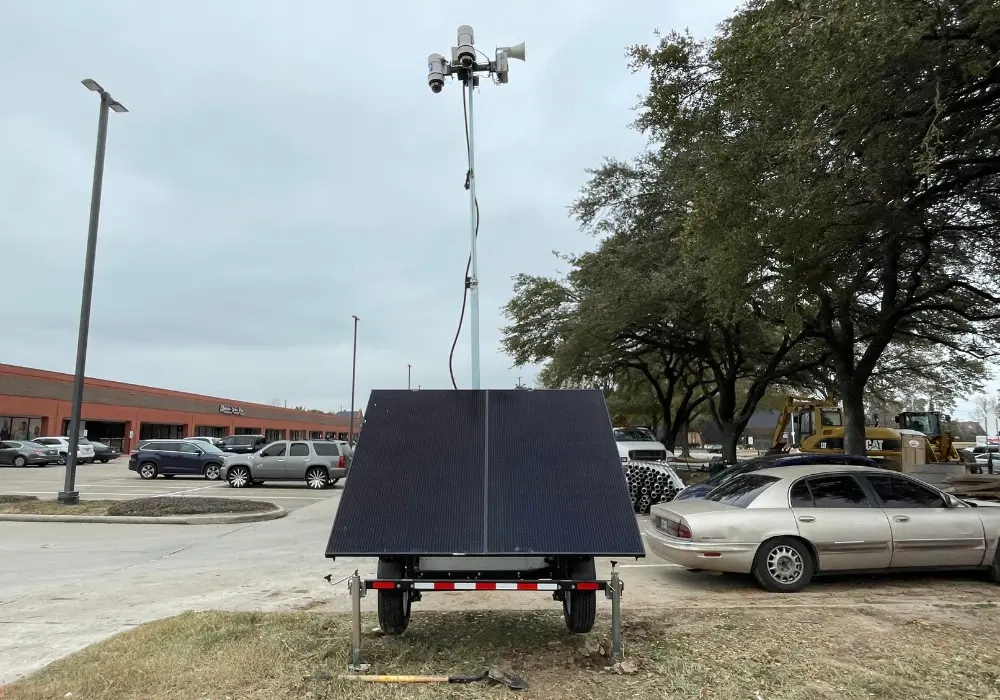
For most property management businesses, parking lots are rarely strategic priorities. But ask any experienced asset manager what drives tenant retention and long-term property value, and the management of exterior areas is often at the top of that list.
Whether a site is fully occupied or sitting vacant, parking lots are arguably the most heavily used spaces on any commercial, retail, industrial, or residential property. Yet they're often overlooked, even though most crime occurs outside.
Poor parking lot management leads to serious consequences, including theft, vandalism, reputational damage, assault, and personal injury claims.
And the stats back this: the FBI identifies parking spaces as the third-most common site for violent crime in the USA, with parking lot crimes up 25% since 2019. What's more, nearly 40% of all property crimes occur in parking facilities, underscoring the concentrated risk within these spaces.
This article looks at why parking lots belong in your property management strategy and how proactive oversight from LotGuard can help.
Why Parking Lots Are Strategic Assets in US Property Management
Parking facilities play a big role in how a property performs and is perceived in the market. Below are a few reasons why they belong in long-term property management plans:
Asset value
A well-maintained and secure parking facility influences a property's Net Operating Income (NOI). Recurring incidents and high crime rates can negatively affect capitalization (cap) rates during a sale or refinancing, so when a commercial site has a history of property damage and/or tenant complaints tied to parking safety, buyers and tenants are reluctant to commit.
Insurance and legal protection
Parking areas are full of risks. Slip-and-fall claims, car crime disputes, and assault incidents on your property can all lead to costly litigation and increased [insurance] premiums. If your parking zone has poor lighting and zero surveillance, it shows safety isn't prioritized, which may be seen as negligence in court.
Tenant retention
Tenant retention means your cash flow holds steady. When parking areas feel unsafe (or are perceived as neglected), tenant confidence disappears quickly. For many, the parking lot is where they arrive and leave every day. If that's an uneasy experience, it can influence lease renewal decisions, potentially causing them to look elsewhere.
Brand perception
A parking lot is typically the first and last interaction tenants and customers have with your property and brand. It's also the area where first impressions are made. A poorly lit, overgrown parking lot ultimately shows poor management, regardless of how polished the inside looks. This matters especially during transition periods or vacancies, where curb appeal translates to leasing demand.
ADA and local code compliance
Parking facilities must meet certain obligations under the Americans with Disabilities Act (ADA) guidelines and local regulations. These include accessible space requirements, fire safety protocols, pedestrian walkways, and signage. Non-compliance creates legal exposure and operational headaches.
Read more: Why Parking Lot Safety Is Critical to Tenant Retention in Commercial Properties
Why Parking Lot Risk Management Can’t Be Ignored
The scale of parking lot crime is hard to ignore, and the data speaks for itself.
-
More than 20% of all vehicle thefts occur in parking lots and garages nationwide.
-
Roughly 70% of these crimes happen at night.
-
35% of car break-ins occur during daytime hours.
-
Vehicle theft is 6X times more likely to occur in open surface lots than in staffed parking decks.
-
In Florida, parking lots accounted for 28% of the state's 45,000 vehicle thefts in 2023.
-
In Texas, 27% of auto thefts in 2022 occurred in apartment complex parking areas
-
Reported vehicle vandalism-related incidents reached 2.5 million incidents nationwide.
For commercial and residential property managers, the scale of these figures means higher insurance premiums, increased liability exposure, and tenants who no longer feel safe on the property.
Read more: Nighttime: The Biggest Security Threat for Property Managers
Why Parking Lot Security and Upkeep Matter
Parking lot security and maintenance matter because they impact how tenants experience the property and how often incidents occur.
Let's take a closer look:
-
Tenant and customer satisfaction: Clean and secure surface lots boost tenant satisfaction and retention rates. When exterior areas of your premises feel orderly and secure, complaints decrease and confidence increases. Over time, this translates into smoother lease renewal cycles and fewer tenant issues tied to safety concerns.
-
Crime deterrence: Well-maintained lots with trimmed landscaping, clear sightlines, proper lighting, and visible surveillance discourage theft, vandalism, trespassing, squatting, and homeless encampments. Neglect invites criminal activity as it signals properties aren't cared for.
-
Safety perception: To tenants and visitors, lighting issues, overgrown vegetation, broken perimeter fencing, and faded line markings signal a lack of oversight. And criminals notice this, too. Even basic surveillance changes how a parking area is perceived and used.
-
Operational efficiency: Staying ahead of maintenance requests reduces reactive responses. Fewer incidents mean fewer disputes to resolve, damages to fix, or insurance claims to file. Clear layouts and consistent oversight make day-to-day property management smoother and more manageable.
-
Liability protection: If someone is assaulted, injured, or has their vehicle stolen on the premises, the property management company/property owner can be held liable. The natural question that follows is whether reasonable precautions were in place to mitigate risk. Inadequate lighting and a lack of security make that a difficult question to answer.
Read more:
- Parking Lot Maintenance Checklist for Property Managers
- Commonly Asked Security Questions From Property Managers
- Top Security Challenges for Property Managers and How to Overcome Them
Inquire About Parking Lot Surveillance – Contact form jump
How to Integrate Parking Lot Surveillance into Property Management Plans
Most property management teams add surveillance after an incident occurs. A break-in or a tenant complaint that could have been avoided. The smarter approach? Building security into your management plan before something goes wrong. That's what separates a security strategy from a security reaction.
Here are 5 ways to do just that:
- Audit your exposure: Walk the lot at different times of day and night. View the site as tenants/clients would see the property. Look for lighting issues, blind spots, sketchy alleyways, and access vulnerabilities, then prioritize improvements based on your findings.
- Find monitoring risk zones: Not every corner needs the same level of coverage. Focus resources where incidents are more likely to occur, such as perimeters and alleyways. Mobile surveillance units offer flexibility, allowing you to relocate coverage as conditions change.
- Consider layered security: Using security guards to monitor parking lots, especially overnight or when vacant, helps spot and deter suspicious activity as it unfolds. Physical barriers, such as anti-climb perimeter fencing, prevent unauthorized access, while lighting upgrades eliminate dark zones and blind spots. Surveillance cameras with remote monitoring and night vision capabilities provide continuous coverage even when no staff is present.
- Leverage technology: Modern mobile surveillance systems use PTZ (Pan-Tilt-Zoom) cameras, AI analytics, and smart detection to flag unusual behavior and identify suspicious vehicles in real-time. This allows teams to respond faster and helps prevent incidents before they occur. Centralized dashboards make it easier for property managers to oversee multiple sites from afar.
- Monitor and maintain: Regularly review incident logs and footage to see where surveillance strategies are working, and where they're falling short. Small tweaks like repositioning a camera or adjusting response protocols can have a big impact over time. Ongoing evaluation ensures your parking lot security evolves alongside changes in tenant behavior and site conditions.
Read more: A Comprehensive Property Management Risk Mitigation Framework
LotGuard's mobile parking lot surveillance options
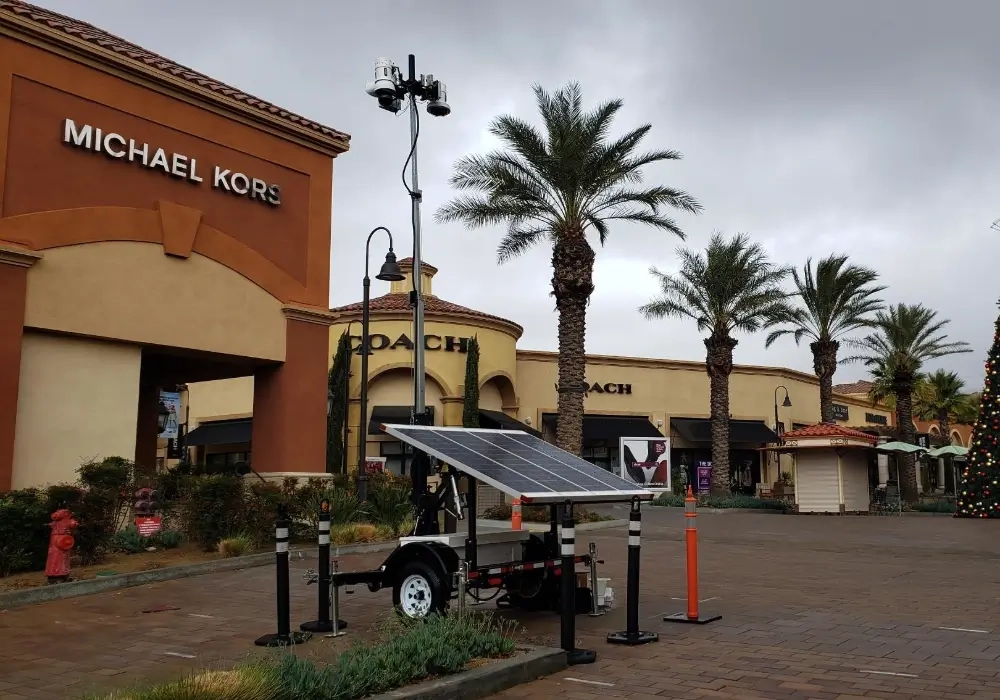
- LotGuard PRO Surveillance Trailers stand up to 20-feet tall and combine PTZ (Pan-Tilt-Zoom) cameras and AI analytics to deliver near-360° coverage. Through remote monitoring at Interactive Surveillance Operations Centers (ISOC), trained operators verify real-time threats and initiate rapid responses, keeping parking lots secure day and night.
- LotGuard MINI 4-camera units (with 23X optic zoom) bolt onto existing structures and cover hard-to-reach spaces with near-pinpoint accuracy. Transmitting live video footage via 4G/5G networks and utilizing remote monitoring, they provide 24/7 "eyes in the sky" without fixed infrastructure.
- Add-on License Plate Recognition (LPR) cameras capture vehicle details (make, model, color) and log all movements automatically. The system creates a credible audit trail that demonstrates due diligence, helping support law enforcement investigations and insurance disputes.
- Our dedicated cloud platform bring all LotGuard devices into a single, unified dashboard, simplifying security management across multiple sites. From one interface, real estate professionals can generate reports and review live and recorded on demand.
Read more:
Property Management Starts Outside
The parking lot is where tenants arrive, visitors form their first impression, and most property crimes actually happen. That makes it one of the most important areas to get right, yet it's one of the most commonly under-managed areas across commercial properties.
Property managers who give exterior spaces the same level of attention as interiors tend to retain tenants longer and carry lower liability exposure. That's why many in the commercial property management industry are incorporating smarter surveillance solutions into their broader property management growth strategies to reduce risk across exterior spaces.
LotGuard's parking lot surveillance systems are "Always Awake and Always on Guard", providing 24/7 coverage when it's needed most. By extending security beyond the building itself, real estate teams can better protect assets and create safer experiences for tenants and visitors alike.

Contents
[hide]Related news
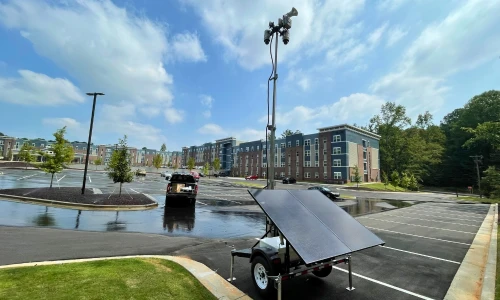
A Comprehensive Property Management Risk Mitigation Framework
Build a 4-step risk mitigation framework for property management, covering physical security, liability, and exterior monitoring. Read more

The State of Property Crime in the US (And How to Protect Yours)
Explore the current state of property crime in the US and learn how smarter security solutions can help protect your property. Read more

Top 10 Commercial Property Hotspots for Copper Theft Risk
Discover the top commercial property hotspots for copper theft risk and how businesses can better protect high-value assets. Read more
Contact Us
Request a Quote for LotGuard
Ready to learn more about how LotGuard can protect your Parking Lots and Properties during the holidays? Get in touch today for a free quote.