
Understanding Insurance Requirements for Different Property Types
Learn how insurance requirements vary across commercial property types and what owners need to manage risk and stay protected.
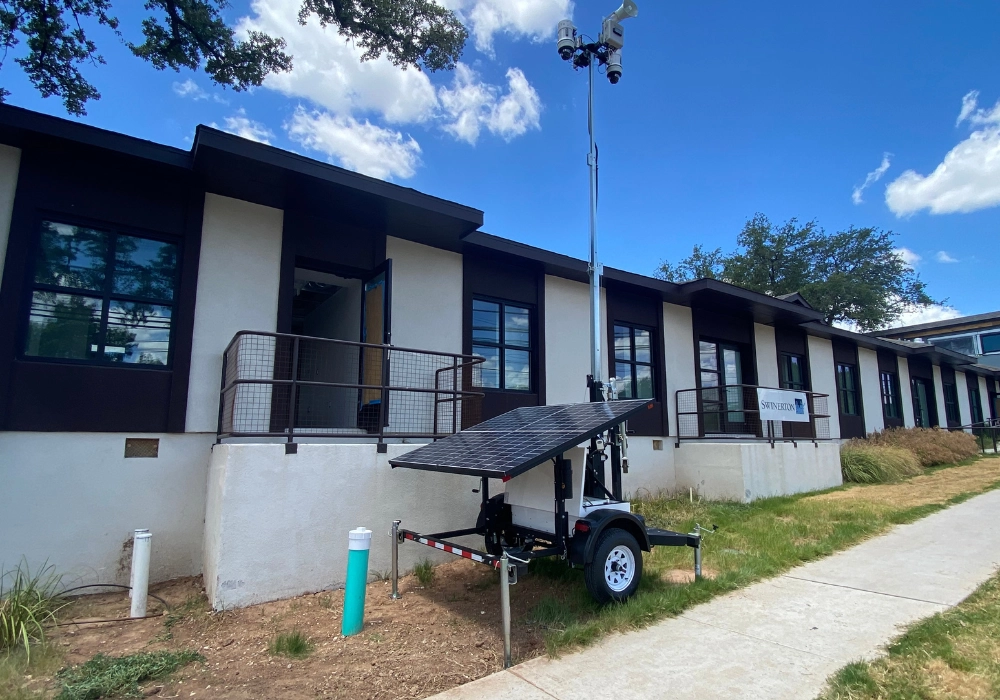
Insurers don't treat all commercial properties the same way because not all carry the same risk. A busy retail center has a very different risk profile than a vacant warehouse or a logistics hub, which is why insurance requirements and coverage terms vary based on how a property is used.
This guide breaks down the insurance requirements for different property types in the United States, covers how insurers assess risk, and explains how smart surveillance can help commercial property managers reduce exposure and lower premiums.
Types of Commercial Property Insurance Policies
Before we look at specific property types, it's worth understanding the types of coverage available in the United States. Most commercial policies start with a base layer and become more specialized depending on the site's risk profile.
Basic cover
Basic cover, or "basic form" in US commercial property insurance, typically covers:
-
Building coverage: Covers the physical structure of the property, such as walls, roof, foundation, and fixed installations like HVAC systems and plumbing, against damage from covered perils (e.g., lightning, storms, explosions, vandalism, water damage).
-
Business personal property (BPP): Also known as contents cover, this policy protects "moveable assets" such as equipment, inventory, and furnishings inside the building. In the event of a covered loss, the insurer typically reimburses the cost to repair or replace damaged items with those of the same or equal value. Some policies may also cover items within 100 feet of the premises and/or during transit.
-
General liability coverage: Protects against third-party claims, whether that's personal injury or property damage. This is a baseline requirement for almost every commercial policy.
-
Business owner's policy (BOP): This combines building coverage, BPP, and general liability into one package. It's generally available for small to medium-sized commercial properties and is most often the standard required by insurers.
Specialized cover
Depending on your property type and how it's used, you may also need:
-
Landlord insurance: Also called "rental property insurance," it protects owners' buildings and structures from fire, storms, and other structural damages. It doesn't cover tenants' personal belongings; this would fall under "renters insurance."
-
Flood insurance: A separate policy through the federal National Flood Insurance Program (NFIP) that covers buildings (electrics, appliances, windows, foundations, etc.) and contents, or both. It protects your business from flood damage but excludes damage from sump pump backups. Highly recommended for commercial sites in flood zones.
-
Ordinance or law coverage: Covers the cost to rebuild or upgrade a commercial property to meet local building codes, ordinances, and/or laws. It's worth considering this add-on policy if your commercial business is located in an older building.
-
Commercial fire insurance: Protects commercial businesses against financial losses due to fire and smoke damage, covering structures, replacement costs, and damage to neighboring properties.
-
Glass insurance: Covers breakage, damage, and/or theft of windows, doors, and storefront glass for commercial retail buildings, specifically excluding general wear and tear. These types of insurance policies work well for retail stores and offices.
-
Vacant property cover: Most insurance companies offer limited coverage for theft, vandalism, and water damage when a property is vacant for longer than 30-60 consecutive days. Since empty buildings have a higher risk of squatting, copper theft, and homeless encampments, this type of cover is advised for extended vacancy periods.
-
Cyber insurance: Special form coverage that protects property owners, landlords, and asset managers against financial losses caused by cyberattacks, data breaches, and ransomware.
How an Insurance Company Evaluates Commercial Property Risk
Insurance underwriters use a standardized framework called COPE (Construction, Occupancy, Protection, and Exposure) to assess risk and set premiums.
Knowing how it works helps you gauge where your property sits on the risk spectrum and what you can actually do to move the needle.
Construction
Building materials and the age of the buildings are generally the first things insurers look at. Steel and concrete structures sit on the lower risk end, while wooden buildings attract higher premiums. An older premise with outdated electrical systems has a much higher risk profile than a modern office space with new wiring and up-to-date fire suppression.
Occupancy
Insurers look at who occupies the building and how the premises are used. A corporate office with hundreds of workers is viewed differently from a small-scale manufacturing plant with a handful of employees. High foot traffic seen in retail spaces introduces liability risks, while industrial operations bring machinery and fire hazards.
Protection
This is where safety measures, exterior monitoring, alarms, and fire detection all come in. The level of protection depends on the building's construction and occupancy. For instance, wooden structures with thatch roofs located far from fire stations require more protection against fire and may come with higher premiums.
Exposure
This looks at the external risks associated with a property's location and environment. A building located in a high flood zone or in an area with high crime rates is considered higher risk than a comparable property in a low-risk location. Vacant premises (standing empty for more than 60 consecutive days) are also considered risky.
Worth knowing: Beyond COPE, insurers factor in your property's claims history when setting premiums. A property with frequent vandalism, theft, or water damage claims will generally see higher premiums and/or less favorable terms. Proactive security measures serve a dual purpose: preventing crime on-site and building a clean claims record that works in your favor at renewal time.
Read more:
Commercial Property Insurance Requirements
Below, we take a closer look at what insurance is advised for different property types in the U.S.:
Retail
Retail properties carry a mix of liability risk and inventory loss exposure. Constant customer foot traffic increases the likelihood of slip-and-fall claims, while exterior areas and parking lots often attract criminal activity. Add in the risk of theft, vandalism, and overnight break-ins, and retailers face a plethora of exposures "under one roof".
According to Capital One Shopping, retailers in the US lose around $45 billion annually to organized retail crime (ORC), and shoplifting increased by 93% in 2023 compared to 2019.
Parking lots and exterior areas are especially vulnerable, as they provide criminals with easy access, quick escape routes, and discreet locations to transfer stolen goods.
What you need:
-
Inventory protection: Covers stock and fixtures against theft, fire, and vandalism.
-
Glass insurance: Covers storefronts and display windows against breakage and damage.
-
Business income coverage: Replaces lost income if a covered event forces temporary closure.
-
Liability insurance: Covers third-party injury claims on the property.
Read more: What is Organized Retail Crime (ORC)? And How to Prevent it
Industrial/manufacturing
Industrial and manufacturing properties are inherently higher risk than most other commercial assets due to their physical design and day-to-day operations. Large open layouts and limited after-hour surveillance increase trespassing and metal theft risk. Hazardous operations such as hot works and storage of flammable chemicals can lead to fire hazards and environmental damage claims.
A single equipment failure or fire in a manufacturing environment doesn't just damage the building; it can also injure workers and halt production for weeks. What's more, with the growing reliance on specialized software and automated systems, the risk of cyber incidents can now trigger physical damage and operational shutdowns, further increasing insurance exposure.
What you need:
-
Equipment breakdown coverage: Covers the cost of repairing/replacing damaged machinery.
-
Commercial fire insurance: Financial coverage for smoke and fire-related repairs.
-
Business interruption insurance: Replaces income during shutdown periods.
-
Environmental liability: Protects against pollution-related claims.
-
Cyber insurance: Protection against cyberattacks and data breaches of sensitive information.
Logistic and distribution centers
Logistics and distribution facilities handle large volumes of inventory, freight, and vehicle traffic across large outdoor areas every day. This constant movement, combined with multiple access points and third-party operators, makes these environments frequent targets for vehicle-pedestrian accidents, cargo theft, trailer break-ins, and unauthorized access.
Did you know there were over 2,500 cargo thefts across the US and Canada last year (2025)? Collectively, California and Texas accounted for more than half of these incidents. With organized crime groups becoming increasingly sophisticated in targeting logistic hubs, physical security and properly structured insurance coverage are critical to mitigating risk and protecting your bottom line.
What you need:
-
Cargo and transit insurance: Covers goods in transit (GIT) against theft, damage, or loss.
-
Warehouse liability coverage: Protects against damage or theft of goods in storage.
-
Inventory protection: Covers stock and fixtures against theft, fire, and vandalism.
-
Commercial casualty insurance: Protects against legal claims from accidents on your site.
-
Commercial auto insurance: Additional coverage for company vehicles.
Vacant properties
Standard commercial property policies typically exclude or heavily restrict coverage once a building has been vacant for 30-60 consecutive days. Most insurance carriers also classify a site vacant if less than 31% of the property is being used.
The main reason for this is that vacant premises are more prone to copper theft, vandalism, unauthorized entry, and damage caused by water or arson. With little to no people on-site to report if something happens (and without insurance coverage), this can lead to significant repair or replacement costs for owners of commercial property.
What you need:
-
Vacant property insurance: Available for commercial and residential properties, covering arson, theft, vandalism, and water damage on flexible terms from 3 to 12 months.
-
Vacancy endorsements: Offered by some insurers to keep your existing insurance coverage during vacancy periods, often at a higher premium.
-
General liability coverage: Covers liability claims should someone be injured on-site.
-
Flood insurance: Recommended for empty commercial sites in flood-risk zones.
Read more: The Main Threats to Vacant Properties
Meet Insurance Requirements with Mobile Surveillance
Security that can be documented and verified matters to insurers when finalizing policies and setting premiums. Visible exterior surveillance reduces vandalism and theft, creating a deterrence effect that changes how criminals assess a target, and generates the kind of incident records that support a clean claims history year over year.
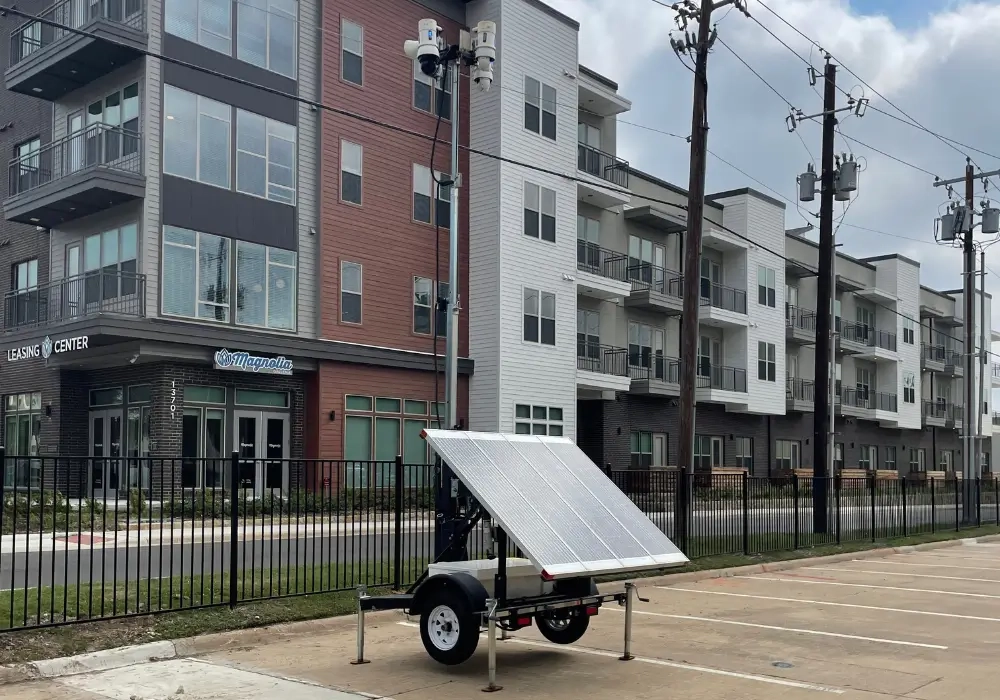
For property managers with outdoor parking areas, vacant sites, loading yards, or high-risk perimeter zones, LotGuard PRO Surveillance Trailers deploy in minutes to any location without fixed power or internet. Using solar power and 4G/5G connectivity, they stand up to 20-feet tall and use PTZ (Pan-Tilt-Zoom) cameras and remote monitoring to protect various property types with near-pinpoint accuracy.
For more targeted zones (alleyways, rear access points), the LotGuard MINI mounts to existing poles or columns. With 4 PTZ cameras and 23X optic zoom, they cover the blind spots that traditional fixed cameras often miss. Add-on LotGuard LPR cameras automatically track and log every vehicle that moves through your site, creating a searchable record of suspect behavior for insurance investigations.
Our cloud platform adds an enhanced layer to your LotGuard systems, bringing together footage, AI alerts, and vehicle data into a single view across your portfolio. Evidence is stored, timestamped, and exportable on demand, enabling users to pull information from multiple properties in just a few clicks.
Read more:
Protect Your Properties (And Premiums) with LotGuard
Insurance is a high ongoing cost for property owners and management teams. Properties that experience frequent theft and vandalism tend to file more claims, and more claims typically translate to higher premiums and stricter terms.
Sites with visible surveillance and active monitoring, on the other hand, often experience fewer incidents and have a lower claims record. Insurers increasingly view these properties as low risk, which can support more favorable underwriting outcomes.
LotGuard systems help property owners demonstrate proactive risk mitigation across outdoor areas. Our fully-managed, visible security solutions provide 24/7 monitoring for retail, industrial, manufacturing, and vacant sites across the United States. We help deter crime before it becomes a claim.
Get in touch with our security specialists today to see how we can help protect your assets and control insurance costs.

Contents
[hide]Related news
A Comprehensive Property Management Risk Mitigation Framework
Build a 4-step risk mitigation framework for property management, covering physical security, liability, and exterior monitoring. Read more

How Squatting Laws Differ by State
Find out all 50 states' squatter laws in the US. See how LotGuard's mobile parking lot surveillance can protect your vacant properties. Read more

The State of Property Crime in the US (And How to Protect Yours)
Explore the current state of property crime in the US and learn how smarter security solutions can help protect your property. Read more
Contact Us
Request a Quote for LotGuard
Ready to learn more about how LotGuard can protect your Parking Lots and Properties? Get in touch today for a free quote.