
The Psychology of Perceived Safety During Property Tours
Learn how perceived safety influences property tours and why security plays a key role in tenant confidence and leasing decisions.
Long before a prospective tenant steps inside a residential or commercial property, they're already forming an opinion. The parking lot and the building's overall condition are where first impressions are made, setting the tone for real estate brokers managing tours on vacant or transitional listings.
Perceived safety is one of the biggest factors in how people evaluate commercial property. We assess risk based on environmental factors, and we do it subconsciously. So when a property and/or its surrounding area appears rundown and neglected, the space feels unsafe, but if it looks clean and well-maintained, that property instantly suggests stability and safety, shifting the perception.
This article breaks down the psychology of perceived safety during property tours, where those impressions most often take shape on commercial listings, and how visible monitoring reinforces the right message before a prospect even steps out of their vehicle on show day.
Why Perceived Safety Matters During Commercial Property Tours
Prospective tenants don't consciously "score" a property on safety. Instead, they respond to how it feels, and that feeling develops before they've left the car. Research into the psychology of urban built environments shows that people read safety signals subconsciously and almost immediately, based on cues like lighting, cleanliness, and crime levels, before any deliberate assessment takes place.
A clean, well-maintained exterior gives the perception of order. It suggests that property management teams are attentive and proactive, putting potential tenants at ease. On the other hand, a property with broken lighting, faded signage, and cracked parking lot asphalt doesn't just look neglected; it quietly suggests that future maintenance requests might get the same lack of attention.
For commercial real estate (CRE) brokers, safety perception directly impacts both your business and the property's listing potential. Potential tenants think about employees arriving early and leaving late, and about whether your space reflects positively on their organization.
A parking lot that feels unsafe or a group of loiterers hanging around an entrance could be a potential liability, and one that prospects would rather avoid altogether. First impressions of a property's exterior often determine whether a tour continues or ends before the front door is ever reached. That's the connection brokers need to get ahead of.
Read more:
- How Loitering Impacts Property Tour Conversion Rates
- Environmental Risk Factors that Increase Property Crime Exposure
- The Role of Parking Lots in Overall Property Management Strategy
Where Safety Management is Often Perceived on Commercial Properties
There are 3 main exterior areas where safety perception is most shaped during a property tour:
Parking lots
The parking area is almost always the first thing a prospective tenant interacts with. They park there, walk through it, and return to it after the tour is done. It sets the tone for everything that follows.
Poorly lit surface lots, overgrown landscaping, piles of trash, loiterers, or signs of vandalism send an immediate message that the space isn't actively managed. With 70% of vehicle thefts occurring at night, and 65% of drivers reporting feeling unsafe in parking garages at night, these facts are hard to ignore.
When a parking space lacks visible deterrents such as lighting and surveillance cameras, it gives the impression that a property is high risk. For prospective tenants evaluating multi-year lease commitments, those early signs can influence whether they actually continue with the property viewing or move on elsewhere.
Read more: How Properties Can Maximize Parking Lot Security
Entryways and perimeters
Entryways and building perimeters are also where first impressions are formed. Limited sightlines, broken fencing, poor lighting, and no visible security presence can make these areas feel exposed, especially at vacant commercial properties where the risk of property crime and squatting is higher.
For a prospect walking toward the entrance, any sign of unauthorized access or neglect directly affects how they feel about the property overall, long before a single interior door has been opened.
Read more: The Importance of Perimeter Security for Commercial and Industrial Properties
Building entrances
Signage, access control, and the general condition of doors and windows all shape how well a property appears to be maintained and managed. Graffiti near entrances, faded signs, broken fixtures, and/or signs of forced entry are instant red flags for prospective tenants during property tours.
At vacant or transitional commercial properties, entrances often become focal points for unauthorized activity, such as loitering, squatting, and trespassing, because there's nobody on-site to detect and deter it.
For prospects visiting the site, those signs completely undermine safety perceptions and create an uneasy starting point for a tour, hardly the foundation for a confident viewing or a serious lease discussion.
Read more: How Graffiti Damages First Impressions in Property Leasing
How Visible Monitoring Reinforces the Perception of Safety During Commercial Property Tours
Visible surveillance changes behavior on both sides of the equation. First, for potential offenders, visible monitoring indicates a higher chance of being caught, often causing criminals to move on to easier targets. According to the National Institute of Justice, the certainty of being caught is a far more powerful deterrent than increasing the severity of punishment.
At the same time, visible surveillance sends a very different message to legitimate visitors and prospective tenants. Research shows that active monitoring reduces fear of crime and increases overall confidence in a space. It creates what's often called the "halo effect" during property tours, where perceived safety improves not only near the presence of security cameras, but also in surrounding areas beyond their field of view.
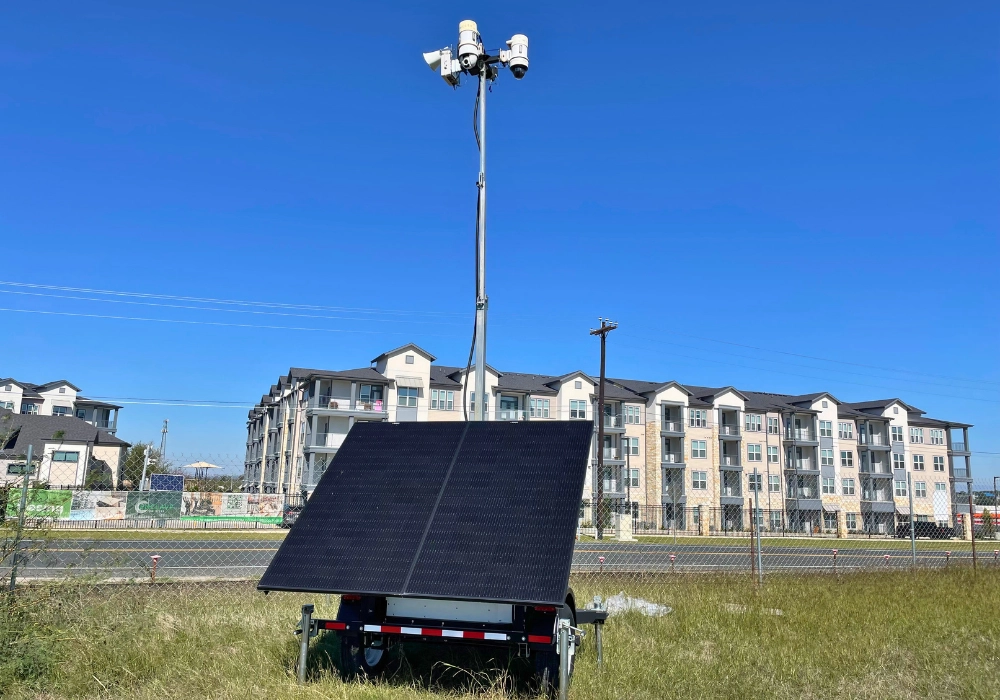
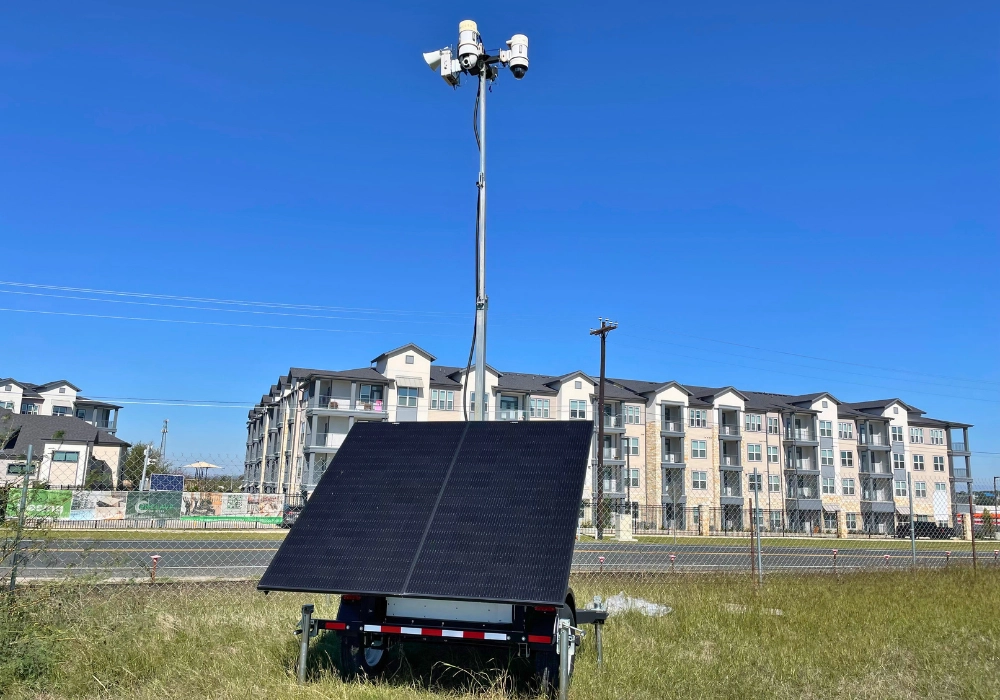
LotGuard's mobile surveillance solutions for commercial sites and parking areas make that signal impossible to miss. Here's how each unit suits specific areas where perceived safety issues are formed during commercial property tours:
Large properties: LotGuard PRO and LotGuard MULTI
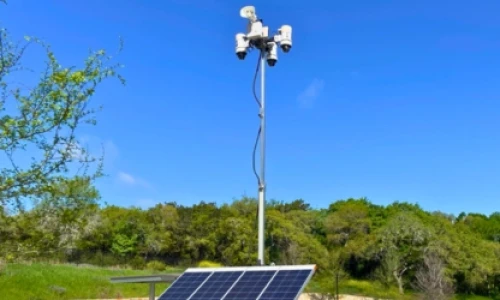
For large properties with open lots and expansive perimeters, the LotGuard PRO is the most visible deterrent available.
Standing up to 20-feet tall and powered by solar energy, it provides near-360° coverage from PTZ (Pan-Tilt-Zoom) cameras. Systems are equipped with AI-video analytics and linked to live remote monitoring at Interactive Surveillance Operations Centers (ISOCs), where qualified operators verify activity as it unfolds. When something suspicious is detected, they initiate various actions such as:
- Issuing live audio voice-down challenges
- Dispatching security teams to investigate on-site
- Contacting law enforcement if/when required
For properties with multiple coverage zones, such as several access points or rear entrances, the LotGuard MULTI extends visibility by combining 4 HD night-vision cameras into a single unit.
Built specifically for parking lots and commercial properties, the system uses AI analytics and remote monitoring to ensure sites are protected both day and night. With 24/7, real-time monitoring of vacant listings, real estate brokers can arrive for tours with confidence, knowing the site is secure and free from surprises that could derail a deal or undermine a prospect's first impression.
Read more: Why Property Managers Shouldn't Overlook Remote Monitoring
Small tour areas: LotGuard MINI
For tighter spaces such as entryways and covered pedestrian walkways, the compact 4-camera LotGuard MINI system fills coverage gaps where loitering and unauthorized access mostly occur.
Installed on existing poles or dedicated mounting points with 23X optical zoom and infrared (IR) night vision, it provides high-definition coverage (and timestamped data) of the areas where a prospective tenant's perception of safety is formed.
For brokers managing vacant listings, smart surveillance provides documented evidence of who's accessing the property, giving property owners and prospective tenants peace of mind that the property is actively monitored.
Read more: A Comprehensive Property Management Risk Mitigation Framework
Parking lots: License Plate Recognition (LPR) Cameras
Parking areas and surface lots carry specific risks, especially after hours, where activity patterns are difficult to document without the right technology.
Our LPR Cameras automatically capture and flag vehicle plate data (make, model, color), creating time-stamped records of activity in and around your property. This makes it easier to identify repeat suspects, detect unauthorized vehicles, and keep a clear record of activity before, during, and after property tours.
Read more: Five Steps to Better Parking Lot Security
For brokers managing multiple commercial listings, our cloud-based platform brings video feeds, AI alerts, and LPR reports from every LotGuard unit in your portfolio into a single, centralized view. With real-time remote access from any device, potential safety issues at one listing are visible and actionable before they impact the next scheduled tour.
With the platform, real estate brokers remain in control and one step ahead of potential problems, ensuring property tours remain secure and professional, not focused on damage control.
Read more: Stellifii: A Centralized Security Management Platform for Commercial Real Estate
Why Not All Monitoring Creates the Same Perception of Safety
Not all security measures send the same message to prospects. Some traditional approaches, like security guards and basic surveillance cameras, do contribute to a sense of safety, but come with limitations, particularly on vacant or transitional listings where coverage consistency matters most.
|
Safety signal |
Traditional security |
Smart security |
|
Visible deterrence on arrival |
[[YES]]
|
[[YES]]
|
|
24/7 coverage |
YES, but it is expensive
|
[[YES]]
|
|
Live remote monitoring |
[[NO]]
|
[[YES]]
|
|
Consistent presence between property tours |
[[NO]]
|
[[YES]]
|
|
Rapid deployment |
[[NO]]
|
[[YES]]
|
|
Multi-site visibility |
[[NO]]
|
[[YES]]
|
Security guards and static surveillance cameras aren't without value. They provide a visible presence and create a baseline level of safety. However, they're often limited by shifts, set patrol routes, and coverage of one area. What's more, maintaining 24/7 monitoring at vacant listings quickly becomes expensive, making it difficult for brokers to justify the cost to stakeholders or the board.
Smart monitoring solutions like LotGuard fill those gaps. They deliver continuous coverage without extensive infrastructure or the long-term commitments traditional approaches depend on. Our smart surveillance systems are available on a flexible rental basis, making professional monitoring more cost-efficient for vacant and transitional properties.
5 Psychological Benefits of Visible Surveillance During Property Tours
Visible surveillance during property tours changes what happens at a commercial listing and how prospective tenants experience it. Here's what that means in practice for brokers:
-
Enhanced sense of security: When a prospect sees active monitoring upon arrival, it shows that the property is managed. Tenants who feel physically safe during tours are more likely to engage with the space and move forward with negotiations.
-
Reduces theft and vandalism: Our surveillance solutions have been shown to reduce crime by up to 87%. That means fewer incidents of vandalism, copper theft, illegal dumping, and trespassing between showings, all of which erode the first impressions a listing needs to make.
-
Limits unauthorized activity: Vacant and transitional buildings attract unauthorized access when there's no visible security. Loitering, trespass, and even homeless encampments can develop quickly without active monitoring.
-
Improves compliance: Visible surveillance generally improves behavior in monitored areas, reducing suspect activity that could lead to property damage that impacts property tour impressions. What's more, insurance companies tend to look favorably on properties with monitored security, potentially lowering premiums.
-
Fewer operational disruptions: Every incident that occurs between tours requires time and money, whether it's coordinating repairs or filing insurance claims. That friction slows leasing momentum, often forcing tours to be rescheduled or canceled altogether. With monitored surveillance, many of those disruptions can be prevented.
Improve Safety Perception During Property Tours Today
The psychology of perceived safety during property tours comes down to how prospective tenants experience a commercial property. When a site looks rundown and neglected, it signals a lack of active management, making prospects nervous that overall management is handled the same way.
On the other hand, vacant listings that are clean and visibly monitored feel secure and professionally managed. Well-maintained parking areas and graffiti-free entrances help prospects stay focused on the space, not on their personal safety. In many cases, that difference determines whether a tour builds momentum or stalls.
With more than 3,000 active deployments across the United States, LotGuard helps prospective tenants feel secure before they ever step inside.
Get in touch with one of our security experts today to see how monitored solutions can keep your listings tour-ready and your leasing conversations on track.

Contents
[hide]Related news
Best Practices for Securing Short-Term Listings
Discover how property managers can improve short-term listing security with better monitoring, visibility, and proactive protection. Read more
How Graffiti Damages First Impressions in Property Leasing
Learn how graffiti affects first impressions in property leasing and why it can reduce tenant interest and conversion rates. Read more
How Loitering Impacts Property Tour Conversion Rates
Learn how loitering affects property tour conversion rates by influencing first impressions, safety perception, and tenant decision-making. Read more
Contact Us
Request a Quote for LotGuard
Ready to learn more about how LotGuard can protect your Parking Lots and Properties? Get in touch today for a free quote.