
Using LPR to Track Suspicious Vehicles at Vacant Property Listings
Learn how license plate recognition (LPR) helps track suspicious vehicles at vacant property listings and improve site security.
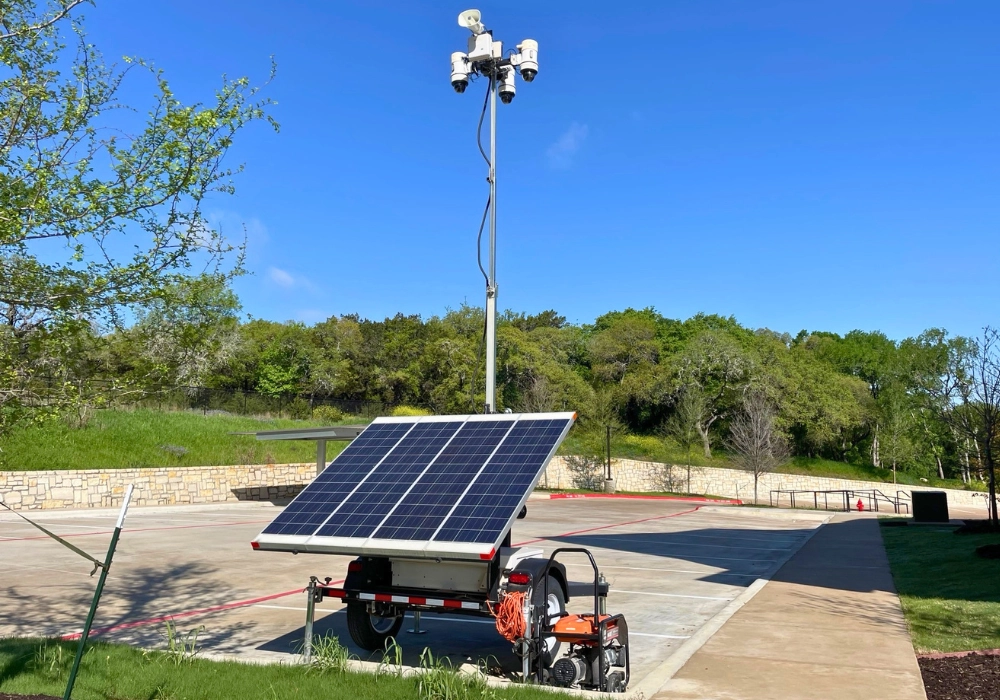
The same vehicle visiting a vacant property multiple nights in a row isn't lost; it's scouting.
Before any crime takes place, thieves, squatters, and vandals often scope a site in advance, knowing that vacant properties can sit empty for weeks or months at a time. With no regular human activity and often without property security in place, vehicles may return repeatedly, confident that there's little risk of being caught or identified.
This is the root problem for commercial real estate brokers managing vacant or transitional listings in the United States. Standard security systems only inform you of what happened after the fact, but rarely flag repeat visits or provide credible vehicle data, such as which vehicles were present in the event of an incident.
This is where License Plate Recognition (LPR) technology makes a real difference. When integrated with LotGuard's mobile surveillance solutions and cloud-based monitoring platform, LPR enables proactive monitoring that helps stop suspicious activity before it escalates. Our systems give brokers the oversight needed to protect assets and keep owners confident throughout the listing period.
This article breaks down everything you need to know.
Why Vacant Property Listings Attract More Suspicious Vehicle Activity
Both empty residential and commercial properties are easy targets for suspicious activity. Notably, vacant buildings are 3 to 5X more likely to experience property crime, vandalism, and unusual vehicle activity than occupied listings.
With no tenants on-site to report suspect behavior (and with predictable environmental factors working against them, such as extended vacancy periods and signs of neglect), vacant properties create a window that both opportunistic and organized criminals actively exploit.
What makes vacant listings particularly vulnerable isn't just that nobody is around; it's the length of time premises stand empty, and criminals are quick to notice patterns. A handful of late-night drive-bys can reveal whether a site is monitored, when there's less activity, and how easy it is to access. Is the property well-lit? Are perimeters secure? Are there visible surveillance cameras?
This repeat-visit behavior is one of the most underreported patterns in vacant property crime. Many thefts, squatting attempts, and after-hours incidents involve the same vehicle returning to the same address: first to access, then to test access, and ultimately, to act.
Construction sites and abandoned buildings are the biggest targets for thieves, who often use vehicles both to scout premises in advance and to enable quick getaways. With roughly 90% of all copper theft occurring after-hours or on weekends, vacant listings are particularly exposed to heightened crime and repeat vehicle activity.
Beyond theft, vacant listings that attract repeat vehicle visits quickly signal to would-be squatters and encampments that the site is unmonitored. Over time, this perception compounds risk, turning isolated vehicle movement into a cycle of ongoing trespassing and security concerns that are much harder to resolve.
Without a record tied to accurate vehicle identification, there's very little law enforcement agencies or insurers can do when the same vehicles return time and again, unless there's evidence to work with. This is why License Plate Recognition (LPR) technology matters.
Read more:
Why License Plate Recognition (LPR) Matters at Vacant Property Listings
Using LPR at vacant property listings matters because it gives property brokers and security teams a record of the offender's vehicle. At empty sites, capturing vehicle data can become the best lead for identifying repeat drive-bys, trespass, loitering, illegal dumping, attempted theft, and even flag stolen vehicles.
Since vacant premises generally have fewer people around to notice odd behavior, vehicle-based evidence is crucial for pinpointing unauthorized vehicles in and around your listing and its parking spaces.
The issue with standard security measures, such as basic camera systems and periodic guard patrols, is that they only capture what happens after the fact. They don't help identify patterns of suspicious activity before problems escalate, nor do they provide credible license plate data that property managers and law enforcement can actually act on.
Smart access control systems like LPR cameras close those gaps in 4 ways:
-
Vehicle identification: High-quality LPR systems automatically track vehicle movements and capture license plates and details (including make, color, and model) of all cars in and around your listing. Using Optical Character Recognition (OCR) technology and infrared illumination, they provide a clear record of all vehicle access in real-time.
-
Repeat visit detection: Because every vehicle's license plate is timestamped and logged, AI-video analytics can detect when specific vehicles show up multiple times. A pattern that would otherwise be invisible to standard security systems now becomes traceable with a digital audit log of all vehicle activity and helps support criminal investigations.
-
All-condition coverage: License plate readers with high-resolution imaging and optimized capture technology read license plates in low light and adverse weather conditions, and can even record vehicle details while traveling at high speeds (up to 130mph). This matters a great deal for vacant listings where no one is physically present to verify vehicle access as it happens.
-
Evidence collection: Timestamped plate data paired with corresponding footage gives law enforcement and insurers something concrete to work with. License plate numbers linked to precise timestamps and video footage are more useful than a general description of "a truck". With smart LPR, this information is retrieved remotely, allowing teams to review footage and investigate unusual activity without being physically present on-site.
To put this into perspective, here's how traditional surveillance and LotGuard's LPR technology measure up:
|
Feature |
Basic security |
LotGuard's LPR systems |
|
Vehicle identification |
[[NO]] |
[[YES]] |
|
Repeat visit detection |
[[NO]] |
[[YES]] |
|
Low-light plate capture |
[[NO]] |
[[YES]] |
|
Real-time alerts |
[[NO]] |
[[YES]] |
|
Timestamped evidence collection |
[[NO]] |
[[YES]] |
|
Rapid deployment |
No, takes days or weeks |
Yes, basic systems are operational in under 20 minutes |
|
Crime deterrence |
[[NO]] |
Yes, reduces crime by up to 87% |
Even if your vacant listing has basic security measures in place, they create the exact gaps that criminals look for. A site with static record-only cameras and no active monitoring reads as a low-risk target and provides virtually zero evidence of the vehicles involved for internal investigations.
A listing with visible mobile surveillance equipped with license plate readers, on the other hand, signals that it's being actively monitored and systematically logs vehicle movements as part of a broader property and parking management strategy. When deterrence is the goal, that difference matters.
Read more:
- Best Practices for Securing Short-Term Listings
- The Role of Parking Lots in Overall Property Management Strategy
- The Role of Mobile Surveillance in Modern Property Management
3 Benefits of License Plate Recognition Systems
LPR systems make security operations smarter, faster, and more cost-effective.
-
Lower working costs: By reducing reliance on full-time, on-site personnel, LPR technology can significantly lower operational costs while maintaining stronger oversight of vehicle activity.
-
Faster investigations: LPR systems streamline investigations by turning raw vehicle activity into searchable data. Instead of manually reviewing hours of vehicle footage, management and law enforcement teams can quickly locate specific vehicle activity or timeframes near-instantly.
-
Smart crime prevention: When LPR technology is integrated with artificial intelligence (AI) and machine learning, it allows for deeper vehicular intelligence, improving crime prevention and helping identify patterns of repeat activity.
How LotGuard's License Plate Recognition (LPR) Systems Help Brokers Track Suspicious Vehicles at Vacant Property Listings
Our LPR Camera solutions are designed specifically for vehicle monitoring. As a vehicle enters or leaves a monitored area, the system automatically captures license plates alongside vehicle make, color, and model, and logs each interaction with a timestamp and corresponding footage.
For brokers and management teams handling vacant listings, that means an evidence-backed record of every vehicle that shows up.
Our LPR Cameras can be deployed on either a Surveillance Trailer or a Pole Camera:
| Site requirement | Recommended mounting option |
| Large open perimeters and/or parking lots | Trailer-mounted |
| Temporary or vacant listings | Trailer- or pole-mounted (site dependent) |
| Tight access points or perimeters | Pole-mounted |
| Vacant retail or commercial listings | Trailer- or pole-mounted (site dependent) |
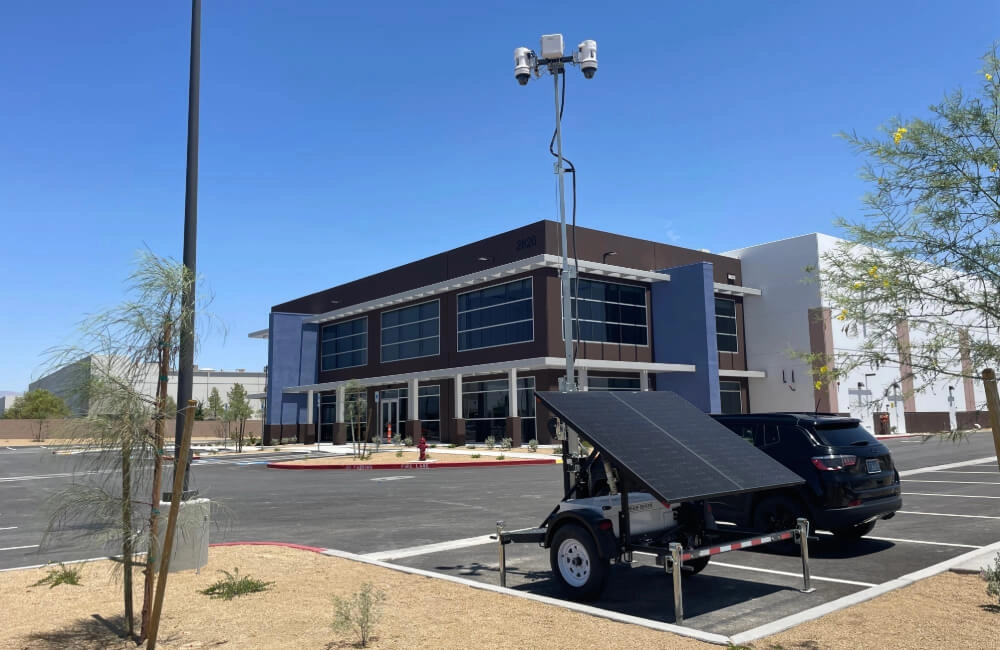
LotGuard PRO: Solar-powered Surveillance Trailer with LPR integration
- Stands up to 20-feet tall with PTZ (Pan-Tilt-Zoom) cameras that rotate nearly 360°, delivering wide-area coverage across open lots and vacant listings.
- Deploys without fixed hardware components or internet, as units are solar-powered and footage is transmitted via 4G/5G.
- Trailers feature AI-video analytics, remote monitoring, and smart detection, monitoring vehicle flow in and around listings in real-time. Remote access allows teams to review footage from afar.
- Systems can be configured to match the specific risks of your property, supporting LPR integrations and relocating quickly to wherever suspicious vehicle activity is most needed.
- Best suited for: Wide-area coverage, parking lots, retail centers, vacant listings
LotGuard MINI: Compact Pole Camera System with LPR Integration
- A compact 4-camera surveillance system that delivers powerful security coverage without the footprint of a mobile trailer.
- Installs onto existing infrastructure (e.g., poles, buildings) in minutes and can be quickly redeployed to new locations to address evolving vehicle-related security needs.
- Equipped with near-360° PTZ night vision cameras with 23X optical zoom for low-light/evening vehicle monitoring.
- Features AI detection, remote monitoring, cellular connectivity, instant alerts, and 4TB onboard storage, accessible from any device.
- Best suited for: Hard-to-reach areas (e.g., side gates, alleyways, perimeters), access control points, empty commercial listings, retail locations
Both systems are available as a fully-managed service, covering installation and live monitoring through Interactive Surveillance Operations Centers (ISOCs). They distinguish authorized vehicle movements from suspicious behavior in real-time and timestamp every incident.
When LPR Cameras are integrated with our surveillance systems, it does 3 things that standard surveillance can't:
- Identifies suspect vehicles early: Plates are logged at first approach, so repeat visits are flagged before patterns turn into problems.
- Maintains clear visibility at access points: Every vehicle's license plate is instantly captured at entry/exit points, regardless of lighting or weather conditions.
- Audit trail: License plate data, timestamps, and associated footage are logged automatically, supporting law enforcement investigations and insurance claims.
Our cloud-based monitoring platform ties this all together. Every LPR alert (plate, timestamp, footage) feeds directly into the system, where everything is organized inside one centralized dashboard. From here, real estate brokers can review current and historical footage, identify repeat vehicle patterns, and generate reports in just a click or two.
Read more: Why Property Managers are Turning to LotGuard for Security
Track Suspicious Vehicles in Real-Time
Vacant commercial listings are inherently risky, especially when there are few (if any) eyes on-site. Without vehicle tracking in place, the suspicious movement and repeat-visit patterns that often precede theft, vandalism, and squatting can go undetected until it's too late.
Using LPR at vacant property listings offers a smarter approach. By capturing license plates and providing a searchable data record of vehicle activity, LotGuard's LPR systems help brokers maintain 24/7 visibility over vacant listings while generating reliable evidence that law enforcement can act on when incidents occur.
Don't wait for suspicious vehicle activity to escalate into costly incidents. Speak with one of our security experts today, and learn how our LPR solutions can provide peace of mind throughout the vacancy period.

Contents
[hide]Related news
Frequently Asked Questions About Vacant Property Security
Find answers to common questions about vacant property security, from risks and solutions to protecting assets and reducing liability. Read more

Vacant Property Security: Guard Services vs Mobile Surveillance
Compare guard services and mobile surveillance for vacant property security and learn which option offers better protection and cost efficiency. Read more
How Graffiti Damages First Impressions in Property Leasing
Learn how graffiti affects first impressions in property leasing and why it can reduce tenant interest and conversion rates. Read more
Contact Us
Request a Quote for LotGuard
Ready to learn more about how LotGuard can protect your Parking Lots and Properties? Get in touch today for a free quote.