
Frequently Asked Questions About Vacant Property Security
Find answers to common questions about vacant property security, from risks and solutions to protecting assets and reducing liability.
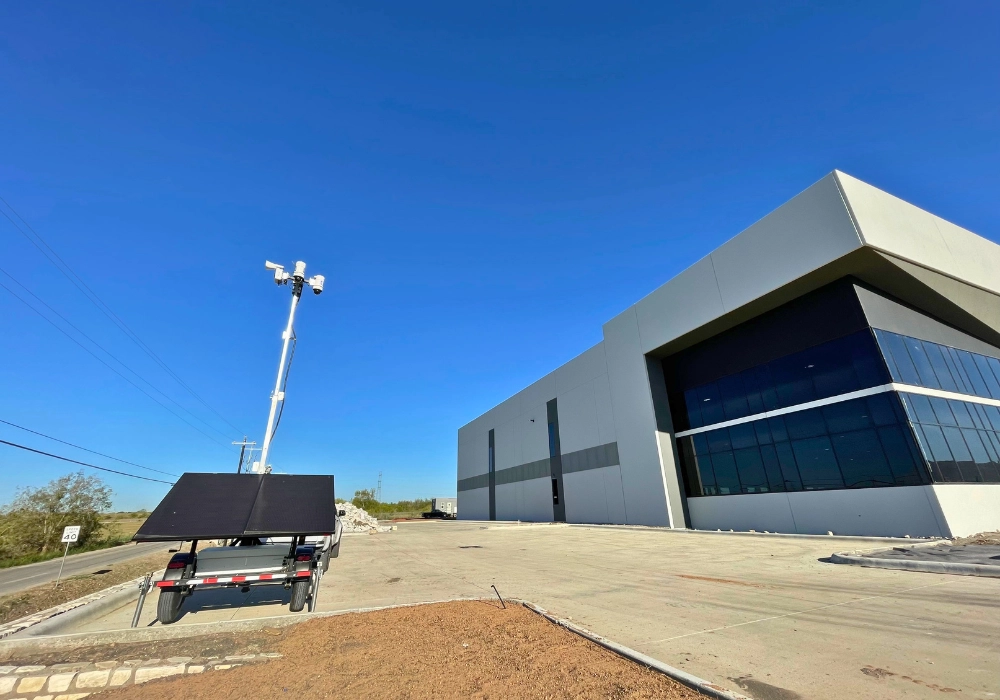
Vacant properties are 3 to 5 times more likely to be targeted by intruders than occupied buildings. Without regular foot traffic or eyes on site, they become soft targets for theft, vandalism, squatting, and other types of property crime.
Property managers and commercial property owners understand the significant risks empty buildings carry, but may misjudge how quickly those risks escalate. A property between tenants or a residential building sitting idle can attract criminal activity within days. Without proper security measures in place, small incidents can quickly turn into costly damage and even liability issues.
This article answers 10 of the most frequently asked questions about vacant property security. It covers monitoring options, insurance complications, and best practices for protecting exterior spaces like parking lots and loading areas. We'll also look at how modern surveillance solutions help property teams maintain visibility across unoccupied sites.
10 Vacant Property FAQs
Here are the 10 most common security questions for vacant industrial, commercial, office, residential, and retail properties:
Why is surveillance important for vacant properties in the US?
Vacant properties face a higher risk of crime, arson, and damage compared to occupied premises. Without people regularly on-site, there's little natural surveillance to detect and deter unauthorized activity, and criminals quickly notice these gaps.
The FBI estimates that in the United States, some form of property crime occurs every 3.9 seconds, making it one of the most common criminal offences in the country. With more than 15 million vacant buildings nationwide (including vacation homes and those between tenants), the scale of exposure is hard to ignore.
What's more, once a vacant property is hit, it's more likely to be hit again. Repeat incidents create a costly cycle for property managers and owners, driving up repair costs and insurance claims, and extending vacancy periods.
Proactive surveillance helps break that cycle by providing visibility and deterrence before losses escalate. Visible surveillance cameras and active monitoring show that a property is watched, helping to deter criminal activity before it even begins.
Read more:
What are the common threats during vacancy?
Vacant buildings are prime targets for both opportunistic and organized crime. Without consistent oversight, these empty sites have a distinct risk profile that differs from an inhabited property, giving criminals easy access without the risk of being caught.
The longer a property sits empty, the more vulnerable it is, signaling to offenders that the site is unmonitored.
Some of the most common threats include:
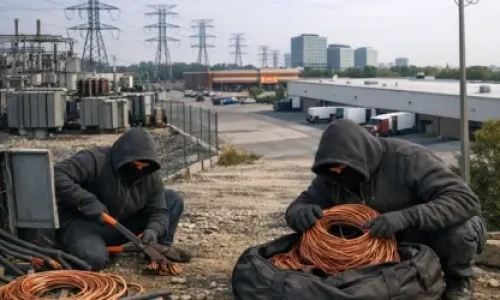
Metal theft, copper wiring, HVAC units, plumbing fixtures, and building materials are frequently stolen, especially at commercial and industrial sites. These losses are costly and often push back construction or leasing timelines.
Graffiti and deliberate property damage escalate quickly at unmonitored sites. Beyond repair costs, visible damage shows neglect, reduces property values, and can even invite further criminal activity if left unresolved.
Unauthorized entry creates safety and liability risks that are expensive and time-consuming to resolve. Squatters can cause significant interior damage, and removing them legally is rarely a quick process.
Arson
Vacant buildings are prime spots for arson and fire hazards. In fact, a 3-story apartment block in California (under construction) caught fire in what was believed to be an act of arson, resulting in $21 million in damages.
Encampments along exterior spaces, such as perimeters and parking lots, bring debris buildup, waste, and potential liability claims if someone gets hurt on site.
Liability risks
An unmonitored vacant property that someone enters and gets injured creates significant premises liability exposure for the owner.
What makes vacant properties more susceptible to criminal activity?
These factors drive higher crime rates at vacant properties in the US:
Visible signs of neglect
Graffiti, boarded windows, uncollected mail, piles of trash, overgrown lawns, and structural damage all signal to potential intruders that a property isn't being watched.
Predictable vacancy periods
Criminals notice patterns. If a site is consistently empty over weekends, after-hours, and during holiday times, there's a higher risk of break-ins and crime.
Limited natural surveillance
Unlike occupied buildings with built-in deterrence, vacant sites generally don't have any surveillance at all. Criminals exploit these gaps, knowing there is very little chance of being caught.
Easy entry points
Many vacant structures allow entry without force due to unsecured doors or windows, inviting squatters, thieves, and loiterers.
Read more:
-
Environmental Risk Factors that Increase Property Crime Exposure
-
Nighttime: The Biggest Security Threat for Property Managers
How do I legally remove squatters from a vacant house in the US?
Squatters' rights (also known as adverse possession) exist in all 50 states of the US. These laws allow someone to claim ownership of a property they occupy without permission, but only if they meet certain requirements (e.g., pay property taxes) over a set number of years.
For instance, squatters can claim legal ownership of vacant property in as little as 3 years in California, 7 years in Florida, and up to 30 years in states like Louisiana and New Jersey. In most cases, however, property owners can't remove them by force and must follow the correct legal process to avoid liability.
While the eviction process differs across the United States, it typically involves serving a formal eviction notice through the courts. In states with anti-squatter legislation (California, Florida, Texas), property managers/owners may be able to file a formal complaint and have the sheriff remove unwanted occupants within a few weeks.
Squatters can be costly, cause considerable property damage, and create serious security risks. The most effective approach to keeping them away from your vacant building? Prevention. Regular inspections and visible surveillance all reduce the likelihood of unauthorized occupancy, and are far cheaper than navigating the legal process once squatters have settled in.
Read more: How Squatting Laws Differ by State
How often should I inspect vacant properties?
Vacant property inspections should be done at least once a week. Many insurance policies require documented inspections and active surveillance for maintaining coverage when sites stand empty. Problems such as water intrusion, unauthorized entry, and fire damage can go undetected for weeks when nobody is around, significantly increasing the overall cost of repairs and claims.
That said, inspection frequency should match your site's risk profile. A vacant commercial property in a high-crime area warrants more checks than a rural site between tenants. To prove due diligence (should disputes arise), keep a paper trail of every inspection with date, condition, issues found, and actions taken.
For empty sites where routine inspections aren't practical, remote monitoring fills that gap. Real-time alerts and 24/7 recorded footage give property owners visibility between visits and documentation of site conditions at all times.
Read more: Understanding How to Manage Vacant Properties in Texas
Can I make a property damage insurance claim when a building is empty?
The short answer: it depends on your policy and how long the property has been vacant. Most standard commercial and homeowners insurance policies include a vacancy clause that limits or removes coverage once a property has been unoccupied for over 30-60 consecutive days. After that threshold, coverage for theft, fire, vandalism, and water damage is typically excluded or restricted.
Vacant home insurance policies do exist, but they generally cost a lot more than standard coverage and have stricter rules. Should you file a claim, premiums may increase by 20-50%, and some insurers may refuse coverage altogether, particularly after repeated incidents.
To reduce insurance complications and verify that reasonable precautions were taken to protect vacant property, proactive security (with live video monitoring) can strengthen your position with insurers.
How can property managers improve security at vacant sites?
Securing vacant property (including residential properties) comes down to a layered safety approach. No single measure covers everything, but combining physical security and remote monitoring closes most of the gaps:
-
Regular inspections: Weekly visits help catch small issues before they escalate into major problems. Routine upkeep (lawn cutting, hedge trimming, etc.) is also recommended.
-
Physical barriers and access control: Perimeter fencing, reinforced doors/windows, and secured entry points make it harder for unauthorized persons to gain entry to your vacant site.
-
Consider security guards: A physical presence helps detect and deter crime before it begins. However, security guards cannot monitor all areas at once, often resulting in blind spots that criminals exploit.
-
Signage: Clear "No Trespassing" or "Private Property" signs help establish legal ownership and deter suspicious activity.
-
Intrusion detection: Motion sensors, perimeter lights, and a reliable alarm system help detect unauthorized activity early and alert both property teams and surrounding communities. When criminals know they've been detected, they are more likely to leave the property before theft or damage occurs.
-
Lighting: Poor lighting is one of the most common factors that increase parking lot and exterior property crime. Bright, motion-activated lights at entry points and along perimeters help keep criminal activity to a minimum.
-
Smart surveillance: Solar-powered surveillance cameras with night vision capabilities provide continuous monitoring even during power outages and low-light conditions. When paired with remote monitoring services, trained operators verify threats and initiate various rapid responses in real-time.
Read more: A Comprehensive Property Management Risk Mitigation Framework
Which surveillance systems work best for vacant properties?
The "right" surveillance system depends on the size and layout of your vacant property. For most commercial buildings, mobile surveillance solutions outperform fixed infrastructure because they can be deployed in minutes, relocated as security needs evolve, and operate without mains power.
LotGuard's range of mobile parking lot security solutions is purpose-built for securing vacant properties.
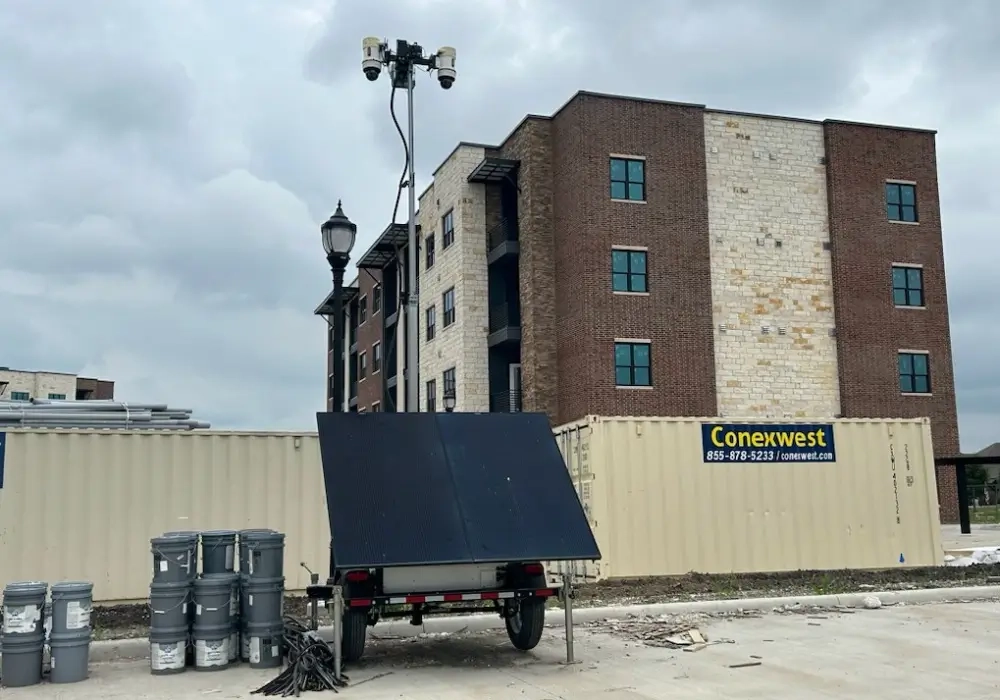
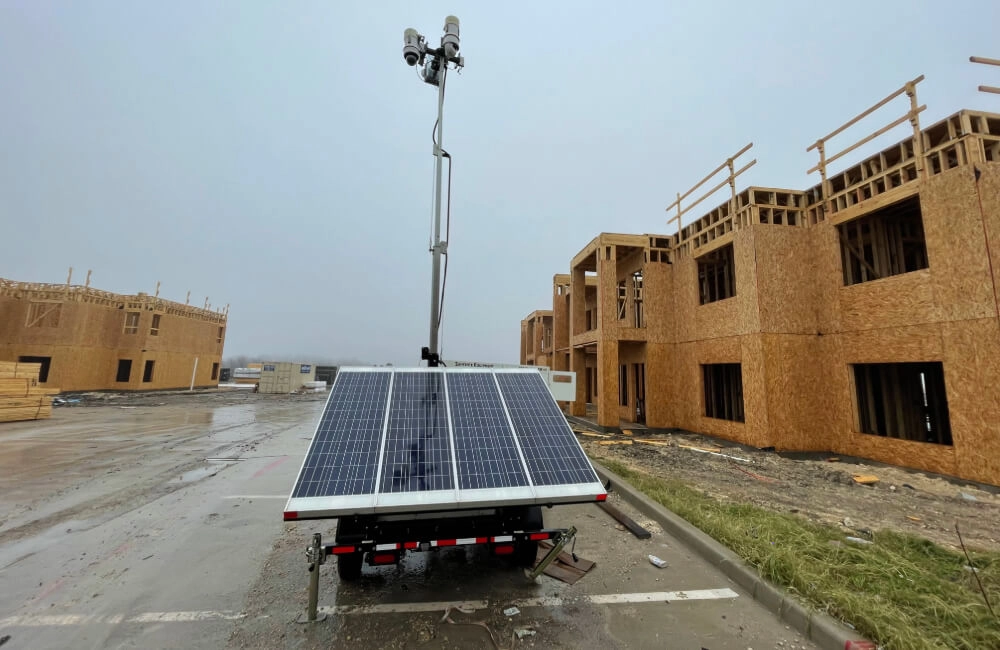
The LotGuard PRO, for instance, is a 20-foot-tall solar-powered surveillance trailer with near-360° visibility and in-built remote monitoring. It provides wide-area coverage across surface lots and expansive exterior areas. The LotGuard MINI is a compact 4-camera unit that mounts onto existing structures, making it well-suited for targeted coverage of entry points or perimeter areas.
Add-on License Plate Recognition (LPR) cameras log all vehicle movement in and around vacant properties, flag repeat vehicles, and provide timestamped records for law enforcement and insurance purposes.
Our cloud-based platform helps connect every LotGuard system into one view. It consolidates all site data (footage, LPR records, alerts) into a single interface, giving property managers real-time insights into everything that happens on-site, from afar.
Read more: Why Property Managers Shouldn't Overlook Remote Monitoring
Does mobile surveillance help reduce vacant property crime?
Mobile surveillance does help reduce crime at vacant properties. Visible security reduces opportunistic crime by changing the psychology of perceived risk for potential offenders. When a site has surveillance cameras and active monitoring, the risk of detection goes up, and most criminals move on elsewhere.
In fact, mobile surveillance units from LotGuard have shown crime reduction rates of up to 87%.
How can LotGuard's mobile surveillance support vacant building security?
LotGuard's parking lot surveillance solutions are specifically designed to address the security challenges of exterior spaces: high-risk, often remote, with no fixed infrastructure.
The LotGuard PRO surveillance trailer is solar-powered and transmits data via secure 4G/5G networks. This means there's no need to wait for power connections or internet installations; it's up and running in minutes and is perfect for isolated locations. Standing up to 20-feet tall, PTZ (Pan-Tilt-Zoom) cameras deliver near-360° visibility and use AI analytics to detect unauthorized activity automatically.
When an alarm triggers, it goes directly to LotGuard's Interactive Surveillance Operations Centers (ISOCs). Trained operators verify the alert as it unfolds and take near-immediate action, such as activating blue lights and sirens and/or contacting emergency services if needed.
The LotGuard MINI's 23X optic zoom and infrared night vision extend coverage to tighter, hard-to-reach spaces such as alleyways and stairwells. LPR systems log every vehicle (make, model, color) that approaches the site, creating a credible audit trail in case an incident does occur.
For property owners/management teams managing multiple vacant sites, our cloud-based platform consolidates everything (incident reports, historical footage, live video monitoring) across your entire portfolio. Here, you can review past and present activity data and generate reports at the click of a button, all without being physically present at your locations.
Read more: Why Property Managers are Turning to LotGuard for Security
Vacant Property Security Questions Answered with LotGuard
Vacancy is when properties are most vulnerable, and most often the least protected. Vandalism, theft, and squatting are real threats that can quickly escalate if left unaddressed.
The good news? All of this is preventable if you have an effective vacant property security strategy in place. Regular inspections, proper lighting, and active surveillance effectively close the gaps that criminals look for.
With headquarters in Texas and a nationwide deployment network across the US, LotGuard's mobile parking lot surveillance solutions give property managers the visibility and real-time alerts to protect unoccupied property without the stress.
Speak with our security specialists today about keeping your vacant properties secure.

Contents
[hide]Related news

The Hidden Cost of Vacancy in Commercial Real Estate (Beyond Lost Rent)
Explore the hidden costs of vacancy in commercial real estate, from security risks to asset deterioration and operational impact. Read more

Vacant Property Security: Guard Services vs Mobile Surveillance
Compare guard services and mobile surveillance for vacant property security and learn which option offers better protection and cost efficiency. Read more
Top 10 Commercial Property Hotspots for Copper Theft Risk
Discover the top commercial property hotspots for copper theft risk and how businesses can better protect high-value assets. Read more
Contact Us
Request a Quote for LotGuard
Ready to learn more about how LotGuard can protect your Parking Lots and Properties during the holidays? Get in touch today for a free quote.