
Short-Term Security Rentals vs Long Contracts for Real Estate
Learn how short-term and long-term security options differ for real estate and which approach best fits property risk and operational needs.
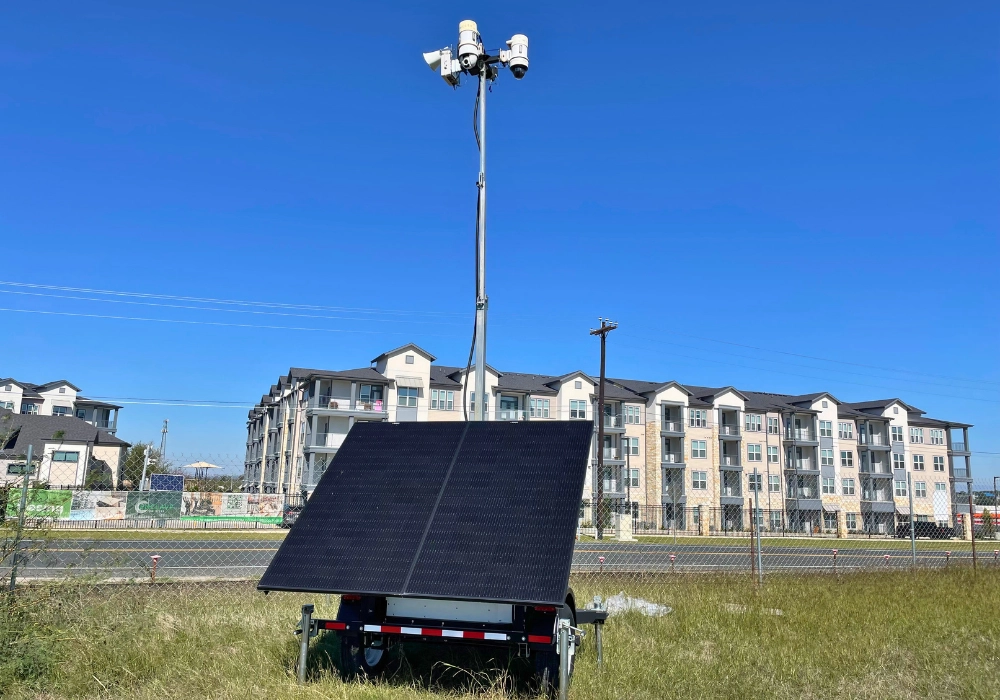
Security is non-negotiable for vacant commercial listings, but how you structure it matters just as much as having it.
Most security options on the market weren't built for a broker's reality of managing fast-moving listings. Long-term contracts lock you into fixed costs and locations, regardless of how fast a deal moves or how quickly a listing changes hands. For real estate brokers managing multiple sites at different stages of the marketing cycle, that inflexibility creates unnecessary costs that quickly eat into your bottom line.
Short-term surveillance rentals work differently as they deploy quickly and move when listings do. This flexibility helps brokers and property managers maintain control of vacant assets without overcommitting, while still delivering visible deterrence and protecting valuation during critical marketing windows.
In this article, we explore short-term security rentals vs long contracts for real estate, so you can decide which one actually fits how you work.
Why Security Matters for Commercial Real Estate (CRE) Brokers
You already know vacant properties attract crime. But the scale of it when properties are left unprotected is wider than most brokers account for. Poor security directly affects operating costs, deal velocity, liability exposure, and long-term asset value.
Here's how:
-
Costly repairs: Unsecured HVAC units, copper wiring, and plumbing fixtures are frequently stolen from vacant sites, driving unexpected repairs and extended downtime. Copper wire theft alone costs the U.S. around $1 billion per year.
-
Liability risks: Illegal dumping in urban and industrial states like California and Texas is common, creating significant cleanup costs ($500 to $5,000+ per incident) and potential environmental liability risks for property managers.
-
Lower property demand: Properties marred by vandalism and graffiti suggest disorder and criminal activity. This first impression, especially during active listings and marketing windows, impacts leasing velocity before tours even start.
-
Lower property value: Unauthorized individuals (trespassers, loiterers, homeless encampments) create immediate safety concerns for tenants and investors, increasing perceived risk. Higher risk and crime directly impact capitalization (cap) rates, market value, and the reputation of the broker tied to the asset.
-
Lengthy legal battles: Vacant and transitional properties are 3-5X more likely to experience crime and squatting than occupied premises, leading to prolonged disputes that stall transactions and expose brokers/property owners to unexpected legal costs.
-
Property damage: California and Florida have some of the highest vacancy rates in the country, at 1.2 million and 1.7 million, respectively. Reports show that 43% of fires in vacant buildings are intentionally set (i.e., arson), resulting in major structural damage or complete asset loss.
-
Unsafe external areas: Unmonitored and poorly lit areas, such as parking lots and perimeters, are more susceptible to crime (theft, takeovers, trespassing) than actively monitored sites, especially after dark. Apart from safety concerns for tenants and visitors, this can also cause serious premises liability exposure for property managers/brokers and property owners.
Read more:
When properties are most at risk
The risks mentioned above don't apply equally across all listing timelines, as certain moments carry significantly higher exposure. That said, all of the properties below have one common thread: vacancy.
An empty retail, residential, or commercial property is more likely to experience property crime than occupied buildings. With no regular oversight to detect and deter crime, these sites are soft targets for both opportunistic and organized criminal activity:
-
Vacancy periods: Including abandoned or poorly maintained buildings with little to no oversight
-
Transitional windows: Times between tenant leases when the site stands empty
-
Real-Estate Owned (REO) property: Repossessed listings after an unsuccessful foreclosure sale
The reality is, brokers know they need security coverage. The real question is which type makes sense for how you actually work: short-term rentals or long-term contracts?
Short-Term or Long-Term Real Estate Security: Which One to Choose?
The 2 main security options for commercial property are short-term rentals (flexible, deployment-based) and long-term contracts (fixed agreements of at least 12 months).
Here's how they compare across the factors that matter most for a broker managing active listings:
| Feature | Short-term rental | Long-term contract |
| Flexibility | Rapid deployment and relocation as listings move | Fixed term at one site |
| Commitment | Rental basis with open-ended commitments | Fixed contract of at least 12 months (or longer) |
| Cost | Low: Flexible rental options for as long as you need | High: Tied into contracts |
| Deployment time | Hours | Days to weeks |
| Relocatable | [[Yes]] | [[NO]] |
| Crime deterrence | Reduces up to 88% of crime | Depends on the system and camera coverage |
| Infrastructure needed | No, runs on solar power and 4G/5G connectivity | Yes, hardwired systems require cabling, mains power, and fixed internet |
| Suited to fast-moving listings | [[YES]] | [[NO]] |
Long-term contracts: Explained
Long-term security for CRE typically involves either manned guards (physical on-site personnel) or fixed surveillance system installations with an ongoing monitoring agreement. Both come with high costs and commitments.
Guard contracts are usually priced per hour (ranging from $30 to $70+), and costs add up quickly across a vacant site when no active revenue is coming in. Apart from hourly rates, costs climb even further when you factor in agency fees and training, and take lengthy contracts into account.
What's more, coverage is limited to patrol routes and shifts, and deterrence only works when guards are "in the right place, at the right time". For a property sitting empty for weeks (or months), that's a big gamble with no clear ROI tied to the listing outcome.
Fixed security systems are hardwired and typically require mains power and permanent infrastructure to operate. While they may be cheaper than 24/7 on-site security, it means installing a system into a property that may be sold or leased before the contract ends. This overcommitment may also come with early termination clauses, turning a "cost-effective" solution into a headache (and budget drain) when a deal closes.
In practice, long-term contracts were never designed for the reality of fast-moving commercial property listings. They're better suited to long-term rental properties where tenants stay for an extended period.
Read more: Vacant Property Security: Guard Services vs Mobile Surveillance
Short-term security rentals: Explained
Short-term security rentals, like LotGuard's mobile surveillance, are specifically designed for fast-moving listings. When brokers oversee multiple vacant premises, they need rapid deployment solutions that provide coverage where it's needed now (and can be relocated just as quickly), at a price that's realistic to manage.
Unlike fixed, long-term contracts, our security solutions are offered on a flexible rental basis for exactly as long as coverage is needed, without long-term leases and unexpected contractual obligations. This means a single, cost-effective monthly rent payment, with professional, remote monitored surveillance that can be relocated from one listing to the next as properties are sold or leased.
Mobile surveillance units run entirely on solar power and 4G/5G connectivity, so they can be installed quickly without reliance on mains power. This makes them well-suited for vacant, partially constructed, or even remote sites. In practice, short-term security rentals align security spend directly with listing timelines, reducing risk exposure without overcommitting capital.
Read more: How Much Does Vacant Property Security Cost?
Why Brokers Choose LotGuard for Short-Term Security Rentals
Real estate brokers choose our fully-managed mobile parking lot surveillance systems because they're built around the realities of commercial listings, without creating unnecessary cost and inflexibility as seen with long-term rentals.
|
Surveillance type |
Features |
|
Mobile Surveillance Trailer: LotGuard PRO Ideal for:
|
|
|
PTZ Pole Camera: LotGuard MINI Ideal for:
|
|
|
MULTI Sensor Pole Camera: LotGuard MULTI Ideal for:
|
|
|
License Plate Recognition Camera: LotGuard LPR Ideal for:
|
|
With the support of our centralized, cloud-based security management platform, all of our products can connect. It consolidates all surveillance footage, AI alerts, and vehicle data in one place, making it easier for brokers to see everything that happens at all active listings. Real-time remote access means you can retrieve incident data and generate reports from any device, wherever you are, in just a few clicks.
Read more: Why Property Managers Shouldn't Overlook Remote Monitoring
Why our short-term rentals work
-
Rapid deployment: Systems are operational within hours, not days.
-
Fully-managed service: Everything handled from installation to decommissioning.
-
No fixed long-term commitment: Cost-effective rentals provide coverage for as long as you need.
-
Trusted network: Thousands of active units deployed across the United States.
-
US-based: Headquarters in Texas with multiple hubs and support teams nationwide.
Read more: Why Property Managers are Turning to LotGuard for Security
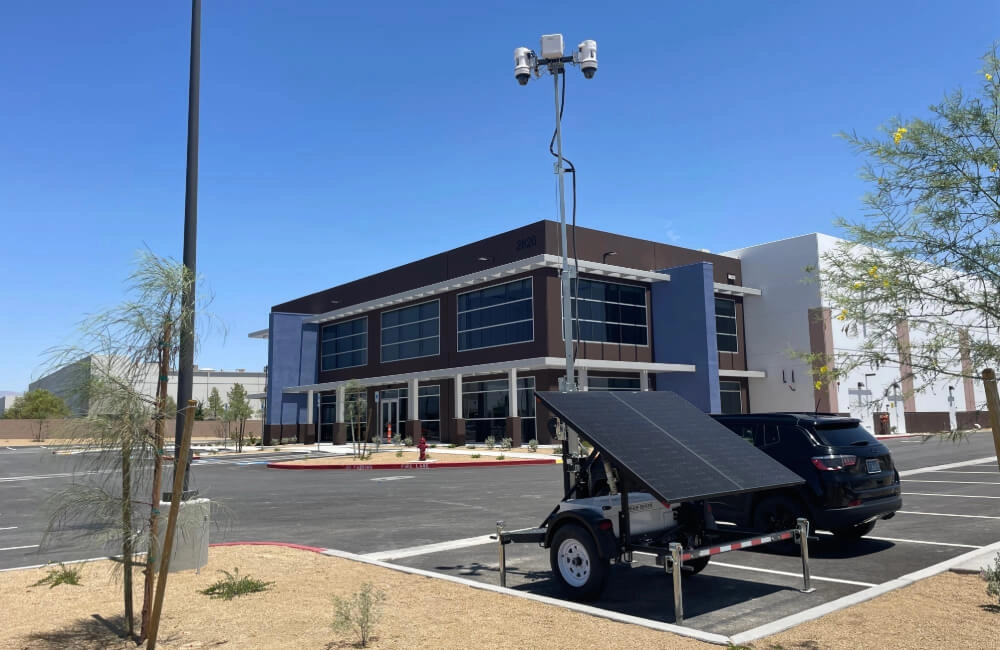
Short-Term Security Rentals Done Right
A vacant commercial listing without security is a problem waiting to happen. The longer a site stands empty and unprotected, the more susceptible it becomes to theft, vandalism, and unauthorized access.
A single copper theft or unauthorized entry during marketing windows can stall a transaction, damage owner trust, and set valuation back in ways that are hard to recover from.
Long-term security contracts don't solve that problem. They add unnecessary costs and commitment to an already unpredictable listing timeline. Short-term mobile surveillance rentals do so because they're designed specifically for commercial listings that move fast.
With over 3,000 deployments nationwide and a fully-managed service, LotGuard's mobile parking lot surveillance solutions offer a smarter approach to short-term security for vacant commercial properties. With systems that are "Always Awake and Always on Guard", our security solutions keep pace with the realities of fast-moving brokerage, protecting assets without slowing deals down.

Contents
[hide]Related news

The State of Property Crime in the US (And How to Protect Yours)
Explore the current state of property crime in the US and learn how smarter security solutions can help protect your property. Read more
How Crime Impacts Cap Rates and Valuation for Commercial Property
High crime rates can quietly erode millions in property value. Learn how crime impacts cap rates and what it means for CRE investors. Read more
The Role of Parking Lots in Overall Property Management Strategy
Learn how parking lots play a key role in property management strategy, impacting safety, tenant experience, and asset value. Read more
FAQs
Is short-term or long-term security better for US commercial real estate?
It depends on the asset's occupancy status. Long-term contracts work for stable, occupied properties where security needs are consistent. For vacant or transitional listings with unpredictable timelines, short-term rental-based solutions are more cost-effective and flexible.
What are the biggest security risks for vacant commercial properties?
Copper and metal theft, vandalism, illegal dumping, trespassing, and squatting are the most common threats that vacant commercial properties face.
Can short-term surveillance rentals be moved between listings as deals close?
LotGuard's short-term mobile surveillance systems deploy and relocate quickly as property and security conditions shift. It's this flexibility that allows them to be moved between listings as deals close.
Contact Us
Request a Quote for LotGuard
Ready to learn more about how LotGuard can protect your Parking Lots and Properties? Get in touch today for a free quote.