
How Crime Affects Internal Rate of Return on Value-Add Property Deals
Learn how crime can reduce the internal rate of return (IRR) on value-add property investments through increased costs, delays, and leasing challenges.
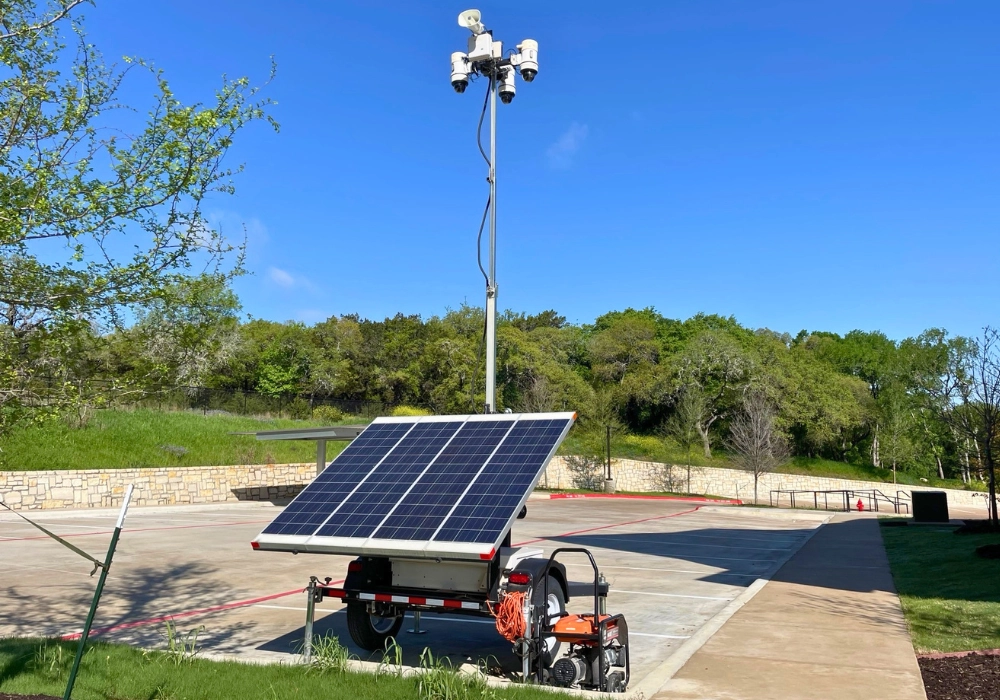
Vacant and transitional commercial properties are usually more vulnerable to unauthorized access and related property crime than occupied buildings. These incidents can increase security and maintenance costs, delay leasing, reduce occupancy, and slow property stabilization, placing pressure on net operating income (NOI) and property value.
Because NOI drives operating cash flow and is used alongside capitalization (cap) rates to determine market value, crime can also reduce the internal rate of return (IRR). Delayed cash flow, extended hold periods, and lower sale values all contribute to weaker investment returns.
For commercial real estate (CRE) investment managers, the link between property crime and investment performance is often missed. When crime affects value-add investments, it can cause significant financial and operational issues, including unexpected costs and longer lease-up periods.
Fortunately, proactive risk management during transitional ownership helps prevent these issues. This guide explains everything you need to know about how crime affects the internal rate of return on value-add properties and what managers can do to protect performance from acquisition through stabilization.
Why Value-Add Assets Are More Exposed to Crime
Value-add real estate typically has higher-than-normal vacancy rates during acquisition and lease-up. During this transitional period, renovations and upgrades are made to increase the property's market value and rental income.
However, some of the very conditions that create value also increase crime exposure:
Low occupancy rate and foot traffic
With fewer tenants and visitors on-site, there are fewer eyes to notice suspicious activity on the property. When premises are vacant for prolonged periods, nobody is around to spot if something looks off, including signs of unauthorized access or unfamiliar vehicles.
This lack of natural surveillance makes it easier for theft, vandalism, and trespassing to go unnoticed compared to stabilized, fully leased properties with regular foot traffic.
Temporary site conditions
During construction or repositioning, perimeter fencing and access controls are often temporary, creating gaps that criminals can exploit. Renovation work may also leave buildings partially open, while unsecured parking lots and vacant outdoor areas can become attractive targets for illegal dumping, loiterers, squatters, and thieves.
Visible assets
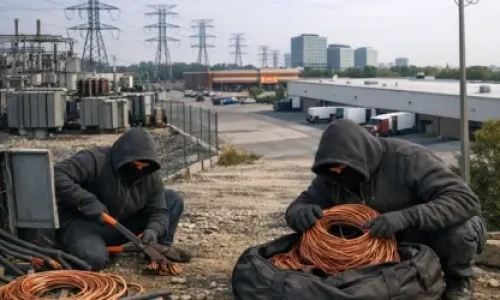
Construction materials, tools, lumber, copper, HVAC units, and generators are often stored on-site during renovations with little (if any) security. With these items easy to spot from the street and combined with their high resale value on illicit markets, they are attractive targets for theft.
Predictable downtime
Construction jobsites typically operate on fixed schedules, leaving materials and partially secured buildings unattended overnight, between shifts, and on weekends. These predictable timeframes give offenders opportunities to access the property, as there is a lower risk of being detected.
Read more:
How Property Crime Disrupts the Stabilization Timeline for Value-Add Real Estate Investments
The sooner a value-add real estate investment reaches stabilization, the sooner it begins generating predictable cash flow and delivering the returns investors expect. Property crime can interfere with almost every stage of that process, increasing costs, delaying renovations, and pushing back the point at which the asset reaches stable performance.
What is the stabilization timeline?
The stabilization timeline is the period between acquiring a value-add property and the point at which it reaches sustainable cash flow and operating performance. It applies across commercial assets, retail, office, industrial, and multifamily alike, though the specific steps vary.
For most value-add properties, that timeline covers 4 phases:
- Post-acquisition transition: Property takeover, vacancy, site prep, and initial security setup.
- Repositioning/capital improvement phase: Construction, renovations, contractor mobilization, and equipment and material staging.
- Lease-up period: Marketing the site, conducting showings, and signing new tenants.
- Operational normalization: Achieving predictable NOI, occupancy, and reduced expense variance.
Once a property clears all 4 phases, it's considered stabilized.
Read more:
- How to Protect a Listing During Extended Marketing Periods
- Protecting Vacant Units and Fixtures During the Lease-Up Phase
How does crime disrupt stabilization?
Each threat type interrupts commercial stabilization differently:
|
Threat |
How it causes disruption |
|
Equipment and copper theft |
Delays contractor mobilization; increases unbudgeted expenses; extends marketing and lease-up |
|
Increases repair costs; pushes back tour-readiness |
|
|
Trespassing |
Creates insurance and legal liability; invites criminal activity; delays deal momentum |
|
Adds unexpected clean-up costs and liability exposure; degrades property value |
|
|
Arson |
Threatens entire deals; disputes arise from a lack of credible evidence |
Read more:
The Connection Between IRR and Crime for Commercial Property Investors
We've briefly covered how crime affects net operating income (NOI). Because NOI and capitalization (cap) rates determine a property's market value, any reduction in income or increase in perceived risk can also reduce the investment's internal rate of return.
Let's explore that in more detail:
Crime first hits NOI through unbudgeted repairs, cleanup, replacements, insurance increases, and security costs. If an incident impacts tenant operations or slows lease-up, revenue drops as expenses rise, compressing NOI from both sides.
Capitalization rates are the market's income-based valuation benchmark. Using the basic formula, valuation = NOI ÷ cap rate, even a small increase in cap rate, combined with a decline in NOI, can reduce asset value. In value-add properties, higher crime risk can lead to slower stabilization, higher operating expenses (OPEX), and, if investors perceive greater risk, a higher exit cap rate.
Now, to tie this all together, the internal rate of return (IRR) for real estate investments measures the annualized return an investment is expected to generate, based on all cash inflows (money received) and outflows (money spent) over the hold period. That means it captures the cumulative financial impact of crime throughout the investment lifecycle, including:
- Higher OPEX from added security, repairs, and rising insurance premiums
- Delays to renovation or capital improvement (CAPEX) projects caused by theft, vandalism, or construction disruption
- Slower lease-up, reduced occupancy, and delayed rental income
- Lower exit value, driven by the NOI-cap rate effect above
In a nutshell, this shows the connection between the value-add property internal rate of return (IRR) and crime. For investment managers, the key point is that crime-related incidents aren't just “security events.” They're underwriting events that can reduce operating income, extend vacancy, increase holding and financing costs, and make both projected returns and exit value less predictable.
Understanding the financial impact is only half of the equation for real estate investors and managers. The next step is putting measures in place to prevent crime before it affects your assets' performance and returns.
Read more:
Passive Security vs Monitored Mobile Surveillance
Not all security measures are equally effective for value-add real estate. While traditional measures such as security guards and basic camera systems have their place, they often struggle to keep pace with properties that constantly change throughout the acquisition-to-lease-up period.
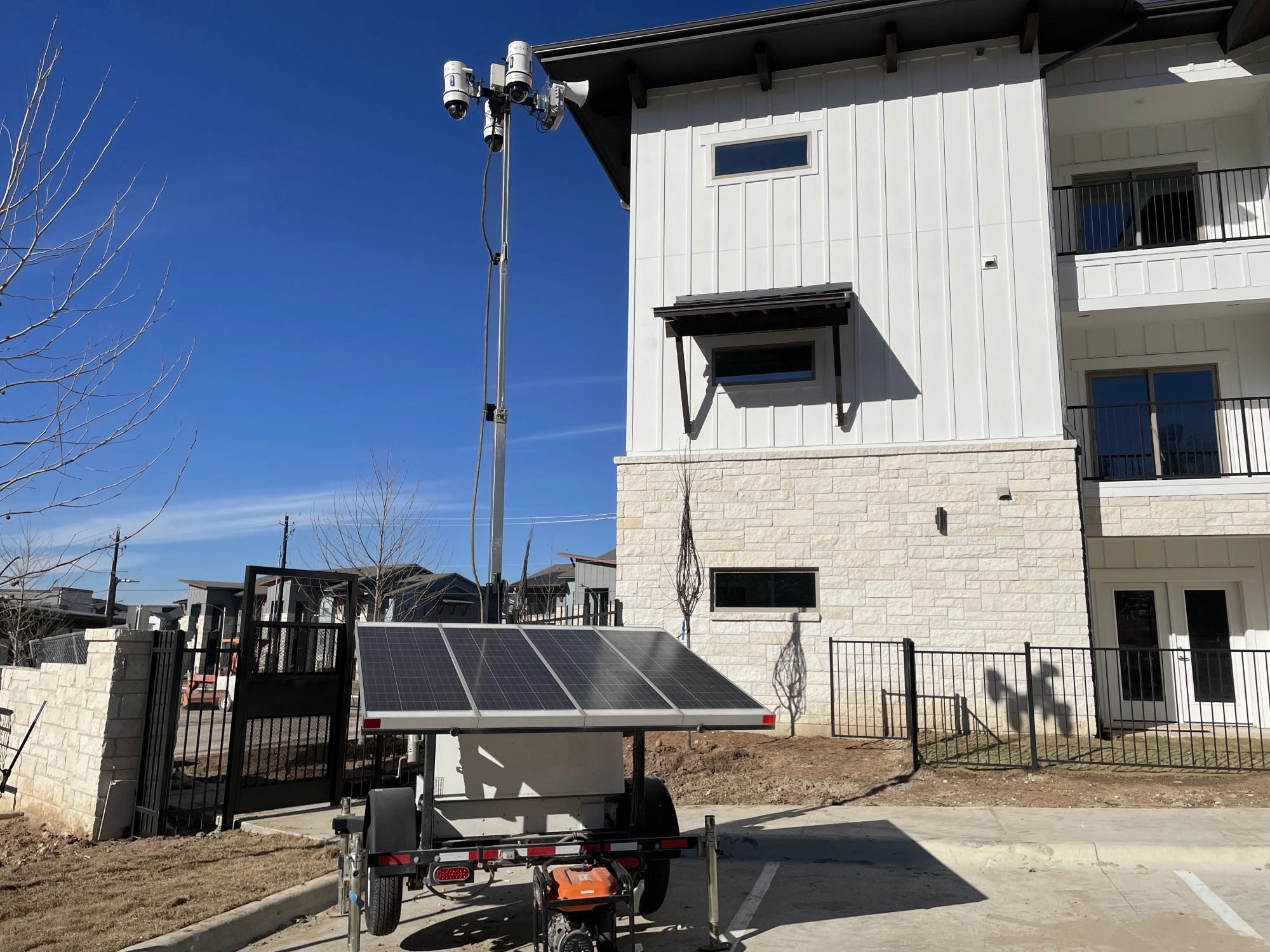
That's where monitored mobile surveillance adds exceptional value. Helping to address the changing risk profiles that static systems often miss, modern solutions combine live monitoring, rapid response, and flexible relocation that keep investment strategies moving forward.
Here's how the 2 measure up:
|
Feature |
Passive security |
Mobile surveillance |
|
Deterrence |
Yes |
Yes |
|
Wide-angle visibility |
Limited to fixed guard routes or camera placements |
Yes, 24/7 live remote monitoring via near-360° cameras |
|
Incident response |
After the fact |
Real-time |
|
Pattern detection (e.g., repeat vehicles) |
No, fragmented reports and manual review |
Yes, AI-video analytics and add-on LPR cameras automatically flag repeat behavior |
|
Power/connectivity |
Mains power and WiFi |
Autonomous, solar power with 4G/5G |
|
Scalability |
Expensive |
Cost-effective rentals |
|
Relocatable as risks evolve |
No |
Yes |
|
Portfolio-wide reporting |
Siloed to each site |
Cloud consolidation across multiple listings |
Proactive risk management through mobile surveillance during transitional ownership and vacancy helps protect IRR and underwriting assumptions and supports investor confidence throughout the hold period
What Proactive Risk Management Looks Like for Commercial Value-Add Properties
For value-add properties, proactive risk management means identifying problems long before they impact IRR. This includes:
- Performing regular property inspections to assess the site's condition and check for signs of unauthorized access, weather damage, or other kinds of suspicious activity before it's too late.
- Investing in mobile surveillance immediately after closing a deal. Deterring crime before it escalates, rapid deployment systems with near-360° cameras, 24/7 remote monitoring, and AI detection analytics (like the LotGuard PRO) can be operational within hours of acquisition.
- Ongoing property maintenance, including exterior areas such as parking spaces, to ensure the site looks actively managed and well cared for. Structural degradation and the appearance of neglect quickly invite unwanted attention.
- Monitor access points to see who is entering/exiting value-add premises in real-time. Add-on License Plate Recognition (LPR) technology monitors and flags suspect activity while creating a timestamped audit trail for later review, insurance claims, and police investigations.
- Centralized oversight and reporting through a cloud-based monitoring platform. Having all site footage, AI detection alerts, and additional vehicle data in one place replaces siloed visibility with one secure dashboard. This allows you to stay in control and generate reports in just a few clicks.
Read more:
Protect Value-Add Property IRR the Smart Way
Crime threatens the financial performance of vacant real estate. Every theft or delay to lease-up has the potential to reduce NOI, increase costs, and put the internal rate of return under pressure.
For commercial investment managers, protecting value-add real estate means treating security as part of the investment strategy from day one. By combining proactive risk management with monitored mobile surveillance, it's possible to reduce crime and protect IRR throughout the acquisition-to-lease-up period.
For security that scales with your investment strategy, LotGuard's mobile parking lot solutions are "Always Awake and Always on Guard", delivering 24/7 protection when your assets are most vulnerable. Protect your property's IRR the smart way; the LotGuard way.

Contents
[hide]Related news
7 Proven Ways to Reduce Squatting Risk While Marketing Vacant Properties
Discover 7 proven ways to reduce squatting risk while marketing vacant properties and protect assets during vacancy periods. Read more
How Crime Impacts Cap Rates and Valuation for Commercial Property
High crime rates can quietly erode millions in property value. Learn how crime impacts cap rates and what it means for CRE investors. Read more
Top 10 Commercial Property Hotspots for Copper Theft Risk
Discover the top commercial property hotspots for copper theft risk and how businesses can better protect high-value assets. Read more
FAQs
What type of crime do value-add properties face in the United States?do value-add properties face in the United States?
In the U.S., value-add real properties are more vulnerable to copper theft, unauthorized access, trespassing, loitering, arson, and illegal dumping than occupied premises. During the acquisition-to-lease-up phase, there are fewer people on-site, ongoing construction, and periods of vacancy that make it easier for criminal activity to go unnoticed.
How does crime impact a value-add property's IRR?How does crime impact a value-add property's IRR?
Crime can reduce a value-add property's IRR by increasing operating expenses (OPEX), lowering net operating income (NOI), delaying lease-up, and extending the time it takes for the property to generate stable cash flow.
What internal rate of return (IRR) do investors expect for value-add projects?do investors expect for value-add projects?
Investors expect roughly 16-20% IRR for value-add projects, though some deals underwrite higher depending on risk, leverage, and hold periods.
Contact Us
Request a Quote for LotGuard
Ready to learn more about how LotGuard can protect your Parking Lots and Properties? Get in touch today for a free quote.