
How to Protect a Listing from Crime During Extended Marketing Periods
Learn how to protect property listings from theft, vandalism, and trespassing during extended marketing periods with proactive security measures.
Many real estate brokers already know that not every listing closes quickly. Commercial properties, in particular, can sit on the market for months, and given that the national office vacancy rate hit a record 20.4% in Q1 2025, extended marketing periods have become the norm rather than the exception.
Reality is, the longer a property stays vacant, the more exposed it becomes. More showings mean more strangers through the door, and "For Sale" signs publicly advertise that the building is empty. Maintenance can slip, site visits become less frequent, and small gaps in oversight start to appear. Together, these conditions create the ideal conditions for theft, vandalism, squatting, and other forms of property crime.
If left unmanaged during extended marketing periods, security risks start to compound, directly affecting the property's value and leasing appeal at the moment it matters most.
This article covers practical real estate listing security tips and professional solutions to protect properties throughout longer sales cycles. If you're a broker, agent, manager, or property owner evaluating ways to help you decide what's right for your listing, this is a good place to start.
Why Extended Marketing Periods Increase Crime Risk at Vacant Properties
The longer a property remains on the market, the more unwanted attention it attracts. Several risk factors often build up at once, such as:
-
More foot traffic: Open houses, private showings, contractor visits, and agent walkthroughs bring a steady stream of unfamiliar guests to both residential and commercial listings. Each additional visit increases the chance of theft, scoping, or unauthorized access.
-
Signs in the yard: "For Sale", "To Let", or "Open House" signage publicly markets the property, signaling its either unoccupied or unsupervised for extended periods.
-
Vacant or semi-vacant sites are easier targets: Residential and commercial sites without regular oversight or on-site activity are viewed as low risk to criminals, particularly after hours.
-
Reduced supervision over time: As deal momentum slows, the frequency of site visits naturally tapers off. That reduced oversight creates windows that opportunistic criminals and organized crime groups (OCGs)
-
Large commercial layouts: Empty offices and retail centers with large parking lots and multiple access points make it easier for unwanted visitors to move around quickly and remain undetected.
As a result, vacant buildings are more likely to experience theft, vandalism, loitering, homeless encampments, and squatters than occupied premises, especially at night. Nighttime hours are often when crimes like vehicle theft, vandalism, illegal dumping, and trespassing are more common, and, for any unmonitored listing, this level of exposure is hard to ignore.
Read more:
-
7 Proven Ways to Reduce Squatting Risk While Marketing Vacant Properties
-
The State of Property Crime in the US (And How to Protect Yours)
Why Traditional Security Measures Fall Short for Commercial Properties
Basic security measures often struggle to keep up during extended marketing periods.
Security guards, for instance, provide a visible human presence, but that presence is limited to wherever they're standing at any given time. On large commercial listings with multiple access points and parking areas, a single guard can't monitor all areas simultaneously, meaning blind spots are inevitable.
Scaling security personnel across multi-site portfolios or maintaining them over months-long marketing campaigns also quickly becomes a major financial outlay. At $30-$70+ per guard per hour, 24/7 coverage simply isn't practical or realistic for most properties.
Fixed security cameras help address some coverage gaps but also come with their own limitations. Most are "record-only" systems, meaning they capture what happened but don't deter it or generate a real-time response. Without live remote monitoring, footage is only useful after an incident has already occurred, by which time the damage is done.
What's more, fixed surveillance units require mains power, cabling, and WiFi, which isn't always available at a recently vacated commercial or Real Estate Owned (REO) site, making installation unviable.
In practice, this leaves many commercial listings under-protected, relying on reactive tools that document incidents rather than preventing them. For listings being shown to potential buyers, a different approach to security is often required.
Read more:
- Vacant Property Security: Guard Services vs Mobile Surveillance
- Comparing LotGuard to Alternative Surveillance Options for Vacant Listings
5 Ways to Protect Listings From Crime During Marketing Periods
When it comes to property crime prevention during marketing periods, there's no single solution that works for every listing. A layered approach works best as the right combination creates enough deterrence and documentation to protect a listing throughout longer marketing cycles.
1. Secure entry points
Start with a full site walkaround to identify weak points such as blind spots, unsecured entrances, and/or perimeter vulnerabilities. Side gates and boundary lines are commonly exploited entry routes at vacant commercial listings.
Start by prioritizing the highest-risk zones first with steel doors, burglar bars, heavy-duty locks, and boarding up any unsecured windows or openings. Apart from keeping the premises secure, these measures strengthen perceived safety, one of the biggest factors in how potential tenants, sellers, buyers, and investors assess a commercial property during showings.
Visible signage is also equally important. Signs such as "Property monitored by surveillance" or "Trespassers will be prosecuted" are low-cost deterrents that show active oversight. This visual reinforcement alone can help discourage crime before it even begins.
2. Upgrade lighting
Poor exterior lighting invites after-hours criminal activity at vacant listings. Motion-activated lights around entrances and parking lots reduce the cover of darkness that unauthorized individuals rely on.
For sites where utilities may be partially or fully disconnected, solar-powered options are practical alternatives as they don't require an active power source. Even basic lighting upgrades (and replacing burnt-out bulbs) can significantly change how a property reads to anyone assessing it as a potential target.
3. Keep properties maintained
A neglected building sends criminals a message that the site is unmonitored and uncared for. Environmental risk factors such as overgrown yards, piles of trash, graffiti, uncollected mail, and structural degradation all point to the same thing: low oversight and low risk.
Simply put, regular maintenance throughout the marketing ensures the property's first impression is a good one. Property maintenance includes mowing the lawn, promptly removing graffiti, replacing burnt-out light bulbs, and keeping the property looking reasonably tidy throughout vacancy periods.
4. Invest in exterior security
Smart parking lot surveillance systems with active monitoring are the most effective crime prevention measure you can take to protect a listing during extended marketing periods.
Near-360° PTZ (Pan-Tilt-Zoom) cameras rotate in all directions to monitor exterior areas from multiple viewpoints at once. AI-video analytics detect suspicious activity while filtering false alarms caused by weather or debris with near-pinpoint accuracy, and live remote monitoring sends genuine threats to Interactive Surveillance Operations Centers (ISOCs) where trained operators confirm them in real-time.
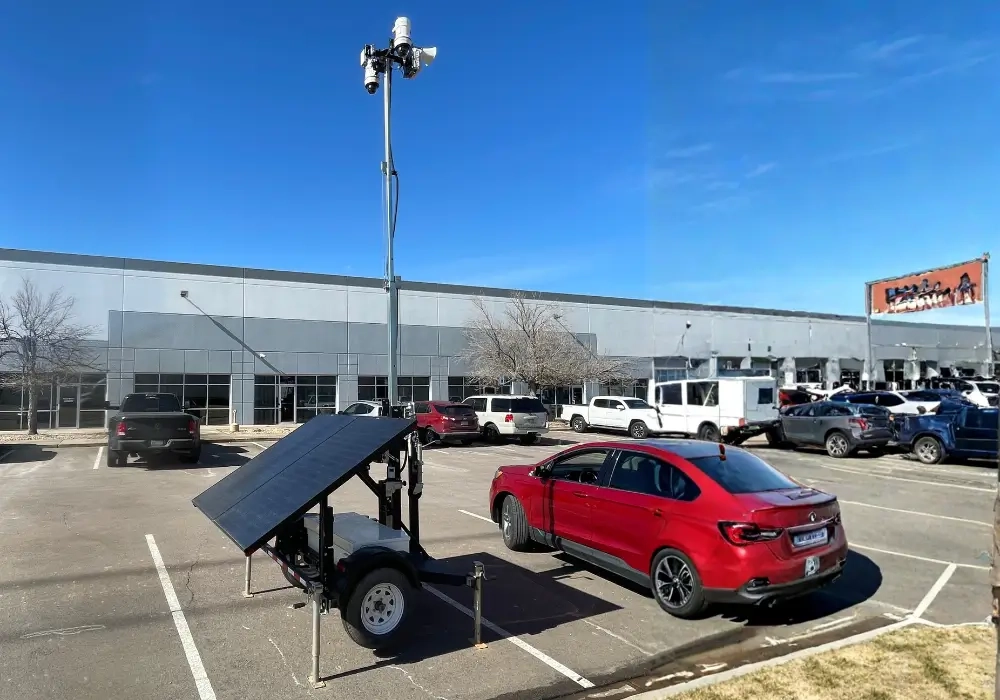
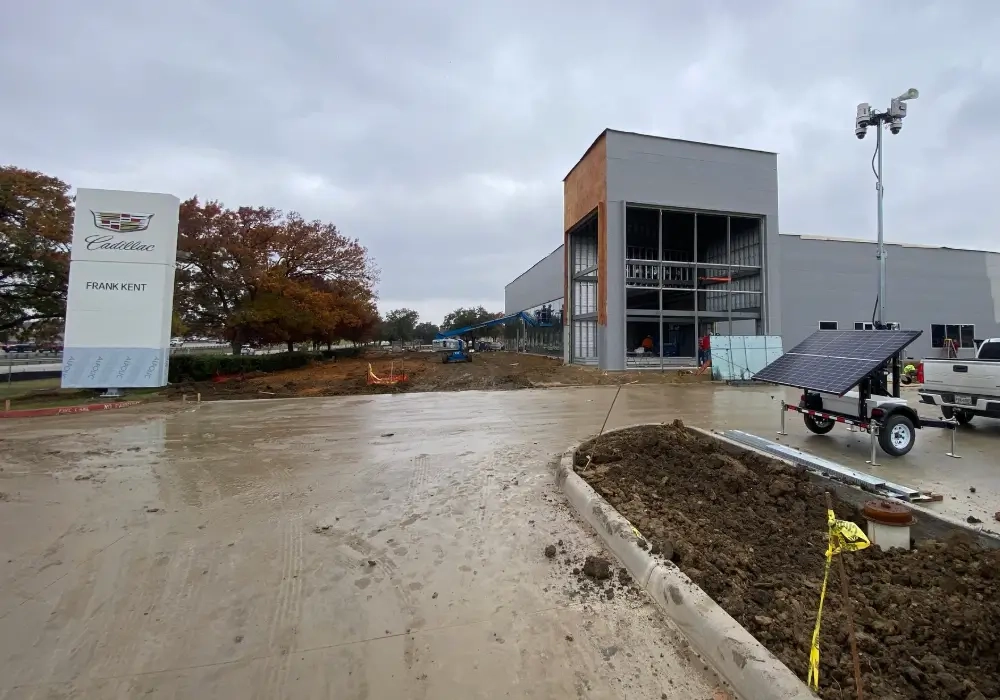
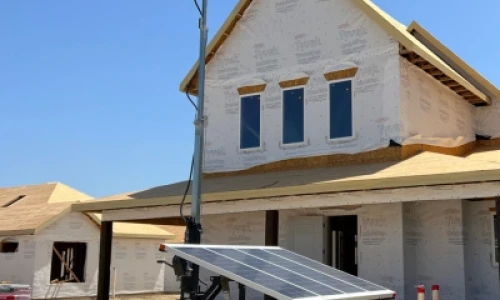
Systems, like the LotGuard PRO, a solar-powered mobile surveillance trailer, are commonly deployed at vacant sites. Standing up to 20-feet tall and installed in under 20-minutes (basic setups) without fixed infrastructure, it provides wide-area visibility across parking lots and perimeters from the moment it arrives.
5. Consider smart access controls
Smart access control systems such as biometric keypads, time-sensitive electric gates, and License Plate Recognition (LPR) cameras all help prevent unauthorized entry.
Add-on LPR systems, in particular, provide vehicle monitoring and tracking at entry/exit points, automatically logging plate, make, and model for every car that approaches the property. Repeat visits are flagged, giving early warning of suspicious behavior before an incident occurs.
At the same time, the system creates a timestamped record that supports law enforcement investigations and insurance claims if something does happen.
Read more:
10 Step Checklist for Protecting On-The-Market Listings
To protect a listing from crime during extended marketing periods, use this 10-step checklist as a guide:
-
Reinforce doors and windows: Replace or upgrade any damaged entry points before the listing goes live (e.g., broken locks, unsecured windows).
-
Install smart locks: Use high-security electronic locks with access logs rather than standard lockboxes, which can be compromised more easily and leave no record of who entered.
-
Add visible cameras and motion sensors: Exterior surveillance cameras and motion-activated lighting around key areas create visible deterrence and cover the perimeter after dark.
-
Set up an alarm system with signage: An active alarm with clear, visible signage signals the property is monitored.
-
Use mobile surveillance: For listings without regular on-site activity, deploy a mobile surveillance system with remote monitoring so activity can be reviewed from afar.
-
Pre-qualify buyers and require agent accompaniment: Limit access to verified, accompanied visitors only. Unsupervised open house traffic significantly increases theft risk during the leasing/selling process.
-
Limit viewing frequency: Fewer, more controlled showings reduce exposure compared to high-traffic tours, where monitoring every visitor is impractical.
-
Remove or lock up valuables: During marketing periods, remove any high-value items from the premises and disconnect utilities where appropriate. Removing the temptation for opportunistic theft is a simple but effective first line of defense.
-
Keep up with maintenance: Maintained external areas show active oversight, and are consistently among the most cost-effective crime deterrents available.
-
Review insurance and compliance requirements: Confirm with insurers that your policy covers vacancy periods and understand what security measures/documentation may be needed to maintain coverage and support claims.
Read more:
Security Solutions and Services to Consider During Extended Marketing Periods
Let's take a closer look at the most common security solutions used during marketing periods for vacant properties, outlining where each option works well and where it falls short.
Use the comparison below to quickly assess which approach aligns with your risk level and operational needs:
|
Security solution |
Best suited for |
|
DIY solutions (smart locks, basic alarms, motion sensors, lighting) |
Early-stage listings with very short vacancy periods and low risk. These tools offer basic deterrence but lack active monitoring, making them unsuitable once marketing (and vacancy) periods extend. |
|
Security guards |
Properties requiring a physical human presence, such as insurance-mandated coverage. While guards have their place, they're expensive to scale and introduce blind spots across larger or multi-site properties. |
|
Fixed surveillance systems |
Single-target areas where existing infrastructure exists. These systems provide recorded footage but offer no real-time deterrence value, reducing their effectiveness during extended marketing timeframes when sites stand empty. |
|
Mobile surveillance |
Fast-moving commercial listings and multi-site portfolios. Mobile parking lot surveillance solutions from LotGuard deliver rapid deployment, 24/7 active monitoring, and auditable records from the day of acquisition, through marketing, and final handover. |
Read more:
How LotGuard Helps Protect Vacant Listings
LotGuard's mobile parking lot surveillance solutions are designed to protect vacant properties during extended marketing periods. In fact, it's been noted that sites monitored by LotGuard surveillance report up to 87% reduction in crime.
Here's how:
-
AI detection and 24/7 remote monitoring: Our systems continuously watch for suspicious behavior and flag it as it unfolds. AI filtering helps reduce false alarms, with ISOC operators verifying genuine threats in real-time.
-
Rapid deployment: Basic setups are operational in under 20-minutes, with no mains power or internet required. Units can be relocated easily as listings close and new ones open, making our solutions a practical option across multiple listings.
-
ISOC-verified: When suspect activity is detected, trained operators at ISOCs verify the threat and initiate rapid responses such as live audio voice-down challenges or deal directly with law enforcement if needed.
-
Cloud-based audit trail: All alerts, footage, and additional vehicle data feed into a centralized cloud-based platform (add-on), accessible from any device. Reports can be exported in just a few clicks for owner reports or insurance claims.
Read more:
Protect Your Listing While It's On The Market
Longer marketing periods are a reality in today's commercial property market, but increased risk doesn't have to be.
Putting the right security measures in place from day one helps keep listings secure throughout extended sales cycles. With practical safeguards and active surveillance working together, properties stay in good condition, maintain curb appeal, and protect broker credibility, no matter how long it takes to close the deal.
Don't delay crime prevention when listings are on the market. Speak with a LotGuard security specialist today to protect your listing from the start.

Contents
[hide]Related news
A Comprehensive Property Management Risk Mitigation Framework
Build a 4-step risk mitigation framework for property management, covering physical security, liability, and exterior monitoring. Read more
Best Practices for Securing Short-Term Listings
Discover how property managers can improve short-term listing security with better monitoring, visibility, and proactive protection. Read more
Comparing LotGuard to Alternative Surveillance Options for Vacant Listings
Compare LotGuard with alternative surveillance options for vacant listings and discover which solution offers the best protection and visibility. Read more
FAQs
What crimes are most common at real estate listings?
Theft of [fixtures] and building materials (copper wiring, HVAC units, appliances), vandalism and graffiti, trespassing, and squatting are the most frequently reported crimes at vacant real estate listings.
Why are extended marketing periods at vacant sites risky?
The longer a property sits on the market, the more it presents the characteristics criminals look for: predictable vacancy, reduced oversight, and visible signs of low activity. Each additional week without active monitoring increases the window of opportunity for unauthorized access and crime.
Does insurance cover theft during vacancy periods?
Standard policies typically exclude or limit theft, vandalism, and water damage once a property has been vacant for 30 to 60 consecutive days. A specialist vacant property policy is usually needed to maintain full protection during extended marketing periods.
Contact Us
Request a Quote for LotGuard
Ready to learn more about how LotGuard can protect your Parking Lots and Properties? Get in touch today for a free quote.