
Best Practices for Rapidly Securing New Listings
Learn how to quickly secure new property listings with proven strategies that reduce risk, improve safety, and protect asset value.
Winning a new listing is a strong start, but the days that follow are just as important. In many cases, the first 48-72 hours determine how well that listing ultimately performs.
When a property sits vacant without security, it becomes a soft target. With no regular foot traffic or visible deterrents, it can quickly attract thieves, vandals, and trespassers, problems that are far easier to prevent than resolve once damage is done.
For commercial real estate brokers managing vacant or transitional assets, acting early helps protect both the asset and the client relationship. Putting security measures in place from the outset reduces risk, preserves property value, and keeps the listing on track.
This article explains why properties need to be secured and outlines the best practices for securing new property listings, helping brokers take proactive steps to protect assets and support stronger listing performance from day one.
Why New Listings Need to Be Secured from Day One
Vacant residential and commercial properties don't stay unnoticed for long. It's estimated that vacant buildings are 3 to 5X more prone to criminal activity than occupied ones, and risks compound quickly once premises sit empty without visible security in place.
Theft and property damage
Vacant sites are especially vulnerable to theft and property damage. Copper wiring, HVAC units, electrical panels, and plumbing fixtures are common targets, largely because there are fewer "eyes and ears" on-site. Without visible activity or oversight, unauthorized access and property crime become far more likely.
Even a single incident can lead to significant repair and replacement costs for property managers and owners, not to mention insurance complications and lost momentum on the listing.
What's more, organized crime groups (OCGs) have become increasingly sophisticated in exploiting these gaps. It's not uncommon for newly vacant buildings to be monitored over time, with multiple visits taking place before a coordinated theft occurs.
Read more: The State of Property Crime in the US (And How to Protect Yours)
Vandalism and graffiti
Vandalism is common at newly vacant listings, particularly in the early stages before security measures are established. Graffiti, broken windows, damaged fixtures, and general property defacement look unsightly, deterring potential buyers/tenants from engaging with the listing while simultaneously reducing its market value.
Visible signs of vandalism essentially signal neglect and poor oversight, making a listing less attractive and harder to market. Industry experts have noted that properties marred by vandalism and graffiti often report value or income losses of roughly 5-15%, while retail spaces can experience up to a 20% drop in customer visits.
Read more: How Graffiti Damages First Impressions in Property Leasing
Trespass and squatting
Vacant properties can quickly attract unauthorized access (squatters, loiterers, trespassers), particularly when a site lacks visible security. Once squatting becomes established at a commercial property, it can be both costly and time-consuming to resolve, often requiring legal action that delays leasing timelines.
Beyond squatting, illegal dumping is another common issue at unsecured sites, especially along property perimeters and in unmonitored parking areas. The associated cleanup costs, environmental compliance liabilities, and curb appeal damage that property brokers and owners face because of this can be significant.
The good news is that these risks are all preventable with the right security strategy in place from the outset.
Read more: How Does Squatting Impact Vacant Properties?
4 Best Practices for Securing New Property Listings
When a property first comes to market, early security decisions play a major role in how well it performs. Implementing the right measures from day one helps reduce risk and prevent avoidable disruptions during the leasing or sales process with prospective buyers.
Below, we take a closer look at 4 best practices for securing new listings:
-
Property assessment: Start with a thorough site assessment to identify vulnerabilities. This includes noting blind spots, unsecured access points, and areas that may attract unwanted activity.
-
Secure high-risk areas: Prioritize entry points, parking areas, and site perimeters, as these are the most common access routes for unauthorized entry. Securing gates, doors, and exposed boundary areas early helps limit intrusions.
-
Upgrade lighting: Well-lit properties are far less attractive to criminals. Improving exterior lighting around entrances, walkways, parking lots, and loading bays increases visibility, especially after dark, where most crimes tend to occur.
-
Invest in exterior security: Exterior security is the first line of defense for vacant or transitional listings. Visible measures such as surveillance cameras with active monitoring and/or License Plate Recognition (LPR) systems at entry points help discourage criminal activity before it escalates.
Together, these best practices help protect a new commercial listing during its most vulnerable period. And this is exactly where mobile, rapid deployable security solutions from LotGuard come into play.
Read more:
-
A Comprehensive Property Management Risk Mitigation Framework
-
Top Security Challenges for Property Managers and How to Overcome Them
Securing New Commercial Listings with LotGuard's Rapid Deployment Surveillance
For property managers and brokers who need quick security, LotGuard offers a range of mobile parking lot surveillance solutions that can be deployed to a new listing without the need for fixed power or permanent infrastructure. Systems are operational in under 20 minutes (basic setups) and provide immediate coverage across parking areas, entry points, and perimeters from day one.
With thousands of active deployments across the United States, our systems are configured to match the specific layout and risk profile of each property type, whether that's a multi-building commercial asset or a hard-to-reach perimeter.
LotGuard PRO
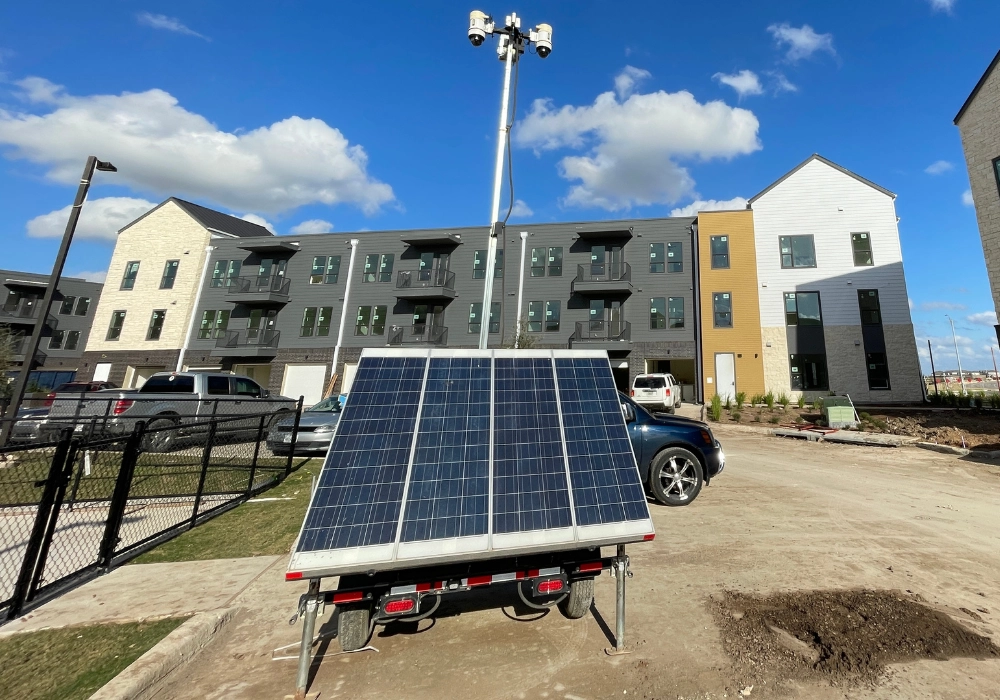
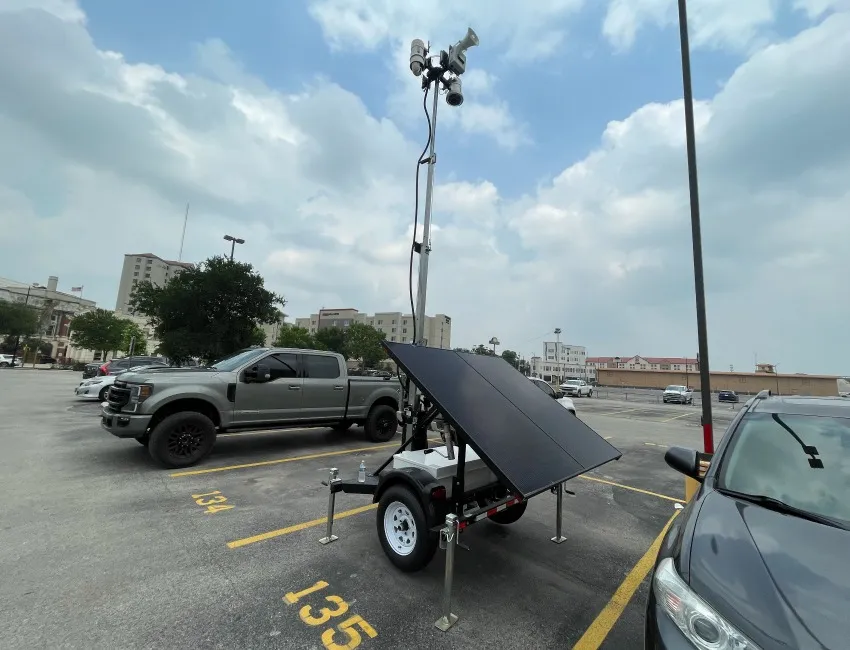
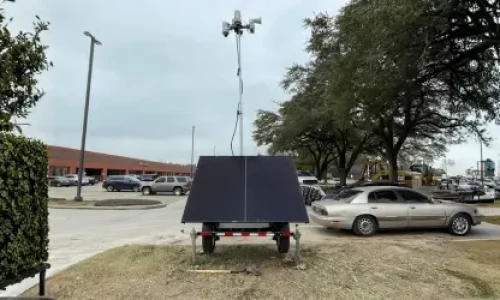
LotGuard PRO is the most commonly deployed solution at new commercial listings, particularly where visibility and wide-area coverage are needed. As a solar-powered surveillance trailer with infrared (IR) PTZ (Pan-Tilt-Zoom) cameras that rotate nearly 360°, it can be deployed quickly on-site and immediately acts as a visible deterrent to ward off intruders.
Behind the scenes, AI-video analytics and live remote monitoring through an Interactive Surveillance Operations Center (ISOC) work together to identify threats in real-time, alerting on-site teams and monitoring personnel via 4G/5G networks before potential threats escalate.
LotGuard MINI
The LotGuard MINI is a compact 4-camera surveillance system designed for targeted surveillance in hard-to-reach places, such as along property boundaries and alleyways. Mounting onto existing poles or buildings, the unit features AI analytics, remote live monitoring, and near-360° IR night vision cameras that deter crime and maintain clear visibility across new property listings.
LotGuard MULTI
Purpose-built for large commercial listings and expansive parking areas, the LotGuard MULTI delivers comprehensive coverage from a single installation point. Equipped with 4 HD cameras, it monitors multiple angles simultaneously, reducing blind spots across high-risk zones.
Using AI-video analytics to identify and flag unusual behavior in real-time, the system enables rapid response through remote monitoring. This allows potential issues to be addressed quickly, helping deter incidents before they impact marketing strategies and/or derail new real-estate listings.
License Plate Recognition (LPR)
Our License Plate Recognition (LPR) Cameras integrate seamlessly with all of the above LotGuard solutions, adding vehicle-level monitoring at all access points. This is particularly useful for new listings where vehicle patterns are not yet established, and any repeat visits warrant attention.
LPR systems automatically capture vehicle details (model, make, color) for every car entering/exiting the property, with every interaction timestamped and paired with corresponding footage. [Suspicious vehicle activity] is flagged instantly, providing early warning of suspect behavior before an incident occurs.
Brokers need centralized oversight when managing multiple listings. Our cloud-based management platform connects every LotGuard product and consolidates footage, AI alerts, and LPR data in a single dashboard. Exportable reports can be accessed on demand and shared with property owners who want visibility on how their assets are being managed.
Read more:
Secure New Property Listings with LotGuard Today
Securing a new commercial listing from day one isn't just about preventing damage; it's about protecting listing leads and timelines, maintaining property value, and demonstrating to clients that their asset is being actively managed.
The first 48-72 hours set the tone for the entire vacancy period, and the cost of acting early is almost always lower than the cost of addressing an incident after the fact.
LotGuard's mobile parking lot surveillance solutions give real estate professionals a practical, rapid deployment solution that scales to any property type, with no fixed infrastructure or long-term commitment required.

Contents
[hide]Related news
A Comprehensive Property Management Risk Mitigation Framework
Build a 4-step risk mitigation framework for property management, covering physical security, liability, and exterior monitoring. Read more
The Psychology of Perceived Safety During Property Tours
Learn how perceived safety influences property tours and why security plays a key role in tenant confidence and leasing decisions. Read more
The Role of Parking Lots in Overall Property Management Strategy
Learn how parking lots play a key role in property management strategy, impacting safety, tenant experience, and asset value. Read more
FAQs
How can I secure a new property listing?
The best way to secure a new listing is to start with a site walkthrough to identify the highest-risk areas, such as unsecured entry points, unlit perimeters, and open parking areas. From there, prioritize lighting upgrades, access control, and mobile surveillance with active monitoring.
Do brokers need to be on-site to monitor a listing secured by LotGuard?
All of LotGuard's systems provide remote access to live and recorded footage via the cloud-based platform, accessible from any device. This means brokers don't have to be physically present to see what's happening at active listings.
Why is securing a new commercial listing important in the USA?
Securing commercial listings is important because vacant properties are more prone to theft, vandalism, and unauthorized access than occupied buildings. Even a single incident can result in significant repair and replacement costs and push listing timelines back substantially. Getting security in place early helps avoid these outcomes and keeps listings on track.
How can I secure a new listing in a competitive market?
Winning a listing comes down to showing sellers that you can price and promote their property better than the competition. Here are a few suggestions:
- Price correctly from day one: Research the local market to compare similar properties and consider a professional appraisal to help secure the right price. A property that's priced competitively attracts buyer interest and avoids long days on the market.
- Focus on presentation and perceived safety: In a competitive market, presentation and perceived safety both influence how quickly a listing moves. Clear perimeters, secure access points, and no visible signs of neglect (damage, vandalism, graffiti) create an appealing first impression, generate interest, and make a property easier to market.
- Highlight unique selling points (USPs): Identify what sets the property apart. This could be location, layout, square footage, upgrades, or security features. USPs (along with great photos) are a powerful marketing tool that captures the right target audience. Use this for hosting open houses and 3D virtual tours.
- Use property marketing strategies: High-quality professional photography, well-written listing descriptions, paid advertising, and targeted social media ads (across multiple platforms to reach a broad audience) all maximize exposure, increase listing leads, and attract serious interest early.
- Respond quickly to inquiries: Faster responses to emails and referral programs help build relationships and, in turn, may attract more showings. Use automated replies to improve response rates and boost engagement.
Contact Us
Request a Quote for LotGuard
Ready to learn more about how LotGuard can protect your Parking Lots and Properties? Get in touch today for a free quote.