
Centralizing Risk Reporting Across Multi-Site Property Portfolios
Learn how centralized risk reporting helps property teams improve visibility, streamline oversight, and manage risks across multiple locations.
Managing risk across multiple properties means staying on top of incidents at sites you can't always visit and spotting trends in data that's scattered across emails and spreadsheets.
When each property runs its own reporting process (or lack thereof), gaps quickly appear. Incidents go untracked, owners receive inconsistent updates, and brokers are left working with fragmented information. This makes it harder to stay fully on the front foot, often resulting in a reactive response rather than allowing for proactive oversight.
Centralized risk reporting across multi-site properties changes that, where platforms consolidate alerts, footage, and incident data from every active listing into a single dashboard. This gives real estate brokers and property management teams a "bird's eye view" of everything happening across multiple locations without the manual overhead.
In this article, we explore the hidden pitfalls of manual risk reporting, why centralized reporting matters when managing multiple sites, and the steps to put it in place.
The Hidden Risks of Manual Reporting Across Multi-Site Properties
When security data is fragmented across multiple sites, problems tend to stay hidden until they've already caused damage.
Below, we discuss where manual reporting creates the most risk for brokers:
-
Slow response to safety concerns: Without centralized visibility, it's hard to know when a situation at one listing needs immediate attention. By the time an incident is flagged manually, it's often already escalated.
-
Limited visibility across the entire portfolio: Managing sites through multiple systems (or no system at all) means you never see the "big picture" across your portfolio in real-time. Gaps between what's happened and what you're aware of create personal stress and professional exposure.
-
Difficulty tracking incidents: Vandalism, theft, trespass, squatting, and illegal dumping rarely happen in isolation. When you're managing 5 to 10 different sites without a central record, it's easy to miss repeat incidents at the same property until it's too late.
-
Communication breakdowns: Property owners receive inconsistent updates when each site runs its own reporting process. One owner might get a detailed summary; another gets a phone call with limited information. That inconsistency affects how in control brokers appear, and how much owners trust your property management skills.
-
Reputational damage: Property owners who don't receive proactive updates tend to assume nothing is being done. Losing an owner's confidence during a vacancy period is hard to recover from, especially in a competitive market.
Read more:
Why Centralized Risk Reporting Across Multi-Site Properties Matters
Multi-site property risk management isn't about having more data; it's about having the right data in one place, at the right time. Here's what centralized reporting gives brokers that manual processes can't:
Portfolio-wide visibility
Risks often hide in fragmented records across individual sites. A centralized reporting system brings your entire portfolio into one dashboard, so property managers can see what's happening at every active listing without separate logins or chasing site-specific updates.
Patterns that would otherwise be invisible across siloed records (e.g., suspicious vehicle activity, recurring risks) become visible and actionable.
Consistent oversight
Without a centralized system, each property tends to develop its own informal review process. Those gaps create inconsistencies with some sites receiving regular attention while others don't.
Consolidating operations across your entire portfolio means every listing follows the same reporting standards and site performance is tracked consistently. This ensures nothing slips through the cracks because it wasn't on someone's to-do list that week.
Regulatory compliance
Commercial real estate (CRE) brokers in the U.S. must comply with various federal, state, and local regulations, such as Occupational Safety and Health Act (OSHA) reporting requirements and Title III of the Americans with Disabilities Act (ADA). Failure to do so can result in serious financial, legal, and operational consequences.
Centralized reporting ensures all sites follow the same compliance standards and maintain consistent audit trails, reducing exposure across multiple properties.
Risk mitigation
A central hub for risk and security data provides brokers with strategic insight into emerging issues. When alerts from every site feed into one platform, such as a loitering pattern at a vacant listing or a spike in after-hours vehicle activity, patterns become visible early, before they escalate into more serious problems.
Centralized safety protocols applied consistently across multiple sites help reduce risk and make it much harder for threats to compound undetected.
Cost savings
Managing security across numerous multifamily properties through separate vendors and manual processes quickly adds up and strains resource allocations. Centralized operations replace the need for multiple systems and reduce the time spent manually compiling reports, freeing both budget and time.
Operational efficiency
A centralized model replaces reactive, single-site management with portfolio-wide operational control. Instead of waiting for problems to surface (or a site manager to notice), you're monitoring across all your locations from a single system. This means faster responses, less duplication, and more time focused on the work that actually moves the needle.
Investor confidence
Transparent reporting builds trust with property owners and investors. [When owners receive regular, data-backed updates] rather than ad hoc calls, it shows their asset is properly managed. Centralized reporting is one of the most practical ways to protect owner relationships, especially during vacancy periods when properties are most at risk.
Traditional Reporting vs Centralized Reporting
Let's take a closer look at how traditional (manual) risk reporting compares to a centralized approach:
|
Feature |
Traditional risk reporting |
Centralized risk reporting |
|
Site visibility |
Single site, siloed, multiple dashboards |
Portfolio-wide, single dashboard |
|
Incident tracking |
Manual logs, spreadsheets |
Automated, searchable records |
|
Alert response |
Reactive, after the fact |
Proactive, early identification as incidents unfold |
|
Owner reporting |
Inconsistent, ad hoc |
Consistent, exportable reports on demand |
|
Audit trail |
No, manual logs |
Yes, with precise timestamps |
|
Scalability |
Harder as portfolios grow |
Scales easily with your portfolio |
|
Cost |
Expensive, in both time and money |
Cost-effective, one system with predictable costs (rental) |
The gap between these 2 approaches widens as a portfolio grows. What's manageable manually across 3 listings becomes complicated and time-consuming across 10. This is where traditional reporting falls short and where centralized operations make a massive difference.
Centralized Risk Reporting Done Right with LotGuard
LotGuard's cloud-based security management solutions are designed specifically for brokers and asset managers overseeing multiple active listings. It pulls data together from every LotGuard product deployed across a portfolio (alerts, footage, etc.) and organizes it into a central hub accessible from any device.
Centralized data collection
Instead of each property gathering its own isolated reports, all monitoring data is captured through our centralized management platform. Alerts, timestamped footage, and vehicle logs from all active listings are automatically assembled into one dashboard with minimal human input required.
Using advanced PTZ (Pan-Tilt-Zoom) cameras, AI analytics, and remote monitoring, our systems provide near-360° visibility across multiple sites (including parking areas and perimeters) in real-time. These solutions include:
|
Product |
Feature |
|
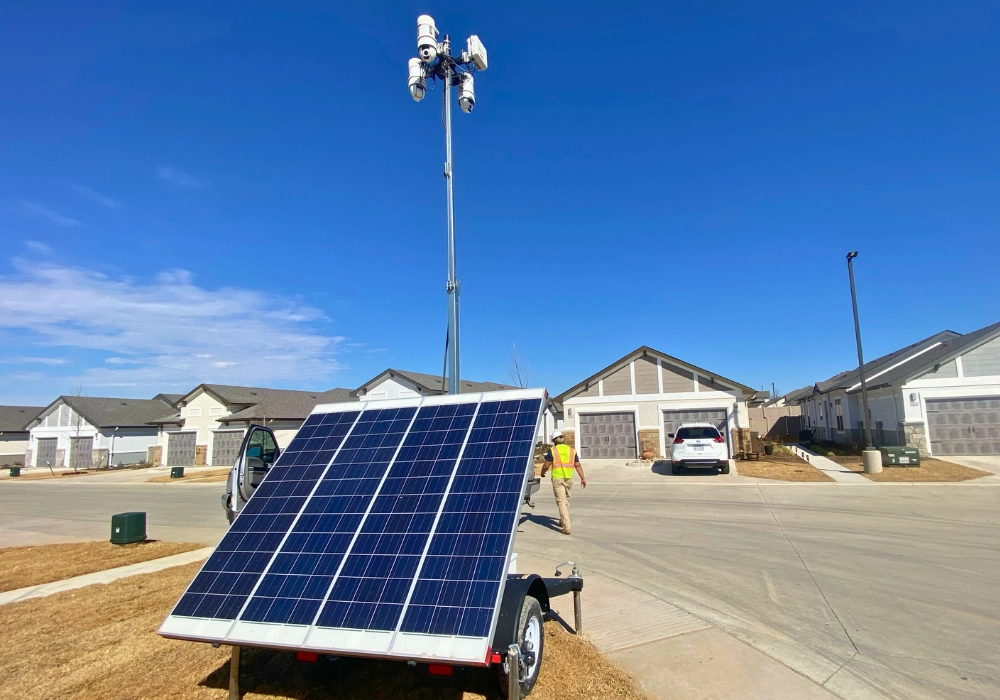
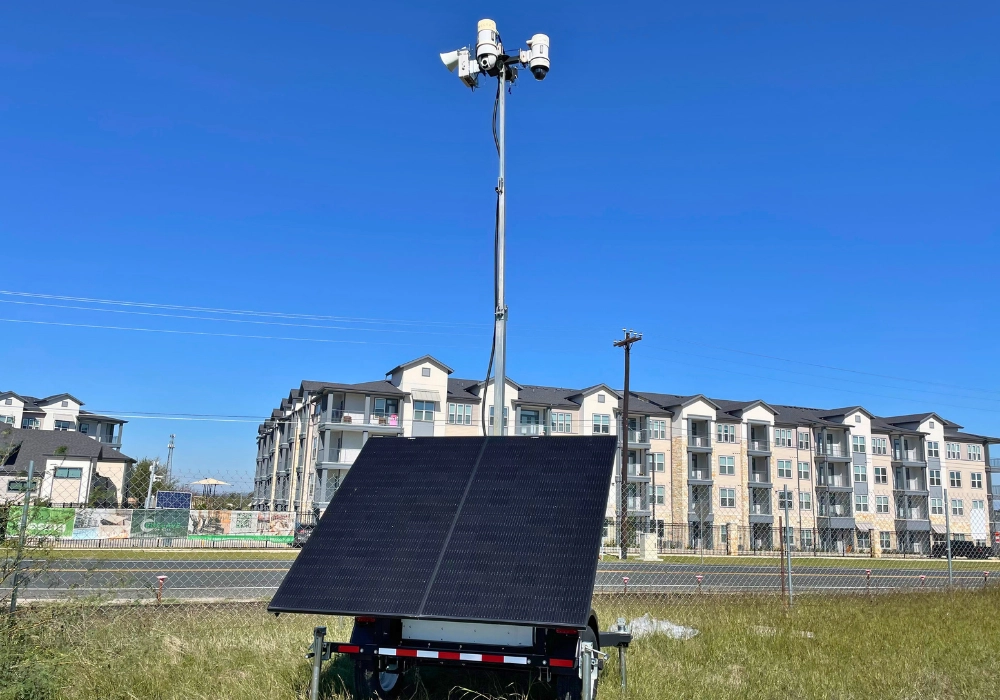
Solar-powered mobile surveillance trailer equipped with AI analytics, remote monitoring, and near-360° night-vision PTZ cameras. Delivers rapid security coverage without requiring fixed infrastructure and transmits data securely via secure 4G/5G networks. |
|
|
Installed onto existing poles or structures, this compact 4-camera unit provides reliable 24/7 coverage, particularly in hard-to-reach spaces like alleyways and entrances. Featuring AI detection, remote access, live monitoring, and 4G/5G connectivity, this system allows live viewing and recorded footage to be accessed from any device. |
|
|
A pole-mounted surveillance system with 4 HD PTZ cameras that monitors large areas from a single installation point. Equipped with smart AI analytics, remote monitoring, and secure cellular connectivity, this unit provides broader surveillance coverage using fewer cameras and timestamps (and stores) every incident in the cloud. |
This means live video monitoring flags suspicious behavior as it occurs, while optional License Plate Recognition (LPR) Cameras track patterns in vehicle movements around commercial properties, capturing details (make, model, color) at speeds of up to 130mph.
As a result, if copper is stripped at one listing while a suspect vehicle makes repeated visits at another, both incidents appear in the same dashboard, giving you a consolidated view of activity across your entire portfolio.
Automated workflows
AI detection software means incidents don't wait for someone to notice manually. Unusual activity is flagged as it happens, verified remotely through Interactive Surveillance Operations Centers (ISOC), and logged instantly with precise timestamps and corresponding footage.
When a threat is detected, ISOC professionals respond near-instantly, issuing live audio voice-down warnings and notifying law enforcement when necessary. These actions help escalate incidents quickly while generating credible evidence to support investigations and insurance claims
Having everything automatically compiled in one place means repeat vehicle visits are detected without anyone having to cross-reference separate site logs; the system connects the dots.
Unified platform
Everything a residential or commercial broker needs to report confidently to a property owner is available through the cloud-based platform. Activity summaries, incident records for investigations and insurance purposes, and vehicle data are all exportable on demand, formatted professionally, not assembled from emails and memory.
For brokers and management teams handling multi-site operations, this kind of property management software is one of the most practical tools for maintaining owner relationships throughout a listing's vacancy period.
Read more:
6 Steps to Centralizing Risk Reporting Across Multi-Site Properties
Going from fragmented, single-site risk reporting to a centralized model isn't as complicated as many may think. Here are 6 practical ways to get you started:
-
Audit your current operations: Map out how each active listing is currently monitored and reported. Identify any gaps, such as sites without consistent oversight, incidents that haven't been logged, or owner communications that rely on memory rather than records.
-
Choose a centralized platform with AI insights: Look for a platform that integrates directly with your surveillance systems and flags alerts automatically, not one that requires manual data entry to stay current. Our cloud-based platform is purpose-built for this, connecting our units across all your listings into one view.
-
Set standardized risk frameworks: Decide what gets logged, at what threshold, and who gets notified. Uniform protocols across all locations mean you're not applying different standards to different locations.
-
Train your team: The value of a centralized platform depends on how consistently it's used. Ensure anyone involved in managing your listings knows what to log, when to escalate, and how to pull reports when asked for updates.
-
Ensure secure access and data protection: Ensure your centralized platform has secure infrastructure with encrypted data transmission and modern authentication controls. Multi-factor authentication and secure logins help protect video feeds, incident reports, and system access, reducing the risk of a breach.
-
Schedule monthly reviews: Regularly review incident trends across your portfolio. Monthly reviews help spot patterns, demonstrate proactive management to owners, and provide data to make informed decisions about where security resources are most needed.
A Smarter Way to Risk Reporting for Multi-Site Properties
Fragmented reporting not only causes operational headaches but also creates real exposure. Incidents go undetected, owners lose confidence, and the broker ends up reacting to problems that a centralized system would have flagged before they escalated.
Stop juggling spreadsheets and losing owner trust. LotGuard's mobile parking lot surveillance solutions and centralized monitoring platform give brokers the visibility and reporting tools they need to manage multiple listings simultaneously from a single dashboard.

Contents
[hide]Related news
A Comprehensive Property Management Risk Mitigation Framework
Build a 4-step risk mitigation framework for property management, covering physical security, liability, and exterior monitoring. Read more
Short-term Security Rentals vs Long Contracts for Real Estate
Learn how short-term and long-term security options differ for real estate and which approach best fits property risk and operational needs. Read more
Why Parking Lot Safety Is Critical to Tenant Retention in Commercial Properties
Parking lots are a key touchpoint for tenants. Here’s how improving safety can reduce churn and boost retention. Read more
FAQs
What is centralized risk reporting for multi-site properties?
Centralized risk reporting consolidates security alerts, incident data, and surveillance footage from multiple properties into a single platform. This gives brokers and asset managers a consistent, portfolio-wide viewpoint without having to manage separate systems for each site.
Why does centralized reporting matter for owner relationships?
Owners who receive regular, data-backed updates are more likely to trust that their asset is being actively managed. Centralized reporting makes professional, timely communication the default rather than an effort, which is especially important during vacancy periods when properties are most exposed.
Is centralizing risk reporting for multiple properties worth it?
Centralizing risk reporting is a worthwhile investment, particularly for portfolios with more than a handful of locations. Having all security and incident data in one place makes it easier to spot patterns, compare site performance, and respond to issues before they escalate.
Contact Us
Request a Quote for LotGuard
Ready to learn more about how LotGuard can protect your Parking Lots and Properties? Get in touch today for a free quote.