
Protecting Value-Add Property Investments During the Acquisition-to-Lease-Up Phase
Learn how to protect value-add property investments during the acquisition-to-lease-up phase with proactive security and monitoring.
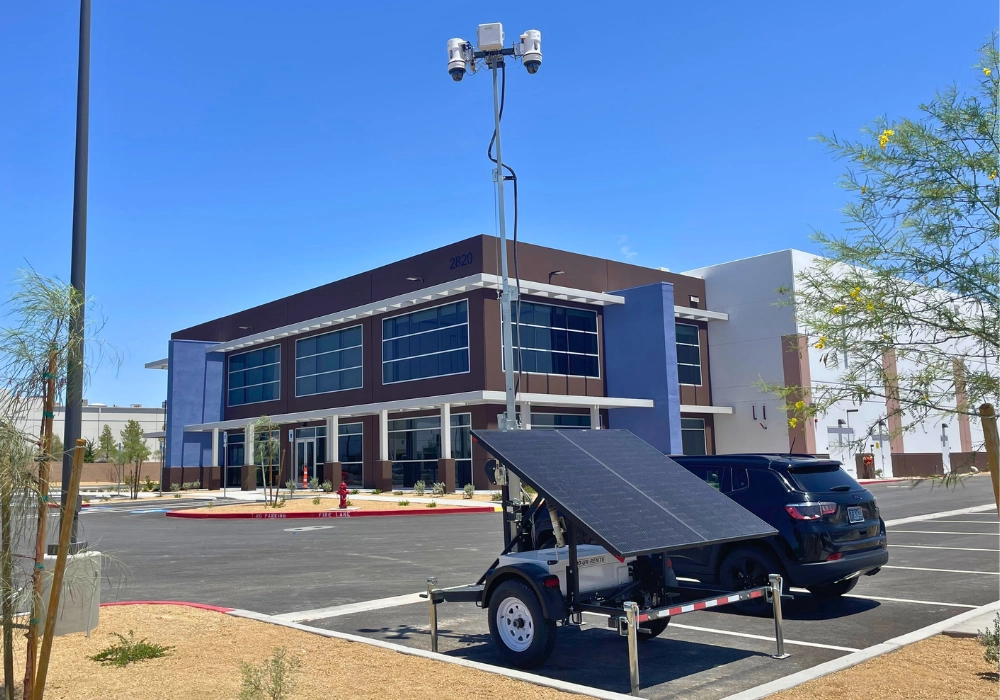
While value-add investments aren't always fully vacant, they typically have higher-than-normal vacancy rates during the acquisition-to-lease-up phase. When left unaddressed, these create major operational and security vulnerabilities for investment managers.
Theft, vandalism, and property crime aside, unsecured commercial properties also carry arson risk. Reports show 61% of fires at unsecured vacant properties are set intentionally, compared to 35% at secured sites.
If you manage value-add real estate investments, you already know your assets are most exposed the moment the deal closes. Low occupancy, active construction, and limited portfolio attention all occur together, right when a property is most vulnerable.
The good news is that all of this is preventable with the right surveillance in place. A proactive security strategy not only deters criminal activity but also gives investment managers greater visibility and control throughout the lease-up process.
This article explains exactly where those risks live, what they cost when ignored, and how commercial investment managers are protecting value-add property investments without slowing down deals.
What Makes Value-Add Properties High-Risk During Transition
Value-add properties have more risk during acquisition to lease-up due to temporary conditions that don't affect fully leased buildings. These include low occupancy, exposed construction equipment during renovations, and limited real-time visibility across multi-site portfolios.
Low occupancy
Newly acquired assets often sit empty for extended periods after closing. With less natural surveillance, there are fewer people around to notice suspicious behavior.
As a result, these properties can quickly attract the wrong kind of attention and be perceived as low risk to both opportunistic thieves and organized criminals. This perception increases exposure to property crime, trespassing, illegal dumping, and arson.
Read more:
Visible construction equipment
Repositioning a value-add investment often involves high-value materials and construction equipment to support physical improvements before lease-up. During this phase, much of that equipment is left exposed and unsecured on-site, particularly overnight or during predictable site shutdowns.
Criminals find power tools, lumber, copper, and plumbing fixtures particularly attractive because they're easy to steal and resell on illicit markets. When theft occurs, contractors have to pause work until the site is secured, [disrupting construction] timelines and pushing back value-add strategies.
Read more:
Multi-site portfolios
Managing multiple value-add portfolios creates a visibility problem before it becomes a security issue. When commercial real estate (CRE) investment managers lack real-time oversight for every active site, incidents are often found after the fact, not as they occur.
That visibility gap leads to reactive responses rather than proactive prevention, increasing operational pressure and making it harder to provide updates to owners and investors when something happens.
Read more:
Common Threats Value-Add Investments Face in The U.S.
Once commercial real estate sits empty or is under construction, the risks presented by low occupancy and site visibility can translate to costly incidents.
Let's take a closer look:
Copper and material theft
Copper wiring, HVAC coils, and other construction materials such as lumber and power tools are common targets at unoccupied buildings during construction phases because they're in high demand among thieves.
Research suggests that organized crime groups are responsible for roughly 25% of large-scale industrial copper thefts, with overall copper theft causing an estimated $1 billion in nationwide losses each year.
When incidents occur, the impact extends far beyond replacing stolen goods, triggering unbudgeted expenses, contractor delays, and erosion of owner/investor trust.
Unauthorized access
Vacant and transitional commercial listings, across retail, office, or multifamily real estate, are 3 to 5X more likely to experience vandalism, trespassing, encampments, loitering, and squatting than inhabited buildings.
Removing squatters from commercial buildings is also rarely quick or cheap, with legal proceedings, insurance claims, cleanup and repair costs escalating quickly while marketing and lease-up timelines stall.
What's more, owners, investors, and property managers may face premises liability claims if someone is injured on-site. This further increases avoidable costs and risk exposure.
Arson
Arson is one of the quickest ways to derail multimillion-dollar investment deals or lose an asset entirely. As mentioned, vacant sites without proper surveillance are almost twice as likely to experience intentional fires, making the acquisition-to-lease-up phase especially vulnerable.
Large-loss fire incidents can result in tens of millions in damages, with insurers increasingly scrutinizing claims. Without reliable evidence showing what happened and when, claims may be disputed, delaying value-add investment strategies even further.
How Crime Exposure Impacts IRR, NOI, and Investor Confidence
Crime tends to set off a series of knock-on effects for value-add premises:
Unforeseen costs: Replacing stolen materials, repairing damage, covering insurance deductibles, or adding stakeholder-expected, permanently installed security that wasn't in the original budget.
Slower stabilization: After an incident, the renovation process is put on hold while sites are secured, investigations take place, and/or contractors are rescheduled. These delays push back lease-up timeframes, which postpones tenant occupancy and income generation.
Increased insurance premiums: Repeat incidents can lead to higher premiums, stricter policy terms, or disputed or delayed claims when evidence is unclear.
Together, these consequences eat into returns and cash flow at exactly the wrong time in the real estate investing lifecycle. This has a direct impact on property value, internal rate of return (IRR), net operating income (NOI), and investor confidence.
Read more:
What Investment Managers Actually Need During Acquisition to Lease-Up
Protecting value-add properties from acquisition to lease-up comes down to 3 operational non-negotiables:
- Speed
- Flexibility
- Portfolio-wide visibility
|
Operational requirement |
Why it matters |
|
Speed of deployment |
Vacant or partially occupied properties are most vulnerable immediately after closing. Delays in coverage expose sites to theft, vandalism, and damage that can derail renovation timelines and budgets. |
|
Flexible coverage |
Risk profiles change as properties move from vacancy to construction to active leasing. Surveillance must relocate easily to follow evolving access points, assets, and activity zones without reinstallations or long contracts. |
|
Portfolio-wide oversight |
Investment teams overseeing multiple assets need consistent, real-time insight across all sites. Centralized oversight supports faster decisions and stronger accountability during transitional periods. |
Once these acquisition-to-lease-up requirements are clear, the next step is understanding which surveillance capabilities actually deliver them in practice.
What surveillance features to look for
Safeguarding value-add properties from start to finish typically calls for:
- Autonomous, rapidly deployable systems that operate without fixed power or internet, allowing protection to be in place immediately after acquisition.
- Near-360° Pan-Tilt-Zoom (PTZ) surveillance cameras with AI-video analytics to maintain full visibility across changing layouts while filtering false alarms as they unfold.
- 24/7 live video monitoring that allows teams to assess incidents remotely in real-time rather than reacting after damage is done.
- Verified deterrence and rapid response through professionally monitored Interactive Surveillance Operations Centers (ISOC), ensuring threats are continuously addressed.
- Vehicle and access monitoring using add-on License Plate Recognition (LPR) cameras to identify unauthorized entry and repeat activity around transitional assets.
- Cloud-based consolidation across multiple sites, ensuring consistent reporting and evidence sharing across entire value-add portfolios.
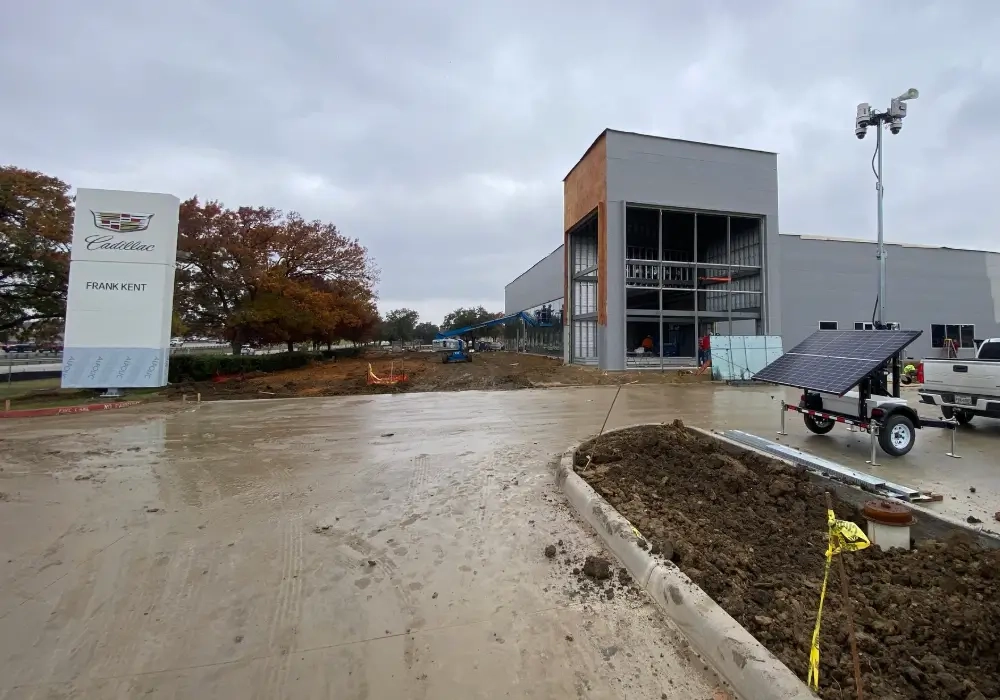
LotGuard's mobile parking lot surveillance solutions are built for the realities of vacant value-add properties. Our systems, like the LotGuard PRO, are solar-powered, equipped with 4G/5G connectivity, and can be deployed (and relocated) quickly without waiting on utility connections. ISOC-verified remote monitoring prevents expensive delays and provides security that scales with your investment strategies from day one.
7 Protection Benefits for Value-Add Property Investments
Proactive protection during acquisition-to-lease-up protects the property's market value, maintains project schedules, and demonstrates operational discipline to investors and lenders.
Here's how:
- Preserves IRR by preventing unplanned expenses caused by theft, vandalism, illegal dumping, squatting, and fire.
- Keeps marketing and lease-up strategies on track (and on budget), rather than derailing them around an avoidable incident.
- Builds investor and owner confidence by demonstrating due diligence and active asset management during the deal's most vulnerable phase.
- Reduces insurance friction with documented evidence that supports claims rather than complicating them.
- Limits liability exposure tied to unauthorized occupants or trespassers on an unsecured site.
- Demonstrates portfolio-wide risk control across multiple assets in different phases of repositioning.
- Protects professional reputations by positioning investment supervisors as proactive risk managers instead of reactive firefighters.
Protect Value-Add Properties from Day One
Value-add properties already carry enough risk during the acquisition-to-lease-up phase. The last thing investment managers need is preventable theft, vandalism, or unauthorized access affecting renovation schedules, costs, or investor confidence.
Putting proactive protection in immediately before the first incident occurs helps preserve timelines, control costs, and keep repositioning plans on schedule.
With LotGuard's mobile parking lot surveillance solutions "Always Awake and Always on Guard", investment managers can secure value-add property investments with rapid deployable, professionally monitored surveillance that protects market value, IRR, NOI, and investor confidence without slowing down the deals

Contents
[hide]Related news

7 Key Risk Factors to Monitor in Transitional Commercial Properties
Learn the biggest risks affecting transitional commercial properties, from theft and vandalism to fire and unauthorized access, and how to mitigate them. Read more
How Much Does Vacant Property Security Cost?
Discover the true cost of vacant property security and how different solutions compare in price, coverage, and effectiveness. Read more
Short-term Security Rentals vs Long Contracts for Real Estate
Learn how short-term and long-term security options differ for real estate and which approach best fits property risk and operational needs. Read more
FAQs
What does value-add real estate investing mean?
Value-add real estate investing means buying underperforming properties, improving them, and increasing their rental income and overall market value.
For example, an old retail center with several vacant units, outdated finishes, and poor management could be purchased below market value. Investors can increase occupancy, property value, and boost profit margins by renovating the property, increasing usable square footage, and making operational improvements.
What's the best way to protect real estate investments?
The best way to protect real estate investments is to identify and reduce risks before they affect returns. For value-add properties, this means securing vacant assets immediately after acquisition with rapidly deployable surveillance and maintaining portfolio-wide visibility to prevent theft, vandalism, liability, and costly delays.
What is the return on commercial value-add real estate?
Value-add investment returns depend on the deal, risk profile, and asset class but typically offer returns between 11% and 15%.
Contact Us
Request a Quote for LotGuard
Ready to learn more about how LotGuard can protect your Parking Lots and Properties? Get in touch today for a free quote.