
Implementing License Plate Recognition Across Multi-Site Commercial Portfolios
Learn how to implement license plate recognition across commercial property portfolios to improve vehicle visibility, site security and access monitoring.
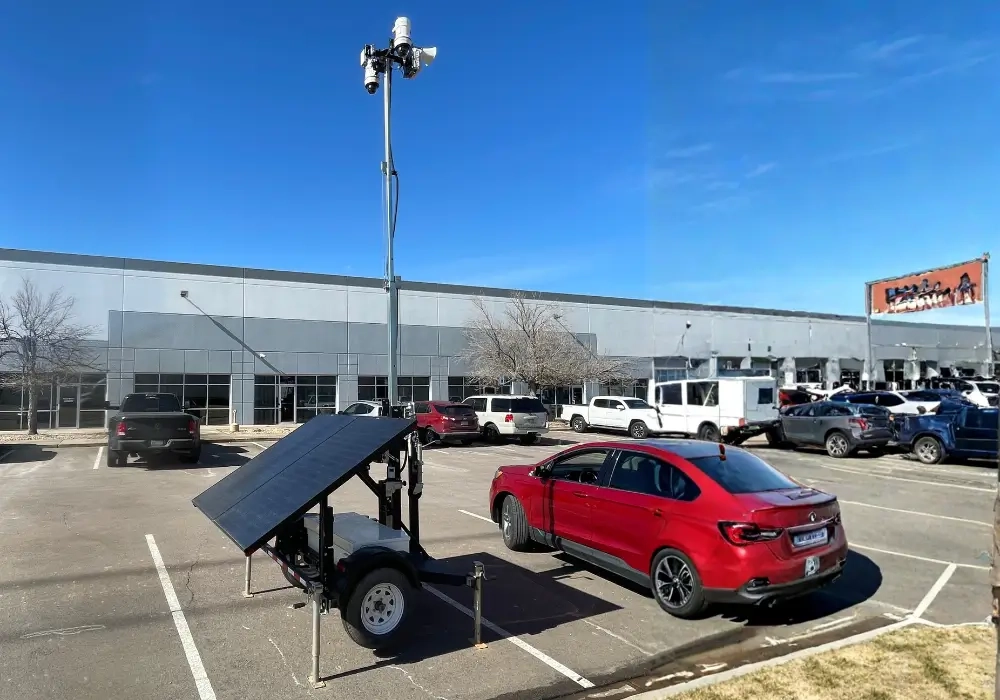
Managing security at one commercial property is one challenge, but managing it across 10, 20, or 50 properties is another.
For commercial real estate (CRE) investment managers, a security incident at one property rarely stays a simple site-level problem. A vehicle may appear repeatedly before an incident occurs. A theft or vandalism investigation may depend on license plate details that nobody captured. Security teams may need to review hours of footage across different camera systems, while investment managers are left chasing reports from multiple vendors.
There's also the ongoing cost of keeping legacy systems running. Guards, basic cameras, various monitoring services, and separate security vendors can add to operating expenses (OPEX) without giving portfolio managers a consistent view of what is happening across their assets.
License plate recognition (LPR) is a smarter way to approach the problem. By capturing vehicle activity, LPR can help teams identify repeat vehicles, investigate incidents more quickly, monitor multi-site activity more efficiently, and create more consistent security records across a portfolio.
This guide explains everything you need to know about license plate recognition for multi-site commercial portfolios, how to implement it, where the technology adds the most value, and how to justify the spend to investment boards.
Why Multi-Site Portfolios Need a Different Approach to LPR
Below we take a closer look at why LPR technology at multiple locations needs a different approach:
Different sites have different risks
A distribution center, a retail complex, an industrial parking lot, and a vacant building under redevelopment all face different threats, so there's no "one-size-fits-all" security setup that suits every commercial property.
Each site can have different vehicle activity patterns and different security concerns. For instance, a vacant property may need more after-hours monitoring, while a busy office block may want to identify recurring vehicles around parking areas.
A bigger problem comes in when each site has its own security provider and system, as vehicle activity at one location is often viewed in isolation and can become invisible at the portfolio level. When vehicle data is scattered and fragmented, it's hard to tell whether 3 separate break-ins involve the same unauthorized vehicle.
The hidden cost of siloed systems
Managing portfolio-wide security can be difficult. One property may rely on basic "record only" cameras, another on manned personnel, and a third on mobile surveillance. Multiply that across 10 or 20 properties and CRE teams can end up managing multiple vendors and reporting formats with no easy way to see the bigger picture.
These legacy systems and traditional security measures can quietly erode portfolio net operating income (NOI) and reduce the investment's internal rate of return (IRR). Managing security for 10 properties with 4 different vendors means multiple contracts, invoices, logins, and admin, which can push up OPEX and create blind spots between sites.
Theft, trespassing, and vandalism can also be linked to vehicle activity that traditional security measures struggle to track. A vehicle may frequently enter a parking area before an incident or appear at a vacant property after hours. Without searchable license plate data, teams are often left to manually review footage to figure out what happened.
In high-crime areas, that lack of visibility can further create security challenges for owners and tenants, while damage to parking areas or theft of materials such as copper can result in unplanned portfolio capital expenditure (CAPEX), potentially delaying stabilization and increasing insurance costs.
Read more:
- How Crime Impacts Cap Rates and Valuation for Commercial Property
- How Theft Disrupts Construction Timelines in Value-Add Properties
- Commonly Asked Security Questions From Property Managers
Where LPR Technology Adds Value Across Multiple Locations
Add-on license plate recognition software turns vehicle activity into actionable intelligence and searchable data. Here's where that makes the biggest difference across a portfolio:
Identify repeat vehicles across properties
On its own, an incident at one property can look like a one-off. When LPR cameras integrate with a broader security camera system, they track vehicles and capture every plate that enters or leaves a site and log it alongside the vehicle's make, model, and color to create a digital record and audit trail. This data can also help security teams investigate suspicious activity and understand what happened around a particular vehicle's visit.
If a vehicle's number plate is flagged for unusual activity at one property, managers can check whether it has appeared at others in the portfolio. Plate detection technology consolidates data in one place, making it easier to spot potential trends, such as the same pickup truck visiting 3 vacant commercial sites in the same week, and investigate further using available security footage.
Read more:
Improve incident investigations
Traditional investigations and an LPR-supported one follow different routes:
- Traditional: An incident occurs, footage is reviewed manually, teams then attempt to identify the vehicle, and a report is compiled. This process can sometimes take days or weeks.
- LPR-supported: An incident (including near-incidents) occurs, the system searches vehicle license plates and timestamps the event, the activity is identified in real-time (with minimal human input), and an evidence-backed report follows much faster than traditional methods.
The shorter LPR route saves time, and the end result is more useful for managers. Law enforcement receive plate details and timestamps, insurers get evidence-backed documentation that helps support a claim, and investors and stakeholders receive a clear account of what happened and how it was handled.
Read more:
Smarter access control
License plate recognition (LPR) uses high-definition cameras, Optical Character Recognition (OCR), and smart AI analytics for tighter control over who enters a site, showing both legitimate deliveries and repeat activity that may otherwise go unnoticed. Systems use infrared illumination and high-resolution sensors to capture plates in low light, bad weather, and at speeds of up to 130 mph.
LPR cameras can help investment management teams keep an eye on:
- Genuine site access: Confirm authorized vehicles/personnel during construction/renovation.
- After-hours activity: Vehicle access when nobody should be on-site.
- Unusual vehicle behavior: Cars circling a parking lot or suspicious parking near entrances/exits.
- Recurring vehicle visits: The same vehicle returning repeatedly, at one location or many.
- Activity at vacant sites/repositioning projects: Flag increased vehicle movement at sites where vehicle numbers are expected to remain low.
Automatic license plate recognition cameras generate real-time alerts and transmit data remotely over secure 4G/5G networks to an Interactive Surveillance Operations Center (ISOC). This is where trained operators verify activity as it unfolds, confirm suspicious activity, and trigger near-instant response actions like activating live audio voice-down challenges or dispatching law enforcement.
Unified operations and centralized visibility
Our add-on cloud-based monitoring platform gives CRE managers centralized oversight by consolidating all LPR vehicle data, live video, and alerts from every site into one dashboard. Entry and exit timestamps also show how long vehicles stayed at a property, so teams at different locations are kept up to date across the wider portfolio.
With everything in one place, CRE managers can generate consistent portfolio-wide reports in just a few clicks without manually pulling data from multiple systems. This makes it easier to track activity, review incidents, identify trends, and provide clear security updates to owners, investors, insurers, and other stakeholders.
Read more:
- [The Benefits of Centralizing LPR Monitoring Across Commercial Property Portfolios]
5 Steps to Implement LPR Across Multi-Site Commercial Portfolios
Implementing license plate recognition technology across a multi-site portfolio is easier when properties are assessed and high-risk areas are prioritized before cameras go in.
These 5 steps help establish a clear framework for your operational decisions, from pinpointing the highest-risk sites to adjusting security coverage as your portfolio grows and evolves:
Step #1: Assess each site and its risk profile
Start with what you already know about each property: incident history, vacancy levels, lighting, entry points, and existing cameras. Review the current camera system to identify potential coverage gaps, assess whether the existing equipment supports LPR integration, and determine where an upgrade is needed. Consider upcoming changes such as an acquisition, renovation, or lease-up when prioritizing sites for LPR coverage.
Step #2: Identify vehicle access/exit points
Map every route vehicles use to enter and leave each property, including loading docks, perimeter entries, and secondary gates. LPR cameras are generally most effective where vehicles have to slow down or pass through a defined point. When planning placement, consider how LPR can complement the property's existing security cameras to provide broader visibility across vehicle movements and site activity, so check lighting, visibility, and camera angles before installation.
Step #3: Prioritize and phase the deployment
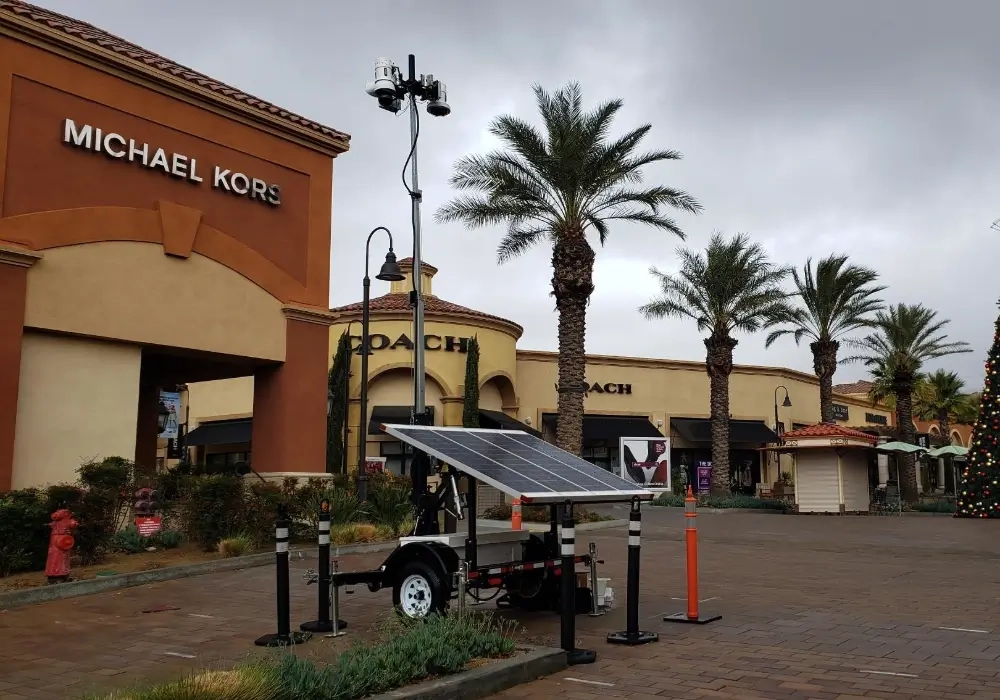
Start with transitional and vacant properties, particularly where existing security infrastructure is limited or non-existent, and crime exposure is high. Rapid-deployment units, like the LotGuard PRO, with add-on LPR technology can provide coverage within days of acquisition, allowing teams to establish vehicle visibility without complex setups. From there, focus on stabilized properties, where fixed security and LPR systems might be most appropriate.
Step #4: Set alerts and policies
Before the system goes live, decide what should trigger an alert, such as after-hours activity, repeat visits, or flagged plates. Define who receives those alerts, how long plate data is retained, and who has access to it. Some LPR providers may offer baseline policies or safeguards covering key concerns, but these can vary by supplier and system. LPR data retention and sharing requirements vary by state, so you may have to involve legal counsel when setting these policies.
Step #5: Centralize reporting and review
With our cloud platform, you can bring each property in your portfolio into the same reporting view and generate real-time reports for owners, insurers, and investment committees. Centralized reporting also makes it easier to examine incident reports, identify recurring patterns, and spot potential security gaps across properties.
That said, review activity regularly and adjust coverage as properties move through acquisition, stabilization, leasing, and/or redevelopment.
Read more:
- A Comprehensive Property Management Risk Mitigation Framework
- Centralizing Risk Reporting Across Multi-Site Property Portfolios
What Should CRE Investment Managers Measure?
These 4 metrics show whether LPR is earning its place in the portfolio, and what CRE managers should measure:
|
Metric |
What to measure |
Why it matters |
|
Incident investigation time |
Total hours required to locate footage, identify vehicles, and compile evidence. |
Shows labor saved per incident |
|
Security coverage across assets |
Percentage of priority properties, perimeter boundaries, and key entry/exit points monitored. |
Exposes gaps in the portfolio |
|
Repeat activity patterns |
Volume of flagged repeat vehicles, recurring trespassing events, and unauthorized after-hours visits. |
Shows whether risk is falling |
|
Reporting efficiency |
Administrative hours spent manually compiling security logs for owners, insurers, and stakeholders. |
Shows administrative cost reduced |
How to build a business case for portfolio-wide LPR
To assess whether portfolio-wide LPR makes financial sense, compare your current security costs with the potential savings and risk reduction:
- Compare current security costs: Look at guard hours, vendor contracts, manual checks, site visits, reporting, and other administrative work. This gives you an annual baseline for what security currently costs across the portfolio.
- Account for unmanaged risk: Consider the potential costs of property damage, unauthorized access, operational disruption, tenant concerns, and incident-related claims. Where possible, use historical data for this step.
- Calculate expected returns (ROI): Compare LPR's measurable benefits, such as reduced investigations and reporting time, with its implementation and ongoing costs. Below is a simple calculation.
Annual labor savings = Hours saved per incident × annual incidents × hourly labor cost
From there, subtract the running costs:
Net annual benefit = Annual quantified benefits - annual operating costs
Illustrative example: If a team saves 4 hours per incident across 40 incidents a year at $45 an hour, annual labor savings come to $7,200. [4 x 40 x $45]
Replace those inputs with your own figures, then add reporting time, site visits, and manual review where you can measure them. Integrating LPR into your broader security setup can help reduce manual checks and fragmented monitoring, which could lead to substantial cost savings.
Make LPR Part of Your Portfolio-Wide Security Strategy
LPR helps turn isolated incidents into patterns, provides tighter access control, gives insurers and owners evidence they can use, and puts every site's vehicle activity in one dashboard.
But implementing LPR at multiple locations requires a portfolio-wide approach: identify where LPR adds the most value, prioritize higher-risk properties, centralize reporting, and measure the time and costs it saves to calculate ROI.
LotGuard pairs rapid deployment mobile surveillance with add-on LPR, live monitoring through an ISOC center, and a unified platform, backed by thousands of active deployments across the United States. If you're ready to explore license plate recognition for multi-site commercial portfolios, speak with one of our security experts today.

Contents
[hide]Related news

7 Key Risk Factors to Monitor in Transitional Commercial Properties
Learn the biggest risks affecting transitional commercial properties, from theft and vandalism to fire and unauthorized access, and how to mitigate them. Read more
Best Practices for Securing Short-Term Listings
Discover how property managers can improve short-term listing security with better monitoring, visibility, and proactive protection. Read more
Centralizing Risk Reporting Across Multi-Site Properties
Learn how centralized risk reporting helps property teams improve visibility, streamline oversight, and manage risks across multiple locations. Read more
FAQs
What is license plate recognition (LPR) technology?
LPR technology uses cameras and software to automatically read vehicle plates and log each one with make, model, color, and a timestamp. The data is searchable, so teams can review activity without watching hours of footage.
What do LPR cameras do?
License plate recognition (LPR) cameras use advanced analytics and Optical Character Recognition (OCR) technology to track vehicle movements and capture details such as plate numbers, make, color, and model. Systems automatically send alerts when unauthorized vehicles enter properties, with accuracy rates ranging between 90 and 95%.
Where can LPR cameras be used?
Automatic license plate recognition cameras can be used in various settings, including but not limited to parking facilities, retail properties, manufacturing and warehousing centers, auto dealerships, vehicle storage units, and commercial real estate.
What is license plate recognition used for in commercial real estate?
CRE managers use LPR cameras to identify repeat or unauthorized vehicles, speed up incident investigations, monitor after-hours activity, and document events for insurers and owners.
What's the difference between LPR and ANPR?
License plate recognition (LPR) and automatic number plate recognition (ANPR) are essentially the same technology. LPR is the usual term in the United States, while ANPR is common in the UK and Europe.
Which security providers offer LPR in the USA?
Many surveillance providers offer LPR technology in the USA, one of which is LotGuard.
Contact Us
Request a Quote for LotGuard
Ready to learn more about how LotGuard can protect your Parking Lots and Properties? Get in touch today for a free quote.