
Enhancing Perimeter Control at Commercial Property and Construction Sites
Learn how to strengthen perimeter control at commercial properties and construction sites to deter trespassing, theft, and unauthorized access.
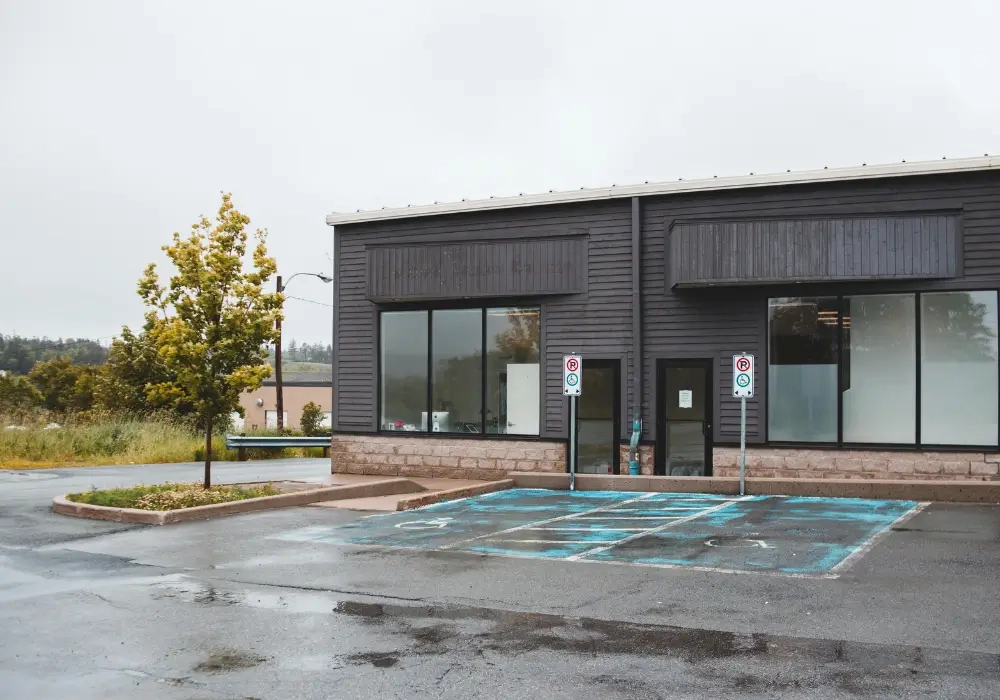
Commercial real estate (CRE) investment managers already know that perimeter control during construction and redevelopment projects is important. But during renovations and repositioning, security is one of the first and easiest places to slip.
An active redevelopment site is constantly changing. Fencing moves as work progresses, contractors and delivery vehicles come and go, and expensive materials are often left exposed overnight. Risk is generally highest after hours, particularly around parking areas, staging zones, and temporary access points where visibility is limited.
Weak perimeter control creates opportunities for theft, vandalism, illegal dumping, and unauthorized entry. Disrupted timelines, increased running costs, and insurance claims are often a result of such incidents.
A strong perimeter strategy, supported by smarter surveillance, is how investors get ahead. With better visibility across the site, it's easier to protect construction schedules, prevent loss and damage, reduce liability exposure, and maintain investor confidence in project execution throughout redevelopment.
This article covers everything you need to know about perimeter control at commercial property construction sites and 7 ways to build a better security strategy today.
Why Perimeter Control Matters during Construction at Commercial Properties
A stabilized building has locked doors and tenants who notice unusual behavior. A construction site, especially when vacant, has none of that. Did you know that the U.S. construction industry loses an estimated $300M to $1B annually due to equipment and material theft, with less than 25% of stolen goods ever recovered? Weak perimeter control is one of the biggest reasons these sites remain attractive targets.
The cost of theft is only one part of the problem, and goes well beyond replacing stolen materials. It can bring construction to a standstill while replacement equipment is sourced and installed, delaying the trades scheduled to follow.
For example, if copper wiring is stolen over the weekend, electricians may need to return before drywall installation can begin, pushing the entire construction schedule back. Vandalism, unauthorized entry, loitering, squatting, and encampments from poor boundary control can also increase costs, delay lease-up, and expose redevelopment projects to avoidable operational, legal, and financial risk.
The business impact of weak perimeter control
|
Business impact |
What it means for the project |
|
Schedule delays |
Stolen materials or equipment halt the work that depends on them, pushing back inspections, lease-up, and stabilization. |
|
Budget overruns |
Replacing stolen materials, repairing vandalism, and re-mobilizing crews add unplanned costs that were never accounted for. |
|
Liability and safety risks |
OSHA expects sites to control and document who is on-site, and injured trespassers can trigger premises-liability claims. |
|
Higher insurance premiums |
Repeat theft or vandalism claims raise premiums, enforce stricter terms, and/or complicate coverage on the next project. |
|
Eroded investor confidence |
Missed timelines and surprise costs can erode trust with investors and stakeholders, and put a strain on projected returns. |
Read more:
- How Theft Disrupts Construction Timelines in Value-Add Properties
- Top Security Challenges for Property Managers and How to Overcome Them
- Understanding and Preventing Commercial Theft
- Commonly Asked Security Questions From Property Managers
Where Commercial Construction Sites Lose Perimeter Control
Commercial property construction sites tend to lose perimeter control for these reasons:
Vacant sites
Before crews mobilize and after they leave each day, the site sits empty for extended periods. Vacant, transitional properties are prime targets for property crime, which may include trespassing, squatting, theft, fire, and illegal dumping because there are fewer "eyes and ears" to notice.
Changing site layouts
Fencing, entry points, and access control systems are often temporary during renovations and repositioning. As work progresses, a boundary that was solid last week may have a gap by the time the next trademen arrive, and nobody updated the monitoring to match.
Boundaries after hours
Most construction losses and damages tend to happen overnight, on weekends, and during holiday periods. Once contractors leave, the perimeter is only as strong as whatever's enforcing or watching it. Basic chain-link fencing alone is rarely enough to deter opportunistic thieves and organized criminals.
Unsecured access points
Temporary gates and removed sections of fencing for heavy machinery access are all vulnerabilities. Delivery access that's convenient during the day becomes an unsecured access point at night; one criminals look to exploit first.
Parking areas
Contractor parking areas generally hold heavy machinery, vehicles, trailers, and tools in the open. They're often outside the main working zone, making them one of the easiest places for criminals to reach undetected. Unused commercial parking lots also tend to lack proper perimeter security whilst construction is underway, "opening the door" for further perimeter breaches and unlawful behavior.
Staging zones and material storage locations
Materials and equipment, such as lumber, copper, fixtures, lighting, power tools, cargo, and generator fuel, often sit exposed between phases of construction work. Even if they're locked inside containers, they're often only secured with little more than a basic padlock. That makes staging and storage zones targeted by unauthorized individuals/groups looking for valuable equipment that is easy to steal.
These perimeter gaps compound quickly across multi-property renovations and repositioning projects. When investment and property managers rely on traditional monitoring methods (e.g., on-site security personnel, manual site checks, and legacy reporting), they have limited visibility and control over every commercial asset in their portfolio.
Read more:
- 7 Key Risk Factors to Monitor in Transitional Commercial Properties
- Understanding Portfolio-Level Risk Management in Commercial Real Estate
Perimeter Control Comparison: Smart Monitoring vs. Traditional Monitoring
Traditional perimeter monitoring generally relies on physical checks by manned guards or basic camera systems with record-only functionality. The problem with this form of access control is that security guards can't monitor all property boundaries simultaneously, and basic cameras have no real-time deterrence value.
Here's how smart monitoring vs. traditional monitoring at commercial property construction sites measure up:
|
Feature |
Smart perimeter control |
Traditional perimeter control |
|
24/7 coverage |
[[YES]] |
[[NO]] |
|
Continuous monitoring |
[[YES]] |
Limited |
|
Real-time alerts |
[[YES]] |
[[NO]] |
|
Verified response before escalation |
[[YES]] |
[[NO]] |
|
Rapid-deployment |
[[YES]] |
[[NO]] |
|
Timestamped audit trail for every event |
[[YES]] |
[[NO]] |
|
Portfolio-wide visibility |
[[YES]] |
[[NO]] |
|
Cost |
Cost-effective rentals |
Costly installation and expensive for 24/7 coverage |
Read more:
- Vacant Property Security: Guard Services vs Mobile Surveillance
- Comparing Alternative Surveillance Options for Vacant Listings
7 Ways To Build a Better Perimeter Security Strategy at Commercial Property Construction Sites
There's no "one-size-fits-all" security measure to secure commercial construction sites. The strongest perimeter control is layered: physical barriers to slow intruders, bright lighting to remove the cover of darkness, and remote-monitored mobile surveillance to detect and deter unusual activity in real-time.
Below is a 7-step overview of how to build that layered approach:
- Put up signage: OSHA requires warning signage for restricted access and construction hazards (29 CFR 1926.200), but this serves double-duty as visible notices also show that a property is actively managed.
- Install physical barriers: High-visibility fencing with strong lockable gates defines the perimeter, and physical blocks like concrete planters help mitigate vehicle-based breaches at access points, staging areas, and parking areas.
- Upgrade lighting: Bright lighting eliminates blind spots and the cover of darkness that intruders rely on to move undetected. It also makes recorded footage far more useful after dark.
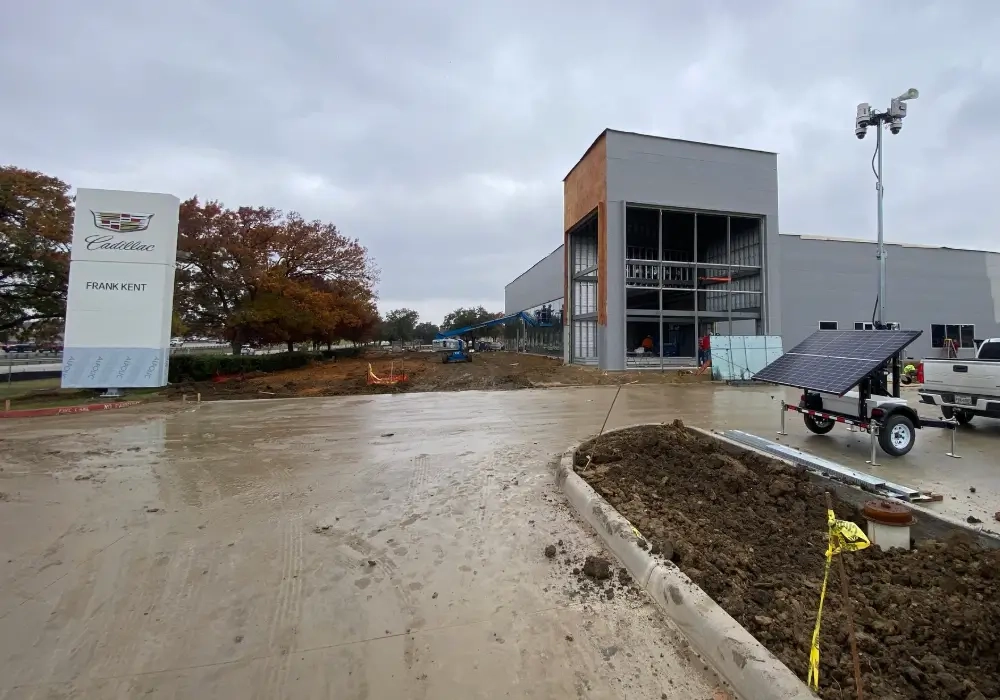
- Deploy temporary surveillance: Rapid deployment mobile surveillance trailers (like the LotGuard PRO) provide near-immediate site security and coverage, without needing fixed infrastructure. Using wide-angle PTZ cameras, live monitoring, and AI-video analytics, they monitor commercial properties, both day and night, and flag suspicious activity before it escalates.
- Monitor activity in real-time: Professional remote monitoring through an Interactive Surveillance Operations Center (ISOC) keeps sites protected 24/7. Trained operators review live video footage and can initiate various response actions from afar.
- Install smart access control logs: Add-on License Plate Recognition (LPR) technology records all vehicle-related movement in and around commercial construction sites, entrances, and parking areas with time tracking and automated audit logs, so you know exactly who entered the area and when. This audit trail also supports insurance claims and investigations should something happen.
- Centralize oversight: Cloud-based monitoring platforms bring video surveillance footage, AI alerts, perimeter breaches, and vehicle data into one centralized dashboard, so investment managers overseeing multi-site developments can monitor activity and generate reports in one place.
How to choose the right perimeter security for redevelopment projects
- Site size: Larger commercial sites and long perimeters may require more surveillance, targeted security in hard-to-reach places, and/or wider-angle coverage to eliminate blind spots.
- Project duration: Short renovations and repositioning projects suit flexible, short-term mobile surveillance deployments, whereas longer builds may justify a more permanent setup.
- Power and connectivity: Solar-powered, 4G/5G-connected surveillance units are ideal for construction sites without reliable power or network access.
- Monitoring requirements: Decide whether you need recorded footage, live monitored response, or both. Note: high-risk sites may need live verification as per insurance requirements.
- Portfolio-wide visibility: If you're running multiple projects, prioritize a platform that consolidates every site into one dashboard through a cloud-based hub.
LotGuard's stronger perimeter surveillance controls help investment managers protect construction schedules, reduce liability exposure, and maintain confidence in project execution throughout redevelopment.
Read more:
Secure Commercial Property Construction Sites Perimeters the Smart Way
The most expensive perimeter breach is the one you discover after the fact. During commercial property renovations and repositioning projects, the cost extends far beyond replacing stolen materials. Delayed schedules, higher operating costs, liability exposure, and lost investor confidence can all have a lasting impact on redevelopment success.
LotGuard's mobile parking lot surveillance solutions help commercial real estate investment managers maintain continuous visibility throughout every stage of construction. With systems that are "Always Awake and Always on Guard", we deliver 24/7 professionally monitored oversight from day one. Achieve full perimeter control at commercial property construction sites the smart way; the LotGuard way.

Contents
[hide]Related news

7 Key Risk Factors to Monitor in Transitional Commercial Properties
Learn the biggest risks affecting transitional commercial properties, from theft and vandalism to fire and unauthorized access, and how to mitigate them. Read more
9 Benefits of All-in-One Surveillance Platforms for Commercial Real Estate Investors
See how integrated monitoring gives CRE investors greater oversight across properties while simplifying reporting and risk management. Read more
The Complete Guide to Securing Vacant Commercial Listings During Marketing and Lease-Up
Discover best practices for protecting vacant commercial properties during marketing and lease-up, from deterrence and monitoring to portfolio-wide security. Read more
FAQs
What is the purpose of perimeter security?
The purpose of perimeter security is to secure a site's outer boundary, deter unauthorized access, and detect potential threats before they disrupt operations, damage assets, or compromise site safety.
Do commercial property construction sites need surveillance?
While it's not a legal requirement to secure perimeters at construction sites, surveillance security systems are considered a best practice to safeguard valuable equipment, materials, and assets. Mobile surveillance with 24/7 active monitoring also provides credible evidence should an insurance claim dispute arise and help with law enforcement investigations.
Who provides commercial property security in the USA?
Many security providers offer commercial property surveillance solutions in the USA, one of which is LotGuard.
Contact Us
Request a Quote for LotGuard
Ready to learn more about how LotGuard can protect your Parking Lots and Properties? Get in touch today for a free quote.