
The Complete Guide to Securing Vacant Commercial Listings During Marketing and Lease-Up
Discover best practices for protecting vacant commercial properties during marketing and lease-up, from deterrence and monitoring to portfolio-wide security.
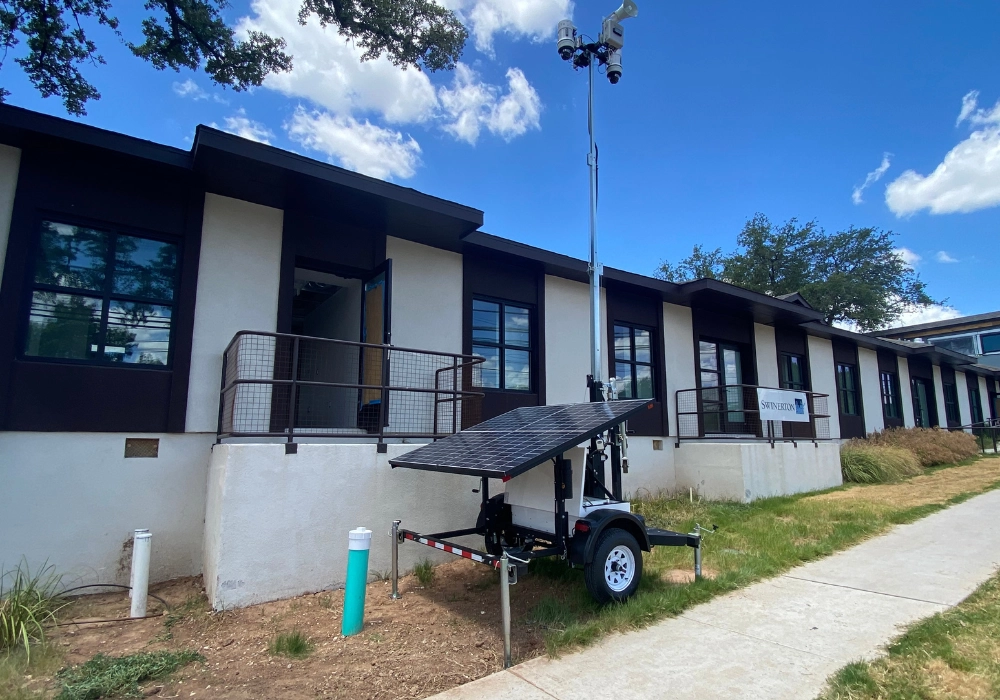
Most commercial real estate (CRE) deals aren't lost because of a bad listing; they're lost because of what happens to the property while it sits empty.
Unoccupied buildings are inherently vulnerable. With no one on-site to spot suspicious activity, the risk of theft, vandalism, and environmental damage is much higher. For brokers, agents, property management teams, and property owners overseeing sites during marketing and lease-up, vacancy is the period when issues such as loitering, water damage, copper theft, and squatting are most likely to occur.
When these risks are left unaddressed, they can affect market value, cause unnecessary expenses, delay lease-up, and put professional reputations on the line.
Securing vacant commercial property comes down to a proactive strategy that aligns with deal timelines. This guide to securing vacant commercial listings covers the risks that surface during vacancy, the statistics behind them, and lays out a practical framework built for temporary vacancy. With clear visibility across parking lots and perimeters, brokers can maintain control and reduce risk throughout the entire listing lifecycle.
USA Vacant Property Crime Statistics
Let's take a closer look at America's statistics on vacant property crime:
-
Property crime occurs in the United States approximately every 4.6 seconds, making it a common criminal offense nationwide.
-
Empty properties are 3 to 5X more likely to experience vandalism, illegal dumping, squatting, unauthorized access, and theft than inhabited sites.
-
Vacant/abandoned sites are consistently associated with higher crime rates, including aggravated assaults and gun violence.
-
Items commonly stolen from vacant properties include copper wiring, HVAC coils, plumbing fixtures, and building materials due to their high resale value on black markets.
-
Illegal dumping cleanup costs at a single vacant site can range from $500 to $5,000+ per incident, before accounting for any environmental liability.
-
Under negligent security law, real estate brokers and property owners can face premises liability if someone (authorized or not) is injured at a vacant site.
-
Empty residential and commercial buildings can become health hazards (e.g., pest infestations) for both the general public and commercial tenants alike.
-
Empty properties marred by vandalism and graffiti often report value or income losses of roughly 5-15%, while retail spaces can experience up to a 20% drop in customer visits.
Read more: The State of Property Crime in the US (And How to Protect Yours)
The Risks of Unoccupied Buildings During Marketing and Lease-Up
When a commercial property is empty, it doesn't take long for anyone scouting the premises to notice. A site with no visible oversight reads low risk, and that perception is often enough to invite unwanted attention. This is why vacant commercial property can quickly become a target for trespassing, vandalism, theft, and arson when left unoccupied and unchecked.
-
Loitering and trespassing: Unauthorized persons on-site create both safety concerns during property tours and liability exposure for brokers and owners if someone is hurt on the property.
-
Graffiti and vandalism: Visible signs of neglect, including commercial space marred by vandalism, lower curb appeal, and signals that nobody is watching the site. Based on the "broken window theory", this often creates a vicious cycle of repeat incidents that's difficult to reverse.
-
Copper and fixture theft: HVAC units, copper, and plumbing fixtures are frequently stripped from vacant local business premises during marketing and lease-up, as there are few to no eyes on site to deter potential intruders. This can lead to unexpected repair bills as well as stall deal momentum.
-
Squatting and encampments: Once squatters establish themselves on vacant sites, removal often becomes a slow and costly legal process. During marketing and lease-up, these situations can delay occupancy, deter potential tenants/buyers, and significantly impact asset value.
-
Illegal dumping and arson: Both dumping and arson are common at unmonitored premises, leaving behind hefty clean-up costs, potential liability claims, and major structural damage/costly repairs (or loss of the asset entirely).
Read more:
- 7 Proven Ways to Reduce Squatting Risk While Marketing Vacant Properties
- Environmental Risk Factors that Increase Property Crime Exposure
Main Risks Across Vacant Commercial Listing Lifecycles
Risks change as a commercial building moves from vacancy through marketing and lease-up to occupancy. That means each phase of the listing lifecycle brings different exposure points, from unsecured access during early vacancy to increased foot traffic during active marketing periods.
Understanding where risk lives at each stage matters to protecting the asset, maintaining deal momentum, and avoiding disruptions that could derail leasing timelines.
|
Lifecycle stage |
Main risks |
Recommended security measures |
|
Newly won listing |
● Unsecured access points |
● Exterior security solutions that deploy quickly and provide an immediate visible deterrent |
|
Extended marketing period |
● More foot traffic |
● Regular inspections |
|
Active property tours |
● Loitering/trespassing that interrupts showings |
● Property tour preparation and ongoing maintenance |
|
Lease-up |
● Theft of new fixtures, valuable assets, and materials |
● Update insurance policies |
Newly won listings
The first 48-72 hours set the tone for the entire listing lifecycle. An unsecured property during this timeframe is an attractive target for criminals before marketing even begins.
Putting security measures in place early, particularly around exterior areas such as parking lots and perimeters, helps reduce risk, preserve property value, and keep the listing on track.
Read more:
- Best Practices for Rapidly Securing New Listings
- Commonly Asked Security Questions From Property Managers
Extended marketing periods
Brokers already know that not every listing closes quickly, and extended marketing periods have become the norm rather than the exception. The longer a site sits empty, the more it shows the traits opportunistic thieves and organized crime groups (OCGs) look for: predictable vacancy, reduced oversight, and visible signs of low activity.
To mitigate crime exposure, brokers should conduct regular inspections and consider mobile surveillance with 24/7 remote video monitoring.
Read more: How to Protect a Listing from Crime During Extended Marketing Periods
Active property tours
Empty buildings can be staged and priced perfectly and still fall short the moment a prospect pulls up. If external spaces feel neglected, unsafe, or have someone loitering near the entrance, tours are interrupted, conversion rates drop, and a broker’s credibility with both tenants and owners can take a hit.
To reduce these risks, commercial real estate brokers need rapid, short-term, tour-ready security. Cloud-based remote monitoring and monitored alarm systems provide 24/7 surveillance and real-time visibility into site activity, generating clear security reports that can be shared with owners to demonstrate due diligence and reinforce trust.
Read more: Using LotGuard to Keep Vacant Listings Tour-Ready
Lease-up
The lease-up phase (between a property becoming available and reaching full occupancy) remains high-risk for brokers and property owners. As new fixtures (and utilities) are installed to prepare the site for tenants, vacant sites become prime crime targets. These incidents can extend vacancy periods and increase costs across multiple listings.
To manage risk during lease-up, brokers should ensure commercial property insurance policies are updated and deploy surveillance coverage that scales with fast-moving listings. These proactive measures allow teams to maintain oversight as occupancy changes and keep lease-up strategies moving forward as expected.
Read more: Protecting Vacant Units and Fixtures During the Lease-Up Phase
8-Step Playbook for Securing Empty Properties During Marketing and Lease-Up
No single security measure secures empty properties on its own. The most reliable approach to detecting and deterring potential risk is layered, working from the perimeter inward so each step "builds" on the last.
The playbook below combines physical security measures with smart monitoring to provide significant advantages during vacancy, marketing, and lease-up:
Step #1: Do a risk assessment
Begin with a full site walkaround, paying close attention to boundaries, access points, and parking areas to identify blind spots and vulnerabilities. Side gates and unsecured perimeters are the most commonly exploited points at vacant commercial sites, particularly after dark.
When these areas aren't properly secured, the risk of break-ins, vandalism, liability claims, tenant complaints, and insurance claims increases tenfold, creating problems that can derail marketing/lease-up efforts.
Step #2: Reinforce entry points
Once the site inspection is complete, the next step is to prioritize which areas need immediate attention. This allows resources to be focused where they'll have the greatest impact in protecting your real estate asset.
High-risk access points should be reinforced with proactive measures such as steel doors, burglar bars, biometric keypads, heavy-duty locks, and boarding of any broken windows. Apart from deterring trespassers and criminals, these upgrades also improve the perception of safety during property tours.
Step #3: Invest in exterior security
Once entry points are secured, exterior security (with active monitoring) becomes the next logical step. Open parking spaces and large commercial layouts give unwanted visitors room to move undetected, particularly after hours.
Deploying wide-area PTZ (Pan-Tilt-Zoom) surveillance cameras across perimeters and lots is one of the most effective ways to secure vacant properties during marketing and lease-up. These systems work reliably in low-light and adverse weather conditions, providing continuous visibility and real-time response.
While on-site security personnel and security patrols can supplement this coverage, they're costly to sustain for extended periods, making mobile security a more scalable and cost-effective solution.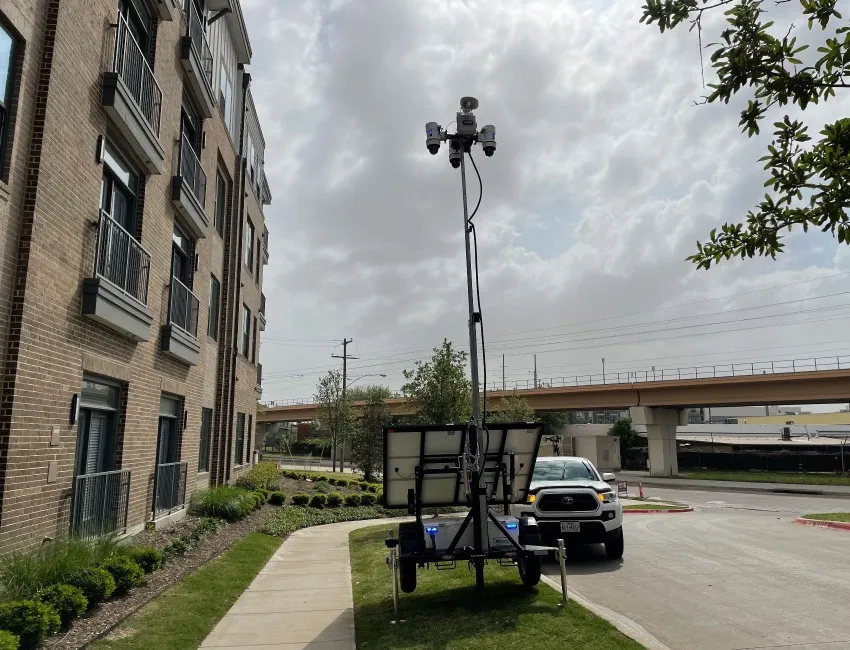
Step #4: Upgrade lighting
With exterior surveillance in place, proper lighting becomes the next line of defense. Visibility is crucial to deterring trespassers and unwanted activity after hours.
Poor exterior lighting attracts suspicious activity, especially around side entrances and parking lots. Motion-triggered and solar-powered lights strategically placed in these areas remove the cover of darkness criminals rely on and work reliably even where utilities are disconnected.
Step #5: Make the property look "lived in"
After lighting has been addressed, attention turns to ongoing property maintenance. A building that appears neglected tells criminals nobody's paying attention. Even small details, like piles of trash and overgrown landscaping, can suggest vacancy for an extended period.
Regular inspections (including checking for vermin) and upkeep, clear signage, quick graffiti removal, and visible "Trespassers will be prosecuted" notices all help reinforce active oversight.
Step #6: Use smart access control systems
Once a property looks actively maintained, the next priority is controlling who can enter and exit the site. As mentioned, unsecured access points make unauthorized access easy.
Smart control systems (e.g., License Plate Recognition (LPR) cameras, automated gates) provide an additional layer of control that limits access and creates accountability.
Add-on LPR systems, specifically, automatically monitor all vehicles passing through entry/exit points across your listing, complementing on-site surveillance for full situational awareness. They capture details (make, color, model) at speeds of up to 130 mph, timestamp each incident for trend analysis (e.g., repeat visits), and provide visual evidence for law enforcement investigations and insurance claims.
Step #7: Consider cloud-based vacant property security
Now that access points are controlled, what do you do when managing security across multiple listings? This is where cloud-based monitoring platforms add value, providing 24/7 oversight of all active listings from a single, centralized dashboard.
By consolidating all video surveillance footage, AI detection alerts, and vehicle data in one place, brokers and property management teams can stay informed about everything that happens on-site, without being physically present at each location. This level of open communication also makes it easier to share reports with property/business owners, building trust during marketing and lease-up.
Step #8: Update vacant property insurance
With all of the above in place, the final step is ensuring your insurance coverage is in line with the realities of your vacant listing.
Standard property insurance often limits or excludes coverage for theft, vandalism, and incidents like water damage once a site has been vacant for more than 30-60 consecutive days. During extended marketing/ lease-up periods (when the building may sit empty for weeks or months at a time), it's best to confirm policy terms and conditions with your insurer. This helps keep coverage valid and sidesteps costly out-of-pocket expenses if something happens.
Read more:
-
A Comprehensive Property Management Risk Mitigation Framework
-
The Role of Mobile Surveillance in Modern Property Management
Mobile Surveillance vs Traditional Monitoring for Vacant Property
Real estate brokers already know they need to secure unoccupied buildings, but they may not know how mobile surveillance and traditional security (guards, fixed cameras) compare.
This section explains exactly that:
|
Feature |
Mobile surveillance |
Traditional monitoring |
|
Visible deterrent |
[[YES]] |
[[YES]] |
|
Coverage |
Near-360° |
Limited to fixed points/patrol routes |
|
Rapid deployment |
[[YES]] |
[[NO]] |
|
Active deterrence |
[[YES]] |
Record-only |
|
Infrastructure needed |
No (solar, 4G/5G) |
Yes (fixed systems require mains power and internet) |
|
Crime reduction |
Up to 87% |
Varies |
|
Cost |
Flexible, short-term rentals |
Expensive: $30-$70+/hr per guard; high upfront costs for fixed systems |
Security personnel bring a physical human presence, but they can't monitor every access point and boundary line simultaneously. At $30-$70+/hour per guard, 24/7 coverage is rarely realistic for a property not yet generating an income.
Fixed camera systems help address some visibility gaps, but most are record-only and offer little real-time deterrence. They also rely on permanent infrastructure (mains power, fixed internet, cabling), making them an expensive and impractical choice for vacant sites where utilities may be disconnected.
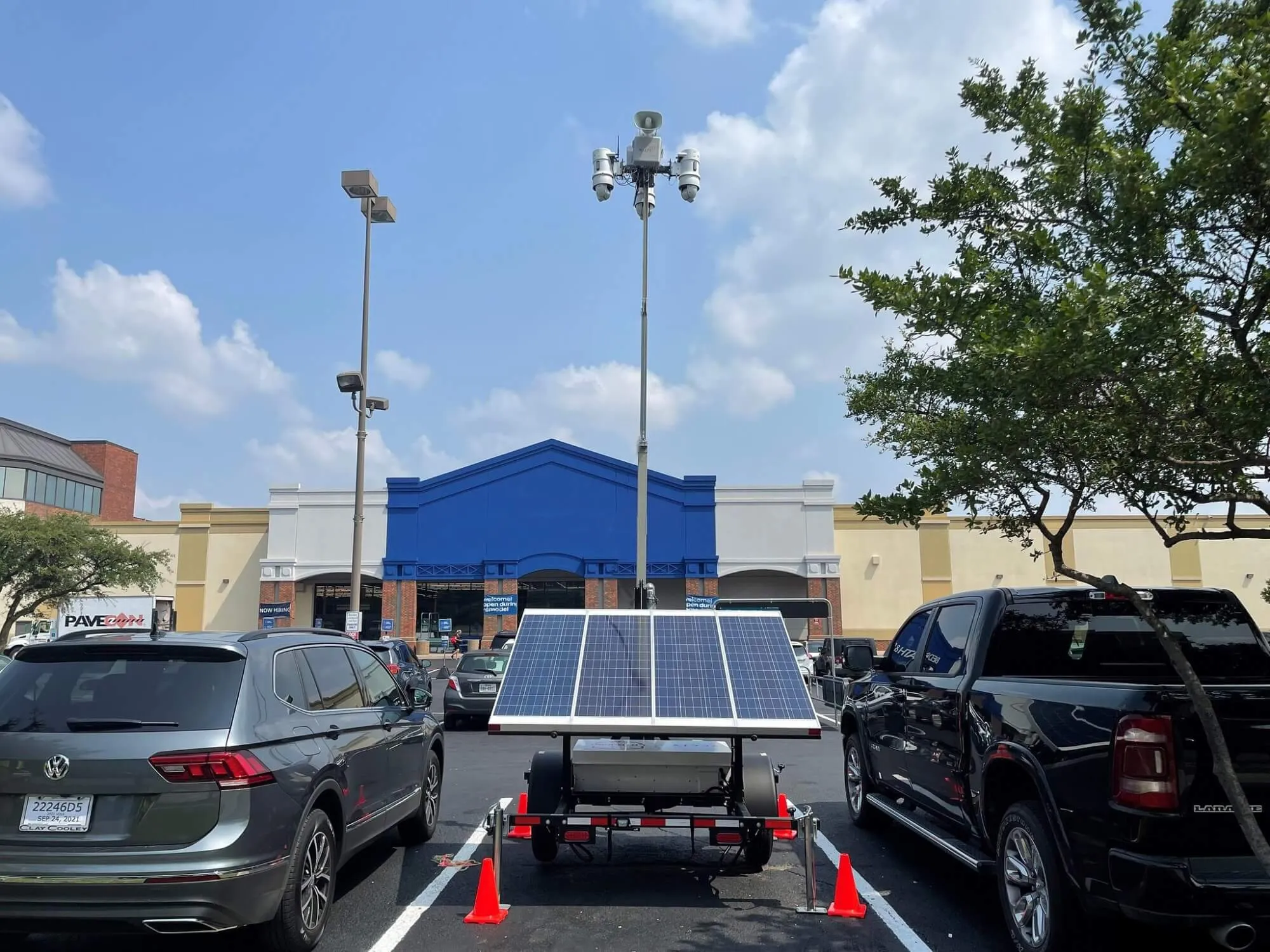
Mobile surveillance and rapid deployment solutions, such as the LotGuard PRO, address these limitations. They incorporate near-360° surveillance cameras, AI-video analytics, and remote video monitoring (linked to Interactive Surveillance Operations Centers (ISOCs)) to detect movement and threats in real-time. Powered by solar energy with battery backup, they transmit data securely over 4G/5G networks and centralize data in the cloud.
Their autonomous design allows units to be deployed (and relocated) quickly, deliver 24/7 coverage, and provide a cost-effective (rental) alternative to traditional monitoring throughout marketing and lease-up.
Read more:
-
Short-Term Security Rentals vs Long Contracts for Real Estate
-
Comparing LotGuard to Alternative Surveillance Options for Vacant Listings
5 Benefits of Proactive Security during Vacancy for Real Estate Brokers
Below, we discuss the advantages of proactive security when securing vacant commercial listings:
-
Faster deal velocity: A secure, well-maintained site moves through marketing without the delays a theft or break-in brings, keeping deals on schedule.
-
Preserved valuation: Stopping crime and vandalism before it escalates protects asset value and avoids the kind of damage that pushes capitalization (cap) rates up.
-
Improved tour conversion rates: A property that looks and feels safe boosts a prospect's confidence through showings, a crucial time when first impressions (and deals) are won or lost.
-
Stronger owner trust: Transparent security reporting shows property owners that risks are being actively monitored and managed. This builds trust with owners and protects the broker’s reputation throughout marketing and lease-up.
-
Lower liability exposure: Proactive monitoring helps prevent issues like illegal dumping, theft, fires, and slip-and-fall claims, reducing legal risk and costly claims later on.
LotGuard Helps Secure Vacant Commercial Properties
LotGuard's mobile parking surveillance solutions provide end-to-end protection for vacant commercial property listings, from acquisition through marketing and lease-up. Built for the realities of temporary vacancy, our systems deploy quickly, relocate easily, enable rapid responses to threats, and are available on flexible rental terms that match deal timelines.
With AI detection, 24/7 monitoring, live response, and cloud-based reporting, we help brokers and owners deter threats, respond faster, and keep listings market-ready at every stage of the listing lifecycle.
Here's the breakdown:
-
AI detection with 24/7 monitoring: Our systems provide continuous monitoring, spotting suspect behavior as it happens. Smart AI filtering helps filter out everyday "normal" movement, so only genuine concerns are escalated, with trained ISOC professionals checking feeds and responding in real-time.
-
Rapid deployment: Basic installations can be up and running in around 20 minutes, without the need for permanent infrastructure. This also allows units to be relocated easily as listings (and risks) change, making it a flexible, self-moveable option for brokers managing multiple commercial listings during marketing/lease-up timeframes.
-
ISOC rapid response: When unusual activity is detected, experienced operators verify the situation before taking action. This may include issuing live audio voice down challenges to deter intruders or contacting law enforcement when necessary.
-
Add-on centralized reporting: All video footage, additional vehicle data, and alerts are stored in a secure, cloud-based platform that's accessible from any connected device. With everything centralized, reports can be generated and shared with owners in a few clicks.
Backed by US-based support and thousands of active nationwide deployments, LotGuard seamlessly slots into your security strategy without disrupting marketing or lease-up efforts.
Protect Vacant Commercial Property Throughout Listing Lifecycles
Vacant doesn't have to mean vulnerability. The listings that move fastest are the ones that look actively managed from the day they're won and stay that way through marketing into lease-up.
A layered approach, combining physical measures with smart surveillance, stops small issues from turning into deal-stopping problems. Done right, it becomes part of how you protect asset value, maintain owner trust, and keep deals on track at every stage of the listing lifecycle.
With thousands of deployments nationwide and a fully-managed service that's "Always Awake and Always on Guard", LotGuard keeps vacant listings secure from acquisition to lease-up without slowing deals down.

Contents
[hide]Related news
Frequently Asked Questions About Vacant Property Security
Find answers to common questions about vacant property security, from risks and solutions to protecting assets and reducing liability. Read more
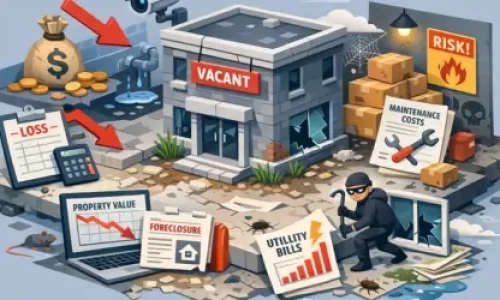
The Hidden Cost of Vacancy in Commercial Real Estate (Beyond Lost Rent)
Explore the hidden costs of vacancy in commercial real estate, from security risks to asset deterioration and operational impact. Read more

Vacant Property Security: Guard Services vs Mobile Surveillance
Compare guard services and mobile surveillance for vacant property security and learn which option offers better protection and cost efficiency. Read more
FAQs
Why are vacant buildings more prone to crime?
With no one on-site and no regular oversight, an empty building reads as low-risk to opportunistic and organized criminals alike. Vacant and transitional properties are 3 to 5X more likely to experience crime and squatting than occupied ones, and the risk compounds the longer a site is unoccupied.
Does insurance cover theft when a property stands empty?
Standard insurance cover typically limits or excludes theft and vandalism once a property's been vacant for 30 to 60 consecutive days, so confirm vacancy terms with your insurer before a listing goes live.
How do buildings become vacant?
Vacant properties may become unoccupied due to various reasons such as sale, lease, renovation, liquidation, end of tenancy, foreclosure, or development, which can lead to legal implications regarding their management and security.
Contact Us
Request a Quote for LotGuard
Ready to learn more about how LotGuard can protect your Parking Lots and Properties? Get in touch today for a free quote.