
ROI Calculator: Preventing Copper Theft in Commercial Property Renovations
Calculate the potential cost of copper theft during commercial property renovations and compare losses against the investment in proactive site security.
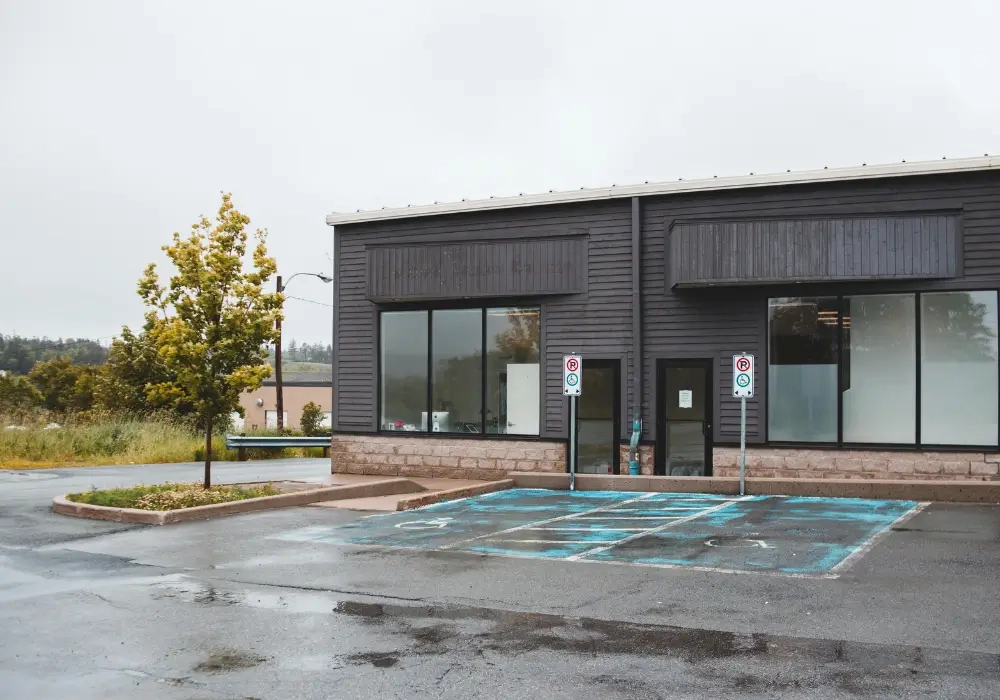
A single copper theft incident can set back a renovation project by weeks. There's the cost of replacing what was stolen, but also the damage left behind, coordinating contractors who have to come back, and work that can't move forward. In some cases, theft can even wipe out a property's profitability and trigger insurance premium increases of 15-25% at the next renewal.
For perspective, construction site theft, including copper, materials, and equipment, costs the U.S. industry an estimated $300 million to $1 billion a year, according to the National Equipment Register and National Insurance Crime Bureau. Some industry reports show that organized crime groups are responsible for roughly 25% of large-scale industrial copper thefts.
For commercial real estate (CRE) investment managers overseeing a value-add renovation, an unexpected theft can divert capital from the redevelopment budget, push back construction schedules, and delay cash flow generation and tenant move-in dates. It can also raise operating expenses and put pressure on net operating income (NOI) and internal rate of return (IRR).
Below, we walk you through an ROI calculator for copper theft in commercial property renovations, providing managers with a framework for putting a number on that exposure and weighing it against the cost of preventing it before it happens.
What Factors Increase a Commercial Site's Copper Theft Risk?
Not every commercial redevelopment project carries the same level of copper theft risk. The stage of the project, the site's location, and the value of copper can all make a difference.
Here are 4 key factors that consistently drive higher risk:
- Renovation phases: A site is most exposed during transition (between acquisition and stabilization), where access points may be unsecured, wiring and plumbing may be exposed, and HVAC equipment is left out in the open. On a large project, these vulnerable periods can last for months, giving both opportunistic thieves and organized criminals plenty of time to target high-value materials.
- Property location and occupancy levels: Where the property is situated and its occupancy level matters. Sites in areas with high crime rates (and a history of metal theft), or those with prolonged vacancy, can be more attractive to offenders. Being close to major roads or scrap metal facilities can also make stolen copper easier to move off site.
- Scrap metal market rates: Copper theft tends to rise when metal value increases, as higher scrap prices make stolen copper more attractive to thieves. Some industry research has found that a $1/lb increase in copper prices can correlate with a 30-40% increase in theft incidents. In the past year alone (2025-2026), copper has risen by nearly 50%, increasing the financial incentive to target wiring, HVAC systems, and other metal components during construction.
- Site visibility: A poorly lit property (including its parking lot) with limited after-hours visibility can make it easier for criminals to move around undetected. This can increase theft, vandalism, and trespassing, particularly when transitional sites are unstaffed and unmonitored. With around 70% of copper theft (and parking lot crimes) occurring overnight, good lighting and active crime deterrents play a big role in making a property less susceptible to suspicious behavior.
Understanding these risk factors is only step one. The real danger to a project's bottom line and return on investment (ROI) lies in the hidden costs that follow a break-in; costs that go well beyond the value of the copper itself.
Read more:
- Environmental Risk Factors that Increase Property Crime Exposure
- 7 Key Risk Factors to Monitor in Transitional Commercial Properties
- The State of Property Crime in the US (And How to Protect Yours)
- Commonly Asked Security Questions From Property Managers
- The Main Threats to Vacant Properties
What Copper Theft Actually Costs Commercial Real Estate
Copper theft impacts CRE investments in both financial and operational ways. The immediate cost is obvious: replacing stolen materials and repairing damage. But the knock-on effect can be just as expensive, especially when a theft delays contractors or pushes back lease-up strategies.
There's also the risk of it happening again. If the same access points or perimeters remain unsecured, a site already targeted as "low risk" can remain vulnerable.
The table below briefly outlines what a major theft could cost unprotected commercial property, along with how those losses could potentially stack up over 3 years*.
|
Cost category |
Theft impact ($) |
Potential 3-year exposure |
Financial and operational impact |
|
Raw materials and equipment |
5,000 |
15,000 |
Replacement cost of stolen copper wiring, piping, and HVAC coils |
|
Structural damage |
100,000+ |
300,000+ |
Repair to walls, roofing, and exterior; water damage from severed pipes |
|
Lost business and delayed lease-up |
200,000+ |
600,000+ |
10-21 day project delays at an estimated $10,000/day in lost time and delayed tenant move-ins |
|
Contractual penalties and overtime |
Varies by contract |
Varies |
Overtime labor costs, contractor delay penalties |
|
Insurance deductibles and premium hikes |
20,000+ deductible, plus 15-25% premium increase |
15-25% premium hike year-on-year |
Higher costs per claim with ongoing premium hikes |
|
TOTAL ESTIMATED COST |
~320,000+ |
~1M+ |
- |
*These costs are for illustrative purposes. Actual exposure costs depend on the site's size, location, and phase of construction.
Insurance and compliance
Insurance companies take note of security measures at construction and renovation sites, particularly when the area is unmonitored and where valuable copper or other high-value items are left exposed for long periods. The level of security (or lack thereof) you have can affect the terms of cover, including higher deductibles (i.e., excess amounts) for theft, stricter policy terms, and/or increased premiums after something does happen.
Remote-monitored surveillance can help strengthen your case. Instead of just saying that a property is "secure", CRE investment managers can prove that the site has active surveillance in place, with real-time, timestamped documentation of activity. This gives insurers concrete evidence when assessing the property's risk, which can often lead to more favorable policy terms and conditions.
Read more:
- Understanding and Preventing Commercial Theft
- Environmental Risk Factors that Increase Property Crime Exposure
- How Theft Disrupts Construction Timelines in Value-Add Properties
- How Crime Affects Internal Rate of Return on Value-Add Property Deals
- How Crime Impacts Cap Rates and Valuation for Commercial Property
Commercial Property ROI Calculator: How to Calculate Security ROI for Copper Theft Prevention
To calculate the ROI of copper theft prevention, subtract the annual cost of your security system from the expected annual loss avoided, divide the result by the security cost, and multiply by 100.
Formula: ROI = (Expected loss avoided − security cost) ÷ security cost × 100
The ROI calculation below breaks this into 3 steps, using a worked example based on an active renovation site with heightened copper theft exposure. Swap in your own project numbers to justify spend to investment committees.
Step #1: Calculate your annual theft risk
This step estimates the dollar value ($) of theft exposure a site carries per year, based on the average cost of an incident and how likely that incident is to occur.
Formula: Annual theft risk = (Materials + structural damage + delay costs) × theft frequency
Example: A mid-size renovation site with an average incident cost of $75,000 (combining materials, structural damage, and delay costs) and a 40% annual likelihood of experiencing a theft, based on its active renovation status and limited monitoring:
$75,000 × 0.40 = $30,000 annual theft risk
Step #2: Calculate security ROI
This step compares the loss avoided by preventing that risk against the cost of the security system itself.
- Net benefit = Expected annual loss avoided - annual security spend
- ROI formula = (Expected annual loss avoided - annual security spend) ÷ annual security spend × 100
Example: Using the $30,000 annual risk from Step 1, against an illustrative annual security cost of $24,000:
- Net benefit = $30,000 − $24,000 = $6,000
- ROI = ($30,000 − $24,000) ÷ $24,000 × 100 = 25% ROI
Step #3: Calculate the payback period
This step shows how quickly the security investment pays for itself (in months).
- Payback = Prevention cost ÷ (annual risk ÷ 12 months) = months to break even
Example: 30,000 ÷ 12) = $24,000 ÷ $2,500 = 9.6 months to break even
On a 12-24 month renovation project, a 9.6-month payback period means the security investment pays for itself in less than a year, well before the project reaches stabilization. The remaining months of coverage represent risk reduction against a hold period's copper theft exposure.
Copper Theft Prevention Strategies: Comparing Security ROI
When it comes to securing vacant commercial real estate during renovations, investment managers often weigh up 3 options:
- On-site guards provide a human presence but have high labor costs, coverage gaps during shift changes, and limited scalability across a multi-site portfolio. A guard covers one location at a time and carries an ongoing hourly cost (between 80+) regardless of whether an incident occurs.
- Fixed-installed surveillance cameras have higher upfront costs and require permanent infrastructure (mains power, Wi-Fi) that doesn't adapt well to sites with changing layouts during renovation. Coverage is fixed to wherever the cameras are originally installed, which can create blind spots and leave newly exposed areas unmonitored as work progresses.
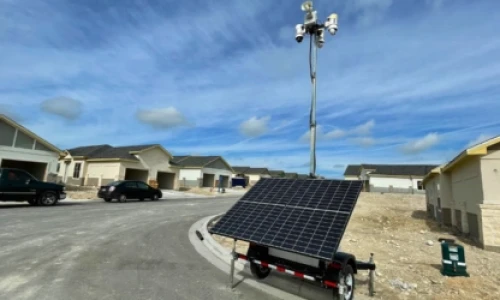
- Mobile surveillance, like the LotGuard PRO, combines solar power, wide-angle cameras, rapid deployment, 24/7 live video monitoring, and AI-powered detection, without requiring the fixed infrastructure or full-time staffing costs of the other 2 approaches. Coverage moves with the site as the renovation progresses, rather than staying fixed to a single viewpoint, and supports add-on integrations like License Plate Recognition (LPR) technology for precise vehicle tracking.
Read more:
- Comparing LotGuard to Alternative Surveillance Options for Vacant Listings
- Vacant Property Security: Guard Services vs Mobile Surveillance
- Mobile Surveillance vs Fixed Install Systems for Commercial Property Construction
How LotGuard delivers the highest ROI
- Rapid deployment: Our units can be operational within hours (20-minutes for basic setups), providing near-immediate coverage after acquisition.
- Flexible coverage: Mobile trailers can be repositioned/relocated as access points and other high-risk zones shift throughout renovation phases, ensuring 24/7 coverage wherever it's needed.
- Remote monitoring: Trained operators at an Interactive Surveillance Operations Center (ISOC) verify detected activity in real-time and can initiate near-instant responses (e.g., dispatching law enforcement) rather than flagging incidents after the fact.
- Crime prevention: Mobile surveillance acts as a strong visible deterrent. When combined with active monitoring, it reduces the likelihood of an incident occurring in the first place, rather than simply documenting one after it happens.
- Centralized cloud documentation: Incidents are logged, timestamped, and stored in our cloud-based monitoring platform, and managers can generate reports on demand. This provides records that help support insurance claims and give investment committees concrete evidence of active risk management.
- No permanent infrastructure investment: Flexible rental packages allow security to be scaled up or down with the project's needs, without the capital commitment a fixed system requires.
Read more:
- A Comprehensive Property Management Risk Mitigation Framework
- Post-Acquisition Security Planning for Commercial Real Estate
- Safeguarding Newly Won Commercial Listings with LotGuard
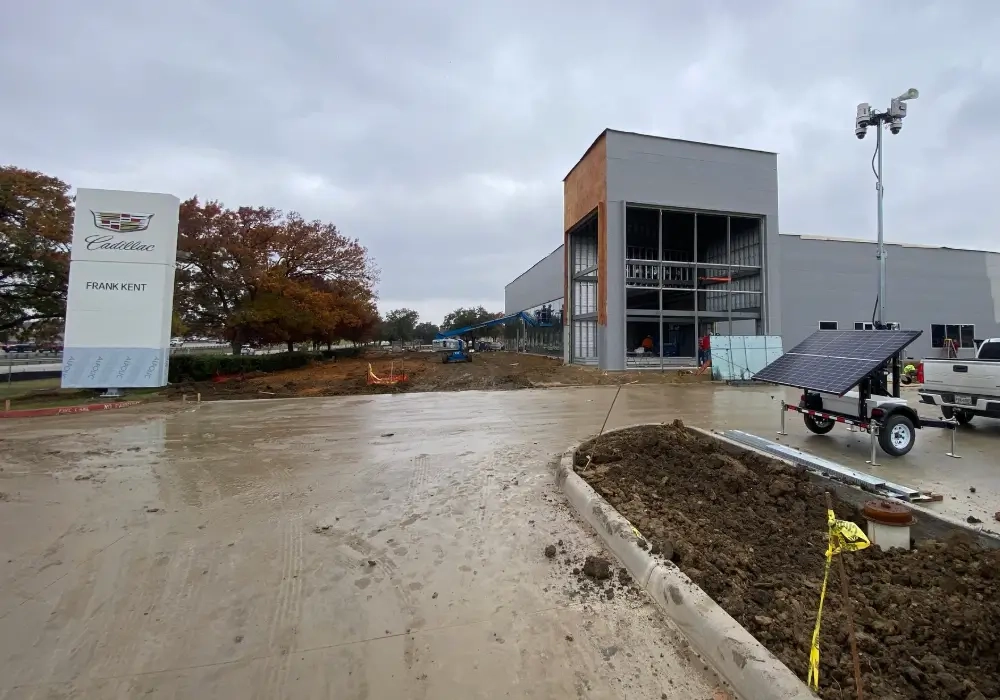
Prevent Commercial Copper Theft the Smart Way
Copper theft is a major risk during renovation and lease-up phases, when occupancy is low, metal prices increase, and site visibility is limited. Delays, structural repairs, and higher insurance premiums can eat into a value-add project's returns, pressuring cash flow generation, NOI, and IRR.
Calculating the ROI of commercial copper theft prevention gives investment managers a clearer way to weigh that risk against security costs. By estimating the potential annual loss, avoidable losses, and payback period, you can put a realistic figure on what security could save before an incident happens.
LotGuard provides rapid deployment mobile surveillance that moves with your project as work progresses. With 24/7 monitoring, active deterrence, AI detection, and no need for fixed infrastructure, it gives CRE managers a cost-effective, reliable way to protect transitional properties. At 87% cheaper than manned guards, we provide continuous coverage without the ongoing cost of on-site personnel or the high initial investment of static systems.
If you're planning a commercial renovation and want to put a number on your copper theft risk, speak to one of our security specialists to protect your property from day one.

Contents
[hide]Related news
A Comprehensive Property Management Risk Mitigation Framework
Build a 4-step risk mitigation framework for property management, covering physical security, liability, and exterior monitoring. Read more
Best Practices for Rapidly Securing New Property Listings
Learn how to quickly secure new property listings with proven strategies that reduce risk, improve safety, and protect asset value. Read more
How Much Does Vacant Property Security Cost?
Discover the true cost of vacant property security and how different solutions compare in price, coverage, and effectiveness. Read more
FAQs
How do you calculate security ROI of copper theft protection during commercial renovations?
To calculate the return on investment (ROI) of copper theft prevention, subtract the annual cost of your security system from the expected annual loss avoided, then divide the result by the security cost, and multiply by 100.
Here is the formula to use:
ROI = (Expected loss avoided − security cost) ÷ security cost × 100
How common is copper theft in commercial real estate construction?
In the USA, copper theft is very common in commercial construction, contributing to about $1 billion in annual losses nationwide.
Is metal theft a major risk for commercial renovations?
Commercial renovation projects can be particularly vulnerable to theft because copper wiring, piping, and HVAC equipment may be exposed between acquisition and final lease-up, sometimes for months at a time. Value-add properties also tend to have higher vacancy and less day-to-day oversight than occupied buildings, which can leave the site with fewer people around to spot suspicious activity. That combination can make them an easier target for thieves.
How does metal theft impact commercial real estate?
Metal theft can impact commercial real estate in more ways than one. It can increase operating costs through repairs, replacement materials, labor, and other additional expenses. These costs can reduce annual cash flow and, if repeated, affect the total cost of owning and renovating a property. For CRE investors, ongoing theft can also put pressure on property value and the returns expected from the original purchase price.
Contact Us
Request a Quote for LotGuard
Ready to learn more about how LotGuard can protect your Parking Lots and Properties? Get in touch today for a free quote.