
Preventing Repeated Equipment Theft at Commercial Renovation Sites
Learn how to prevent repeated equipment theft at commercial renovation sites by identifying security gaps and strengthening monitoring and site protection.
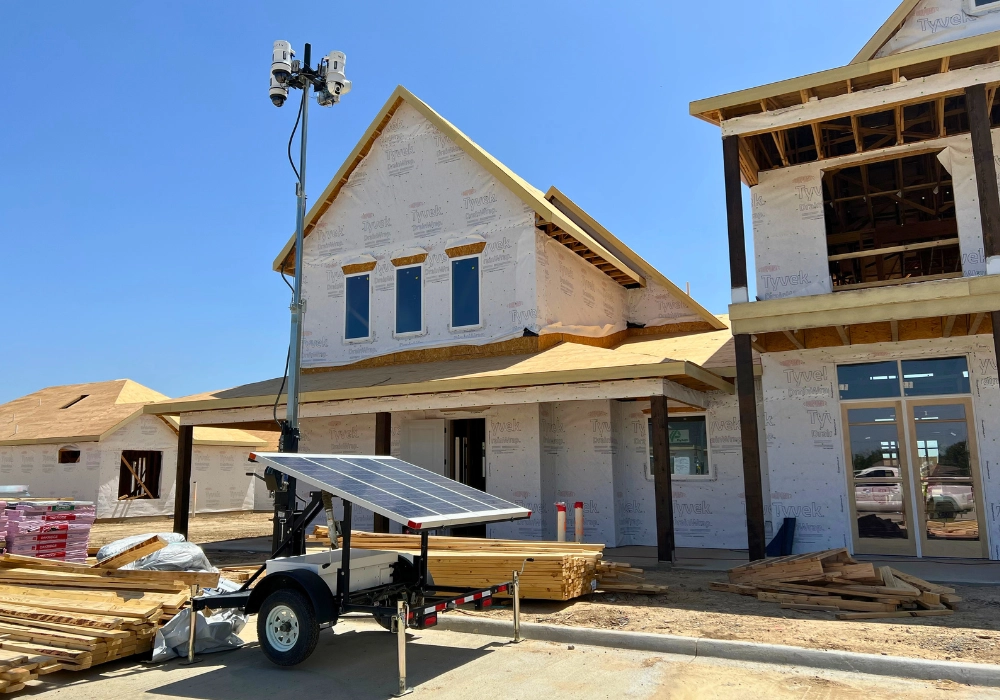
Commercial real estate (CRE) investment managers already know equipment theft is a risk during renovations. But the bigger concern comes in when it keeps happening. A stolen generator or piece of equipment is one loss to deal with; repeated theft a few weeks later might suggest that a site remains exposed and that thieves already know how to get in.
CRE redevelopment projects are inherently exposed by design. Construction workers change the site layout as work progresses, equipment and material storage areas shift between phases, perimeters are often temporary, buildings sit vacant before reaching stabilization, and sites are mostly unattended overnight and during shutdown periods.
Preventing repeated equipment theft at commercial renovation sites involves much more than replacing what was stolen. Investment and property managers need to adapt security strategies as the site evolves, and this guide explains everything you need to know.
Why Equipment Theft Recurs During Commercial Renovations
Construction site theft rarely happens once and stops. During renovations, it's common for valuable equipment, like power tools, generators, copper wire, and heavy equipment, to be "left out in the open" between construction phases, low occupancy stages, and at night. These conditions, combined with high resale values on illicit markets, make them attractive targets to criminals.
To put the scale into perspective, here are a few industry figures on construction equipment theft:
- In the U.S., construction site theft costs the industry around $300 million to $1 billion each year.
- Construction sites face an estimated $400 million in annual theft losses.
- The states worst affected by site crime are California, Texas, and Florida.
- Less than 25% of stolen construction equipment is ever recovered.
- Construction theft incidents average around $20,000 to $40,000 per event.
With that in mind, here's why recurring theft keeps happening in the construction industry:
Layouts keep changing
During renovations at value-add commercial properties, layouts continuously change. Site teams may move perimeter fencing, change gates/access points, or shift equipment, tools, and materials from one side of the site to another. Demolition can also open up areas that were previously enclosed, while temporary entrances may be added for deliveries and subcontractors.
This also creates a problem for fixed security systems. A camera positioned to cover a high-risk area one week may point to an empty space a few weeks later, and the newly exposed area/s go unnoticed. Without regular oversight, security coverage can fall behind as sites evolve, and the gap is only noticed after something goes missing.
Low occupancy creates predictable opportunities
Weekends, holidays, shutdown periods, and after-hours stretches leave properties undergoing renovation unattended for long periods. It doesn't take long for vacant sites to draw unwanted attention, as thieves and trespassers are quick to exploit these weak points.
Opportunistic theft, as well as organized crime, often follows a "scout and return pattern", with offenders testing response procedures, looking for blind spots, and identifying valuable equipment such as copper wire first before returning later. For property renovation sites relying on passive measures such as simple chain-link fencing or infrequent foot patrols, repeated equipment, and tool theft is much more common.
High resale value of construction equipment and materials
Renovation construction sites hold various high-value items such as heavy machinery, copper piping, HVAC systems, plumbing fixtures, and specialized power tools. Most of these items are easy to steal and transport, particularly when stored on-site with little security in place.
Copper specifically is largely targeted for its high resale value on illicit markets, and industry reports have often correlated higher theft risk with increases in copper prices.
Response times and discovery are often delayed
Commercial renovation sites can sit unattended for long periods, particularly for those in remote locations or during times of low occupancy. When a site is empty overnight or on weekends, fewer people are around to notice suspicious activity or respond to an intrusion.
In many cases, equipment theft is only noticed when crews return for their next shift. By then, thieves may have had hours (or days) to move through the site, locate valuable items, and leave undetected.
Read more:
- 7 Key Risk Factors to Monitor in Transitional Commercial Properties
- ROI Calculator: Preventing Copper Theft in Commercial Property Renovation
- Environmental Risk Factors that Increase Property Crime Exposure
- Commonly Asked Security Questions From Property Managers
The True Cost of Recurring Theft at Commercial Renovation Sites
For investment managers tracking CapEx, net operating income (NOI), internal rate of return (IRR), and asset value, the cost of stolen equipment extends far beyond replacing a generator or copper piping. Each incident has a knock-on operational and financial impact, and repeated theft compounds the problem.
|
Direct theft impact |
Operational impact |
Financial impact |
|
Lost machinery and materials |
|
|
|
Physical site damage |
|
|
|
Insurance claims |
|
|
|
Project schedule delays |
|
|
When equipment theft becomes a recurring problem, project delays can stretch from days into weeks. A late tenant handover can push back rental income and stabilization, while damage caused by trespassing or vandalism can add unexpected repair and security costs to the budget.
Ultimately, a repeat theft often shows that a site's security hasn't adapted to the vulnerability. With the gap identified, the next step is building a layered security strategy that can respond to changing site conditions and stay aligned with the renovation from one phase to the next.
Read more:
- Understanding and Preventing Commercial Theft
- How Theft Disrupts Construction Timelines in Value-Add Properties
- How Crime Impacts Cap Rates and Valuation for Commercial Property
A Layered Security Strategy for Preventing Repeated Equipment Theft at Renovation Sites
Once a construction site has been breached, theft prevention doesn't necessarily mean adding more security cameras or increasing security personnel patrols. On a renovation site that's constantly changing, the biggest challenge for investment managers (and construction companies) is keeping equipment, boundaries, and access points protected as the project moves along.
Traditional security measures can still play a role, but they have limitations. Security guards can cover one area, but they cannot be everywhere at once. Static security cameras record what happened, but stay fixed to the spot where they were mounted, and footage reviewed after a theft only documents the loss rather than preventing it.
Reducing theft risk needs proactive, layered security measures designed around how temporary sites actually operate. Mobile surveillance forms that foundation, with active monitoring and other security measures adding further layers of protection.
Create a visible deterrent with mobile surveillance coverage
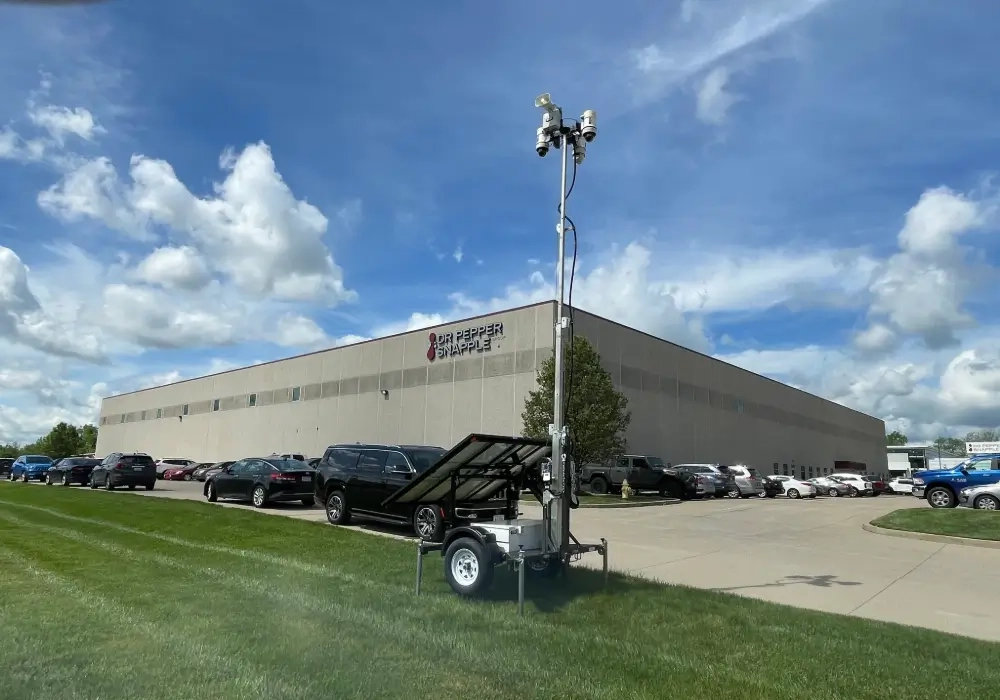
Solar-powered trailers (like the LotGuard PRO) give renovation sites the deterrent that thieves cannot miss. Units stand up to 20-feet tall, and that visibility helps discourage opportunistic theft and organized crime groups before they even approach the perimeter.
A few features of mobile surveillance systems include:
- Rapid deployment: Basic setups can be deployed within 20-minutes, providing near-instant coverage whenever it's needed.
- Advanced cameras: Wide-angle cameras with a near-360° field of view provide exterior coverage of renovation sites day and night, helping deter crime before it even begins.
- AI detection: AI-video analytics distinguish genuine threats from false alarms caused by moving vegetation or passing traffic, enabling faster responses.
- Mobility and flexibility: Self-moveable trailers allow project teams to reposition or relocate units as project phases progress, or where risk exposure is highest.
- Autonomous operation: Solar panels and battery backup mean systems work without fixed infrastructure and transmit live site data over secure 4G/5G networks, making them ideal for renovation sites where utilities are partially connected or not yet available consistently.
- Centralized cloud platform: Video footage, alerts, and site activity (present and historical) appear in a single dashboard, which is accessible from any connected device. Following a theft, reports can be generated on demand to help support insurance claims and law enforcement investigations.
Why it matters
Mobile surveillance systems offer a visible security presence without tying protection to fixed infrastructure, for one monthly rental fee. Because units can be deployed quickly and repositioned as project sites change, coverage remains in place for as long as you need it and focused on the areas where equipment and materials are most exposed.
Detect and respond with live video monitoring and active deterrents
Passive 'record-only' cameras can show managers and site teams what happened after a theft, but they do very little in actually preventing equipment theft. Live monitoring through an Interactive Surveillance Operations Center (ISOC) changes that completely by adding a response layer.
AI analytics flag suspicious activity, trained professionals verify each alert as it unfolds, and they can activate various deterrents such as blue strobe lights, live audio warnings, or dispatch law enforcement when needed. By interrupting offenders in real-time, remotely monitored surveillance systems can deter theft before incidents escalate and damage is done.
Why it matters
Live monitoring closes the gap between detecting a threat and doing something about it. For renovation projects, that means suspicious activity can be addressed while it's happening, helping protect equipment, limit site damage, and keep work moving without relying on someone to discover the problem after the fact.
Identify vehicles with license plate recognition (LPR) technology
Criminals often use getaway vehicles to haul construction equipment and materials off-site, and the same vehicle may be used in multiple theft incidents. For CRE managers overseeing multiple properties, having that visibility can help spot recurring patterns and flag suspicious movements that may be linked across a portfolio.
Add-on License Plate Recognition (LPR) cameras at entry and exit points help create a digital record of every vehicle around the property. In simple terms, the system can:
- Flag suspicious behavior near perimeters during working and off-hours
- Identify suspicious vehicle patterns and repeat visits to the location or appearing across multiple sites
- Capture details such as plate numbers, model, make, and color, giving police and insurers an evidence-backed audit trail for investigations and insurance claims
Why it matters
LPR technology provides extra visibility by showing who is coming and going, not just what happened on site. When investment managers are dealing with a portfolio of renovation sites, that vehicle data can help confirm legitimate deliveries as well as reveal repeat activity that may otherwise go unnoticed. It also provides a searchable record to support investigations, claims, and decisions regarding security strategies.
Other preventative measures
Smart surveillance also works alongside physical security measures:
- Perimeter controls: Secure fencing, access controls, and bright boundary lighting make unauthorized entry harder.
- Lighting improvements: Better visibility around equipment yards and entrances discourages after-hours activity.
- Local law enforcement partnerships: Sharing site schedules, gate details, and after-hours contacts with local police helps improve site security.
- Tool engraving/equipment tracking: Identifying marks on tools and equipment improve the odds of recovering stolen items.
Read more:
- Vacant Property Security: Guard Services vs Mobile Surveillance
- A Comprehensive Property Management Risk Mitigation Framework
- Comparing LotGuard to Alternative Surveillance Options for Vacant Listings
- Mobile Surveillance vs Fixed Install Systems for Commercial Property Construction
How to Choose a Security Solution for CRE Renovations
Not all security is created equal, which means there’s no "one-size-fits-all" solution for every renovation. A setup that works for a stabilized property may not make sense halfway through a renovation, so investment managers need to consider how quickly the site is changing, where equipment and tools are stored, and how accessible the property is after hours.
The "right" surveillance solution also depends on the size of your site, location, specific risks, and the infrastructure already in place. Here is a general overview of what to look for when comparing security solutions:
|
Look for |
Why it matters |
|
Rapid deployment |
Security can be deployed quickly without complex installation |
|
Autonomous design |
Operates without fixed infrastructure (mains power, Wi-Fi) |
|
Relocatable systems |
Coverage moves as sites and risks change |
|
24/7 remote monitoring |
Trained professionals assess activity after hours remotely |
|
AI detection |
Flags genuine threats while filtering false alarms |
|
Visible deterrence |
Makes security presence obvious before theft occurs |
|
4G/5G connectivity |
Systems don't depend on site internet |
|
LPR integration |
Adds vehicle monitoring to video surveillance |
|
Cloud management/reporting |
Useful for managers overseeing multiple properties/portfolios |
|
Incident reporting |
Creates timestamped records for operations, investigations, and claims |
How LotGuard supports commercial renovation sites
LotGuard's mobile parking lot surveillance solutions suit temporary renovation sites because they're built for locations without permanent infrastructure. Our units combine the layers described above into one fully-managed service, so investment managers don't have to coordinate multiple vendors for cameras, monitoring, and reporting.
With thousands of active deployments across the United States, we bring over 2 decades of experience to every renovation site we secure. A few benefits of partnering with us include:
- Ready on arrival: No power cables or internet connection; basic setups deployed in 20-minutes.
- 24/7 protection: Continuous monitoring helps keep sites secure day and night.
- Fully-managed service: We handle everything: installation, monitoring, system diagnostics, and decommissioning.
- Cost-effective solution: Our solutions can be up to 87% cheaper than on-site security guards.
Read more:
Keep Security Aligned with Commercial Renovations
Repeat equipment theft can happen when a site's layout changes and its security does not. In reality, the cost of theft goes far beyond replacing stolen items, adding pressure to CapEx, net operating income (NOI), hand-over dates, and project timeframes.
With less than 25% of stolen construction equipment ever recovered, CRE managers need security that adapts as equipment, boundaries, and access points move through project phases. A layered security approach combining mobile surveillance, live monitoring, and vehicle monitoring technology helps maintain consistent security throughout the renovation stage, protect momentum, and support successful asset repositioning.

Contents
[hide]Related news

10 Most Commonly Stolen Items From Vehicles
Theft from vehicles are common crimes that continue to create parking lot security challenges. We share the most commonly stolen items and our advice to businesses. Read more

Benefits of Remote Video Monitoring for Surveillance Cameras
Mobile Surveillance Units enhance security at parking lots, but when they are backed by remote video monitoring services they act as a virtual security guard. Read more
Keeping Vacant Properties Safe
The security experts at LotGuard look at examples of why it is crucial to keep vacant properties safe and how LotGuard can do this. Read more
FAQs
Why does equipment theft keep happening at renovation sites?
Thieves often scout a renovation site first, then return once they know where valuable equipment is located and how little supervision the property has. If the conditions behind the first theft remain unchanged, the site reads as "low risk" and often becomes an easy target.
How can investment managers prevent repeated equipment theft during commercial renovations?
CRE investment managers can combine visible mobile surveillance, live video monitoring with active deterrents, and license plate recognition (LPR) technology, then reposition that coverage whenever fencing, gates, or staging areas change. Lighting improvements, tool engraving, and roaming patrols can also add further protection.
Contact Us
Request a Quote for LotGuard
Ready to learn more about how LotGuard can protect your Parking Lots and Properties? Get in touch today for a free quote.