
Why Movie Theater Parking Lots Are Prime Targets for Vandalism
See how security and monitoring strategies can help prevent vandalism in movie theater parking lots.
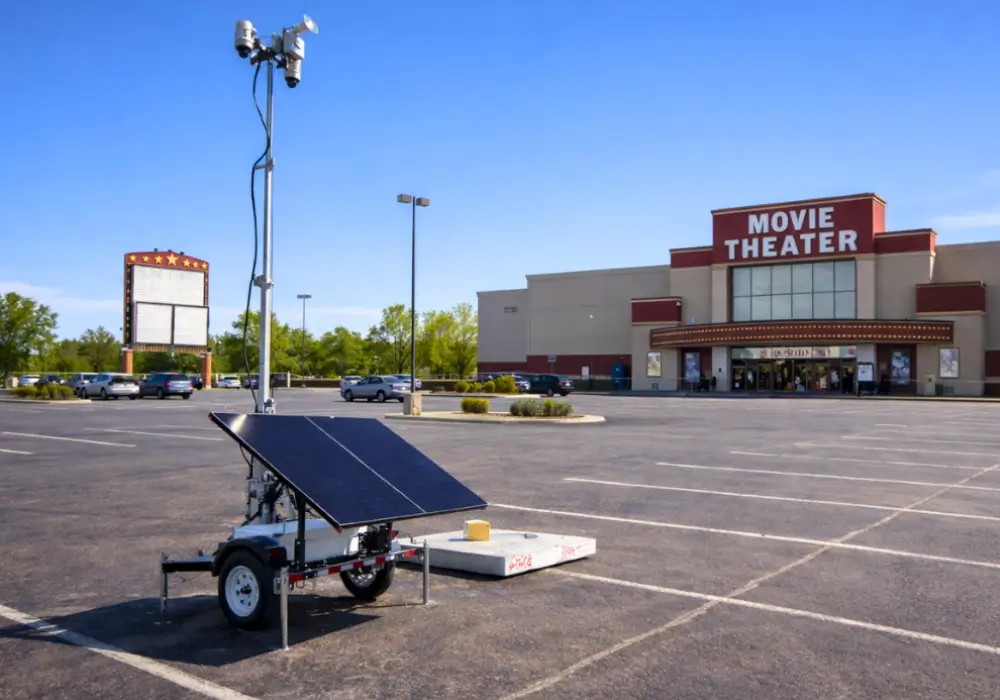
Movie theaters are designed to provide a friendly, safe environment that’s welcoming customers, but the parking lot is where impressions normally begin. However, these are one of the most vulnerable locations.
Large layouts, late night traffic, and minimal nighttime staff and surveillance mean parking lots are particularly vulnerable to vandalism and vehicle damage.
For regional managers tasked with protecting customers, staff, and profits, understanding why these lots are one of the most popular spaces for vandalism is crucial in preventing costly incidents and ensuring positive customer experiences.
We explore the security risks presented to movie theater parking lots, why they attract vandalism, and steps that can be taken to prevent such crime.
The Overlooked Security Risks in Theater Parking Lots
Movie theaters rely heavily on having a welcoming, safe experience for customers from the moment they step into the lobby to the end of the film. However, on the outside, the parking lot faces far less operational control and visibility.
From their large layouts and late-night traffic to fewer overnight staff and limited real-time monitoring, parking lots provide the perfect conditions for vandalism and vehicle crime to take place.
Common vulnerabilities include:
- Large lot layouts that offer blind spots and uneven lighting that criminals can take advantage of, and creates greater complexities for full perimeter surveillance monitoring
- Late-night showtimes often means fewer staff, but access continue remain open to customers and potential criminals
- Vehicles acting as visual barriers, creating blind spots and hiding spaces for criminals to carry out illegal activity without anyone knowing
- Reactive surveillance coverage that only record incidents rather than deterring and preventing them
- No centralized visibility across multiple sites to identify trends, establish crime hot spots, and understand patterns of behavior
These risks not only effect the operationality of a movie theater, but also the overall reputation of a brand. This challenge is faced by regional facilities managers on a daily basis.
When an incident takes place in a parking lot, customers rarely separate it from the theater brand itself. Understanding these vulnerabilities is just the start, to reduce incidents and regain control, it’s important to establish why parking lots are attractive targets in the first place.
5 Reasons Movie Theater Parking Lots Attract Vandalism
Parking lot incidents are rarely random and often appear due to a combination of factors, including their access, anonymity, and increased opportunity, all of which make them especially vulnerable to vandalism and vehicle damage.
For movie theaters, there are several contributing factors that play a key role into increasing these risks further. We’ve broken down the 5 reasons most consistently found for this industry.
Large, Open Layouts Create Surveillance Gaps
In line with creating a welcoming, hassle-free environment inside the movie theater, their parking lots tend to be designed to provide capacity and convenience also.
Although this prevents containment and eases customer experience, this vast space, multiple entries/exits, and uneven lighting throughout the lot create natural surveillance gaps. These blind spots create opportunity.
Even with fixed camera systems in place, coverage is predictable and often limited by their positioning, meaning surveillance gaps still exist even when it’s thought a store and its perimeter is protected.
Customer and staff vehicles can create blockers in surveillance and pedestrian’s sightlines, especially during peak periods when there is likely to be increased traffic present at a lot.
The result being only partial visibility, large surveillance gaps, and room for opportunistic criminals to commit vandalism in complete peace. With no method of tracking any incidents back to those responsible, leaving your business liable to potential damage.
Predictable High-Traffic Windows
Peak periods at movie theaters are often predictable, from premiere nights to weekend evenings and holiday releases. They follow a consistent pattern that criminals can easily establish as if they’re apart of the operation team themselves.
It’s easy to be deceived that high traffic equals safety, however, it creates distraction. Whilst customers enjoy the film, they’re not focused on their surroundings meaning that activity can simply blend into the background.
A wave of traffic entering and exiting the lot provides predictability that lowers the risk for offenders to carry out vandalism and vehicle damage as they’ll be aware that lots will be full and oversight is stretched.
Limited On-Site Staff After Hours
As screenings wide down in the movie theater, so do staff levels. Management attention generally shifts towards closing correctly, completing cash handling, and managing internal operations by shift end.
However, whilst staff are focused on closing down protocol, parking lots remain open and completely accessible, even to unwanted visitors. Even with guards present, coverage could be inconsistent, especially at night when they’re likely to face increased tiredness and concentration issues.
That’s why choosing the right parking lot surveillance solution is vital as without active monitoring, incidents are likely to escalate under complete darkness, without staff or customers even being aware. This risk only increases for vehicles parked further from the entrance or under poor lighting.
Read More: What to Look For in a Parking Lot Surveillance Solution?
Valuable Targets in One Concentrated Area
Parking lots offer something most other spaces don’t, a high volume of valuable targets to vandalize all within one consolidated area. And often for several hours at a time.
Customers simply leave their cars unattended whilst they go to watch a film, quite often leaving personal items inside. These items create attraction for theft and vandalism.
Having such a high density of vehicles within one parking lot only increases the opportunity that criminals will look to target that space, whether it’s for criminal damage or catalytic converter theft.
For vandals, damaging signs, lighting, storefronts, or exterior fixtures is easier to execute and more difficult to trace when there’s also a high volume of vehicles there to cover it up.
Minimal Real-Time Intervention
Many industries like retail and movie theaters still rely upon systems that document incidents rather than prevents them. Footage only tends to be viewed after a complaint or liability claim is filed, with reports generated the morning after.
This lack of proactive monitoring and visible deterrence, there is little to no protection against unwanted activity. This absence of criminal intervention signals that a parking lot is of lower risk to potential criminals looking to target it for vandalism.
And once this perception is created, this tends to invite repeat activity, creating further repair costs, liability claims, and loss of business as customers look to seek brands who are perceived safer.
Leaving risks exposed like this means they rarely stay confined to the parking lot, often escalating into operational challenges that land within the responsibilities of facilities managers, who already face heavy administrative burdens.
The Operational Impact on Regional Facilities Managers
For regional facilities managers overseeing several sites, parking lot incidents are rarely isolated incidents, but rather patterns of behavior. Vandalism and vehicle damage ripples across each theater, but also beyond this.
Reputation, budgets, and day-to-day workload, the operational impact extends far for businesses, and when this happens across several theaters, regional managers are faced with increased workloads that are complex to manage. Especially when this need to be managed consistently.
What simple starts as a broken window can escalate into damage signage which then leads to vehicle damage and property theft.
Brand Reputation at Risk
For customers, perception of a movie theater plays into their experience heavily. The parking lot is where first impressions are built and where last impressions are formed.
If customers see a group loitering outside of a movie theater or notice their car is damaged upon leaving, they’re likely to feel unsafe and therefore, reduces their chance of return. This leads a brand’s reputation to take a hit.
One negative review can have lasting effects on a business, so whether it’s about the ‘inside’ or ‘outside’, it’s rare that these instances will be deemed different to one another.
A parking lot incident risks damaging customer trust, repeat customer visits, and community relationships. When you multiply these incidents across several sites, this can quickly escalate into public scrutiny and questions around store safety.
Financial Pressure from Repeated Incidents
Vandalism isn’t just a knock on your movie theater’s aesthetics or customer’s vehicle, it’s an additional cost to your business, and an expensive one at that.
Repairing signage, removing graffiti off storefronts, fixing lighting, and restoring external fixtures, all come with costs. Although, one broken light seems small, for regional facilities managers overseeing several sites, one broken light as every movie theater quickly becomes expensive.
And these are not the only risks that place financial risks on a business, vehicle incidents in your parking lot can increase insurance claims and premiums.
Recurring costs surrounding vandalism make it difficult to demonstrate the ROI of any existing security investments currently in place, especially guards, due to their often-heightened costs. This issue only places increased pressures onto already tight budgets.
Related Article: Five Ways Mobile Surveillance Cameras Improve Safety Across Multiple Store Locations
Personal Stress and Reactive Management
For regional facilities managers, they face heavy personal pressures regarding vandalism on site. If an incident happens, it isn’t the brand left managing this, it’s them.
This responsibility ranges from late-night callouts, urgent damage assessments, coordination with law enforcement and customers, and creating incident reports following the events.
With most businesses still using traditional surveillance systems, this places them in a cycle of constant reaction. Instead of focusing on their long-term security strategy and how to improve this, managers are pulled into incident management and documentation.
The repercussions of this being severe fatigue, high stress, and short-term strategic planning that leaves regional managers in constant ‘firefighting’ mode.
If even with existing measures in place like fixed surveillance systems and guards, incidents continue to take place, it’s clear a smarter, more technology-led approach is required to tackle the matter of vandalism at movie theaters.

Why Movie Theater Parking Lots Require Proactive Surveillance
Traditional surveillance methods remain popular amongst many industries; however, they tend to be designed to only record incidents rather than prevent them.
For large, open plan movie theater parking lots faced with late-night loitering and limited staff support, this reactive approach still leaves properties and vehicles at risk.
Whereas, through proactive, smart security solutions like mobile surveillance trailers, they focus on deterring unwanted activity and preventing crime before they can even happen. In turn, reducing the number of parking lot incidents that impact your business.
| Incident Type | Traditional Security | Smart Surveillance |
| Vehicle Break-Ins | Footage reviewed after an incident, often due to a complaint or claim being logged | Remote monitoring services respond to real-time triggers, implementing audio deterrence and calling law enforcement if required |
| Graffiti / Property Vandalism | Damage discovered during morning checks. | AI detection enables instant warnings and evidence capture. |
| Loitering / Suspicious Groups | Periodic guard patrols may miss activity until large groups have already gathered. | Systems flag suspicious behavior, and issue live voice warnings to disperse groups. |
| Vehicle Theft / Suspicious Vehicles | Cameras may capture the event after the fact a vehicle has been stolen. | Real-time 24/7 surveillance monitoring triggers alerts to prevent crime before it develops into theft. Add-on camera enhancements like license plate recognition help identify and track vehicles, monitoring patterns and suspicious behavior. |
| Damage to Fixtures (signage, lighting) | Maintenance teams respond after damage occurs. | AI-driven monitoring detects tampering and enables rapid response. |
The main difference being that proactive systems focus on deterring crime, helping to avoid personal claims, heavy administrative burden, and reduce stress for regional managers whilst protecting the brand from reputational damage.
Understanding the difference is the first step in bettering parking lot safety and preventing on-site vandalism, the next is to establish how proactive systems truly integrates into the everyday.
What Proactive Parking Lot Security Looks Like
Changing systems or implementing a new one can feel like a large shift for a business, and at times create resistance. That’s why understanding how proactive systems truly integrate into your movie theater’s day-to-day operations is vital to removing that stigma.
We’ve broken down this straightforward process, detailing how managed surveillance systems interrupt vandalism before it can escalate, or even happen:
Step 1: Make Security Visible
Prevention starts with creating a presence in your parking lot. Proactive systems tend to offer strong visible deterrence through their design alone meaning that once installed, deterrence sbegins almost immediately.
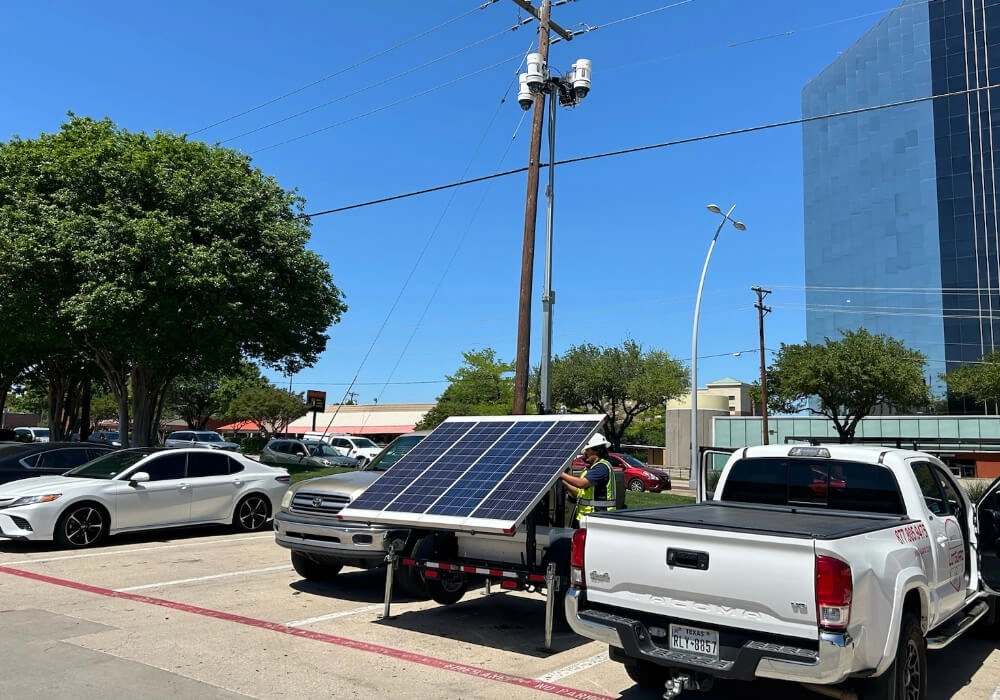
Options like the LotGuard PRO, which stands up to 20-feet tall, create a strong visible presence whilst only utilizing one parking space for the unit placement.
Other visible deterrent boosts include clear signage and lighting that highlights that surveillance systems are in place and actively monitoring the site.
For opportunistic criminals, they’re looking for easy targets and creating a presence minimizes that target for a business and its parking lot.
Step 2: Detect Suspicious Activity Early and Respond Quickly
Once installed, smart surveillance systems generally use AI to monitor movement and filter out false alarms from true threats.
If cameras are triggered, the system flags this behavior such as, repeat vehicle patterns or loitering near vehicles, all without the need for immediate human intervention.
To ensure complete verification and provide the appropriate response, remote monitoring centers are there to support. Trained professionals provide that reassurance in threat detection and provide further escalation in addition to any automated response.
This includes live audio warnings that provide a clear, targeted warning to potential vandals that they are being monitored and recorded, making it far less likely for them to continue their attitude.
With 24/7 real-time monitoring and recording, any suspicious activity or near-miss incidents are captured clearly to support with crime trend tracking across movie theaters and provide as evidence to law enforcement.
Step 3: Monitor and Track Multiple Sites via One Dashboard
Unlike traditional systems, proactive parking lot systems are backed by advanced technology that allows regional managers to oversee multiple theaters through one centralized dashboard.
After setup, managers can check live and recorded surveillance footage wherever they are remotely via their desktop or mobile app.
This allows them to keep track of several movie theaters at once and generate reports on crime and near incidents to establish location hotspots, crime trends, and monitor organized crime that could be taking place across an overall brand.
At LotGuard, we understand a shift to a new system can appear disruptive, hence the reason for us creating a fully-managed solution that easily slots into your parking lot without causing major operational impact.
How Regional Managers Can Take Back Control of Their Parking Lots with LotGuard
Many vandalism incidents will often occur due to surveillance gaps created through reactive and fragmented systems. These security solutions are operational expenses yet provide inconsistent service that leave room for crime.
LotGuard surveillance units transform systems into proactive crime prevention tools that through the power of our in-house platform, Stellifii can consolidate multiple site systems into a singular centralized view.
This combination of strong visible deterrence and technological support help regional managers restore control across their movie theaters, minimizing operational impact and protecting brand reputation.
Key ways our systems provide this include:
- Visibly deter vandalism and prevent crime through their design alone. Standing 20-feet tall and fitted with audio features like sirens and live audio warnings, they discourage potential criminals before damage occurs.
- Reduces reliance on traditional methods like guards, helping save on operational expenses whilst also providing 24/7 remote monitoring and AI threat detection.
- Detect suspicious activity near-instantly through AI detection, allowing remote monitoring experts to verify quickly and respond in that moment to prevent any vandalism from escalating without a manager needing to be on-site.
- Track vehicles and repeat offenders through live video monitoring and optional LPR add-ons allow managers to track suspicious vehicles and patterns across multiple theater locations, supporting investigations and long-term prevention.
- Gain centralized visibility across every theater through Stellifii which consolidates live feeds, alerts, and analytics from all locations into one dashboard, giving regional managers complete control without needing to manage several systems at once.
- Simplifies reporting in just a few clicks through the Stellifii platform, allowing managers to gather reports quickly regarding crime trends, incident numbers, and locational hotspots. This reduces workload and allows them to plan long-term.
Related Article: Turning Data into Deterrence: How LotGuard’s Analytics Strengthen Parking Lot Security
Final Takeaway: Parking Lots Play a Key Role in Customer Experience
For movie theaters it’s all about the customer’s experience, from when they enter your parking lot to getting in their vehicle to go home after the film.
That’s why creating a safe, welcoming parking lot environment is central to ensuring a positive perception is maintained amongst your customers.
Mobile surveillance units like LotGuard’s Trailers monitor parking lots and external perimeters with the aims of protecting property and people, encouraging repeat visits and avoiding costly claims. But most importantly, brand reputation.
Contact us today to learn how proactive parking lot security can help safeguard your theaters and reduce costly incidents through the power of LotGuard and Stellifii.

Contents
[hide]Related news

10 Most Commonly Stolen Items From Vehicles
Theft from vehicles are common crimes that continue to create parking lot security challenges. We share the most commonly stolen items and our advice to businesses. Read more
20 Shocking Car Crime Stats (and How to Prevent Them)
Cars are an expensive commodity and a popular target for thieves. We highlight some shocking statistics that show the increasing need for better security. Read more
Five Steps to Better Parking Lot Security
Parking lots present plenty of security challenges. However, there are several easy steps you can take to keep your staff, visitors, and customers safe. Read more
Contact Us
Request a Quote for LotGuard
Ready to learn more about how LotGuard can protect your Parking Lots and Properties during the holidays? Get in touch today for a free quote.