
A Comprehensive Property Management Risk Mitigation Framework
Build a 4-step risk mitigation framework for property management, covering physical security, liability, and exterior monitoring.
Property managers overseeing multiple sites know that protecting assets is an ongoing battle, one where exposure can creep in from small oversights like an unlit parking lot, a vacant building without visible surveillance, or inconsistent access controls. When left unchecked, these risks can lead to break-ins, vandalism, liability claims, tenant complaints, insurance increases, and other problems.
Property management risk spans physical security, financial exposure, environmental hazards, and tenant safety. Without a proper risk management strategy, you're left reacting to incidents after the fact rather than preventing them.
This article provides a practical property management risk mitigation framework you can apply across commercial, residential, and vacant property portfolios. It covers how to identify the highest exposure areas and implement layered, proactive strategies to reduce risk before it begins.
4 Major Risk Categories in US Property Management
In property management, effective risk management starts with understanding where exposure exists. Most property-related risks fall into 4 categories:
1. Physical security risks
Physical security risks include theft, vandalism, break-ins, trespassing, squatting, loitering, and unauthorized access.
These risks can stem from weak access control, lack of surveillance, inadequate lighting, and broken perimeter fencing, all of which can compromise tenant safety and the overall security of a property.
Exterior areas (particularly those with poor lighting or minimal foot traffic), such as surface lots and perimeter spaces, are often the most vulnerable points of entry and criminal activity.
Read more: The State of Property Crime in the US (And How to Protect Yours)
2. Liability risks
Liability risks arise when a property management company or owner may be held responsible for injuries, negligence, or failure to follow legal rules (including landlord-tenant laws), even when an incident involves unauthorized persons entering your site illegally.
Common examples of liability risks include trips and falls, poor lighting in common areas, uneven surfaces, poor property maintenance, wrongful eviction, fair housing law violations, and other incidents that can quickly lead to lawsuits or regulatory penalties.
Read more: Parking Lot Maintenance Checklist for Property Managers
3. Financial risks
Financial risks are exposures that directly impact a property's cash flow and overall profitability. This can include high vacancy rates and tenant turnover, lost rental income, rising insurance premiums, and unexpected emergency repair costs caused by property damage.
Squatting and homeless encampments (which pose a particularly high risk for vacant properties), once established, can take months and cost thousands in legal fees to resolve. What's more, properties with higher crime rates can negatively affect cap rates and property values.
Read more: How Crime Impacts Cap Rates and Valuation for Commercial Property
4. Environmental risks
Environmental risks stem from site conditions, contamination, or weather-related events that can affect tenant health, property condition, and regulatory compliance. Examples include exposure to hazardous materials such as mold, asbestos, and lead-based paint, as well as natural disasters like flooding and pollution.
Beyond health safety concerns, certain environmental risk factors, such as poor lighting and visible signs of neglect, can signal a lack of oversight. These conditions often make properties more attractive targets for criminal activity, further impacting tenant safety and asset value.
Read more: Top Security Challenges for Property Managers and How to Overcome Them
Where risks compound
Here's the important bit: these risks often don’t exist on their own; they overlap.
For instance, a break-in at a vacant property (physical security risk) can trigger an insurance claim (financial risk) and create liability exposure for property owners if somebody is injured during the incident. In many cases, one incident can compound and trigger a chain reaction of additional risks.
The goal of mitigating risk through structured frameworks is to address the threat's root cause before something happens, rather than reacting to the problem after the damage is already done.
4-Step Risk Mitigation Framework for Property Managers
Most risk management strategies tell you to "be proactive," but they rarely explain how. The framework below breaks it down into 4 easy steps that help you put an effective property management strategy into place, whether you're managing one or multiple commercial buildings.
Step #1: Conduct a risk assessment
The most effective risk management strategy starts with a thorough risk assessment. This means scouting your building (and its surroundings) for where potential threats are most likely to occur.
For most commercial and industrial properties, criminal activity often starts in and around exterior spaces. Risks such as theft and vandalism concentrate around perimeters, parking lots, loading bays, and rear access points. These zones are particularly high-risk because they often lack adequate lighting and generally have limited foot traffic, especially at night and/or after-hours, making them easy targets for criminal activity.
With 70% of parking lot crime occurring under the cover of darkness, these spaces are easier for opportunistic thieves and organized crime groups to access. They are also harder to monitor and are often overlooked when it comes to security investment.
Vacant properties and sites between tenants carry even higher exposure. Without regular property inspections, signs of neglect (e.g., overgrown yards, piles of trash, uncollected mail) accumulate, signaling to potential offenders that the site isn't being watched.
A simple, yet thorough, risk assessment helps identify potential risks in specific areas. From there, you can prioritize the areas that are the hardest to monitor and in need of the most surveillance.
Read more: Nighttime: The Biggest Security Threat for Property Managers
Step #2: Rate severity and prioritize
Once you've identified the highest-exposure points, evaluate each one based on two key factors:
-
How likely an incident is to occur
-
How severe would the impact be if something happens
Take physical security, financial, and liability risks into account when setting priorities and making informed decisions.
For example, a poorly lit parking area at an occupied property may have a moderate likelihood of vehicle theft, but high severity due to liability and financial exposure for the property owner. If a vehicle is stolen from an unsecured, poorly lit parking lot, it can quickly lead to tenant disputes, insurance claims, and reputational damage.
In another instance, a vacant retail property with an unsecured perimeter has a high likelihood and high severity as it's an easy target for copper theft, squatting, vandalism, illegal dumping, and arson. This creates physical, financial, and legal risks for professional property managers and owners alike.
The idea behind this step is knowing which areas need attention first, so you can direct resources where they'll have the most impact in protecting your real estate assets.
Read more: Why Parking Lot Safety Is Critical to Tenant Retention in Commercial Properties
Step #3: Layer your risk mitigation strategies
Proactive property management doesn't rely on a single solution. The strongest defense comes from layers of security that work together, starting with environmental design and active monitoring.
Environmental design
The Crime Prevention Through Environmental Design (CPTED) is a framework that uses the physical layout of a property to reduce crime opportunities, structured around four key principles:
-
Natural surveillance: Design spaces so people can see and be seen. Keep sightlines clear across parking areas and position workspaces near windows to overlook outside and walkways. Install bright lighting (or motion sensors) in dim areas.
-
Territorial reinforcement: Shows that a commercial site looks cared for, owned, and watched. Fencing, signage, landscaping, and clear boundaries between public and private spaces all signal property ownership. This helps deter trespassers from testing their luck.
-
Natural access control: Guide how people enter and leave a property by limiting entry points to reduce uncontrolled access. Fences, pedestrian gates, and walkways help direct foot and vehicle traffic in parking areas and commercial office blocks.
-
Maintenance: Keep up with maintenance requests and ensure the property doesn't look neglected. Trim landscaping, tidy sidewalks, remove trash and graffiti within 24 hours, and keep parking spaces clean.
Mobile surveillance and active monitoring
Environmental control helps remove the opportunity for crime, but it doesn't respond to potential risks.
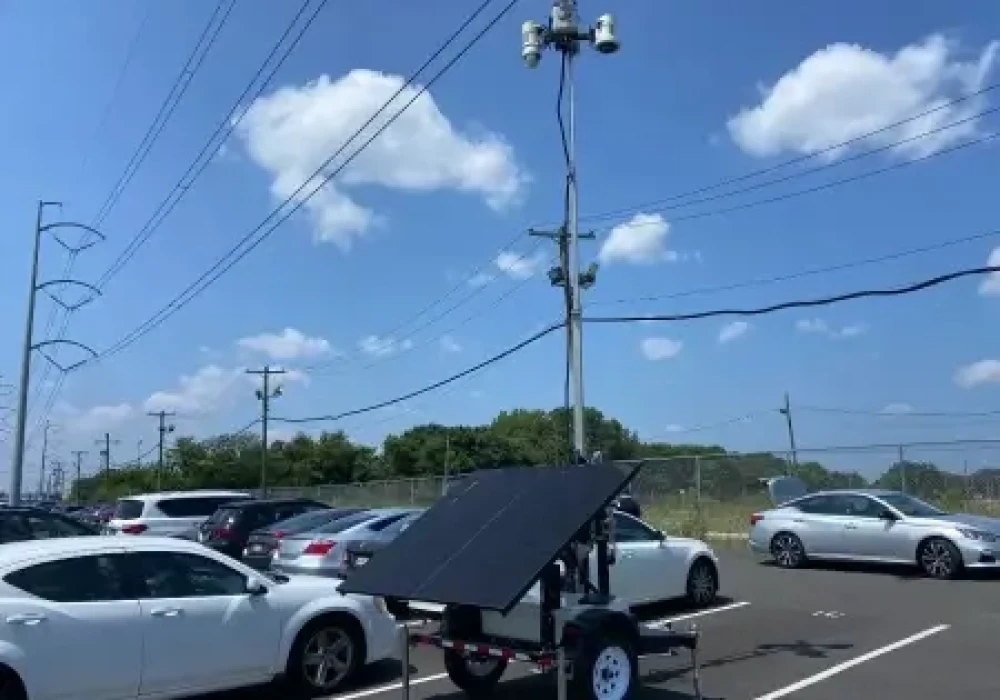
Solar-powered mobile surveillance trailers, like the LotGuard PRO, add a physical presence that passive security cameras can't match. Standing up to 20-feet tall with remote monitoring and PTZ (Pan-Tilt-Zoom) cameras that rotate nearly 360°, these units monitor sites 24/7 and trigger instant alerts when something looks off.
For more targeted coverage at specific risk points, rapid deployment pole cameras, like the LotGuard MINI, use AI analytics and transmit footage via secure 4G/5G network, which can be accessed from any device. Add-on License Plate Recognition (LPR) cameras add another layer of vigilance, recording all vehicle movements (including make, model, and color) around your property/parking lot in real-time.
When connected to LotGuard's active monitoring through Interactive Surveillance Operations Centers (ISOC), trained operators verify threats as they unfold. When threats are verified, they activate various responses (live audio voice-down challenges, blue light activation) well before incidents escalate, while timestamping every event for compliance and reporting purposes.
Addressing potential risks and enhancing tenant satisfaction all in one, Stellifii (our cloud-based platform) connects every LotGuard system and consolidates all site data into a single dashboard. From here, property management teams can access live and recorded data and generate reports without being physically present on-site. You get one platform, but endless possibilities.
Read more: Why Property Managers are Turning to LotGuard for Security
Step #4: Monitor, tweak, and adapt
As risks change when properties transition between tenants and as seasons shift, a risk management plan isn't a one-off exercise.
One of the best property management practices is to review incident data, insurance claims, and monitoring reports every quarter. This allows you to see if your risk mitigation strategies are working and identify gaps where they're falling short so you can adjust plans before minor issues become major problems.
Stellifii makes it straightforward to spot trends across commercial sites, delivering reports when needed most. Through a single dashboard, Stellifii gives property teams faster visibility, quicker investigations, and better control across their locations.
Read more: Commonly Asked Security Questions From Property Managers
Prevent Crime Instead of Reacting to It
Parking lots, perimeters, and rear access points are often the zones that attract the most criminal activity, generate liability claims, and have the greatest impact on how tenants and visitors perceive safety. They're also typically the hardest areas to monitor consistently.
That's why many commercial property managers and owners are turning to proactive, tech-led solutions to secure exterior spaces. LotGuard's mobile surveillance parking lot units operate autonomously, scale easily across multiple sites, and can be deployed in minutes to help prevent crime before it even begins.
With headquarters in Texas and a nationwide deployment network, our systems help reduce crime by up to 87% while costing a fraction of on-site guard services.
If you're looking to strengthen exterior security the smart way, contact our security specialists today.

Contents
[hide]Related news

A Rise in Retail Theft: How to Protect your Business Against This
A surge in retail theft has seen the number of incidents increase above that of the number reported in the same period before the COVID-19 pandemic. But what’s the reality of retail crime on businesses and communities? Find out below. Read more

Benefits of Remote Video Monitoring for Surveillance Cameras
Mobile Surveillance Units enhance security at parking lots, but when they are backed by remote video monitoring services they act as a virtual security guard. Read more

The State of Property Crime in the US (And How to Protect Yours)
Explore the current state of property crime in the US and learn how smarter security solutions can help protect your property. Read more
Contact Us
Request a Quote for LotGuard
Ready to learn more about how LotGuard can protect your Parking Lots and Properties during the holidays? Get in touch today for a free quote.