
How Squatting Laws Differ by State
Find out all 50 states' squatter laws in the US. See how LotGuard's mobile parking lot surveillance can protect your vacant properties.

In California, a squatter can file for legal property ownership after just 5 years. In New Jersey, it can take up to 30. For landlords, property owners, and property management companies, understanding these differences is crucial to protecting both residential and commercial properties, particularly when they are vacant.
Squatting laws (also known as adverse possession laws) vary significantly across the United States, and most property owners are unaware of the potential exposure their buildings face until someone has already moved in. If you manage vacant buildings or properties between tenants, knowing where you stand legally can mean the difference between a quick resolution and a drawn-out battle that costs you thousands.
This guide explains how squatting laws differ by state, the legal and financial risks for property owners, and which practical steps you can take today to prevent unauthorized occupancy before it becomes a costly legal battle.
What Is a Squatter (And What Are Their Rights)?
A squatter refers to an individual or group of individuals who occupy and/or live in a property without the owner's consent or permission. They often treat the property as their own through open and continuous use, even though there's no lease, formal agreement, or legal transfer of ownership.
Yet, under certain conditions (e.g., if they've been paying property taxes), that person can gain legal possession of the property and claim squatter's rights. Until the matter is resolved, many local laws actually protect them, limiting what an owner can legally do.
To avoid confusion, a squatter differs from a trespasser. The latter enters a property illegally (or accidentally) and typically leaves soon after. A squatter enters and stays, often with the intention to remain long-term. The difference between the two matters because trespassing is a criminal offense in most states, while squatting is usually treated as a civil matter, as many states treat squatters as "tenants".
However, if a squatter admits to illegal trespassing, law enforcement can remove them. If not, property owners/managers must go through lengthy legal procedures to have them removed.
Squatter's rights explained
"Squatter's rights" is the informal name for adverse possession, and it exists in all 50 states of America. In a nutshell, squatter's rights allow someone to claim ownership of property they've occupied without permission, provided they meet specific conditions over a set number of years ("statutory period").
These conditions typically include:
-
Continuous and uninterrupted possession: Uninterrupted occupation for the full statutory period.
-
Open and notorious possession: The squatter isn't hiding/sneaking around; their presence is obvious.
-
Actual possession: Treats the property as if it's their own (including maintenance) and pays property taxes.
-
Hostile possession: They've moved in with no concern for who owns the building.
-
Exclusive possession: They're the sole occupant, not sharing with the owner.
-
Payment of property taxes: Required in some states (California, Florida, Arkansas)
Why do squatters have rights?
While rights for squatters vary across the US, they exist to promote active land use, clarify ownership, and ensure fairness. Simply put, squatter's rights laws discourage property abandonment, help resolve long-term ownership disputes, and protect people who have openly maintained a property over time.
State-by-State Squatting Laws: 2026
Squatting laws differ by state. In some places, squatters gain adverse possession in as little as 5 years, such as in California and Montana. In other states, such as Louisiana and New Jersey, the timeline can stretch to 30 years.
Certain states also differ in what they require before squatters gain adverse possession of vacant land. Some states require property taxes to be paid, while others demand continuous possession or a color of title (i.e., apparent title) to claim ownership.
Below, we take a closer look at the various US states that allow squatters to claim legal ownership of land after living in the property for the full statutory period:
|
Timeline for ownership claim |
State/s |
|
30 years |
Louisiana, New Jersey, Texas |
|
21 years |
Ohio, Pennsylvania |
|
20 years |
Delaware, Georgia (undeveloped), Hawaii, Idaho, Illinois, Maine, Maryland, Massachusetts, New Hampshire, North Carolina, North Dakota, South Dakota, Wisconsin |
|
18 years |
Colorado |
|
15 years |
Connecticut, Kansas, Kentucky, Michigan, Minnesota, Nevada, Oklahoma, Vermont, Virginia |
|
10 years |
Alabama, Indiana, Iowa, Mississippi, Nebraska, New Mexico, New York, Oregon, Rhode Island, South Carolina, Texas, Washington, West Virginia, Wyoming |
|
7 years |
Alaska, Arkansas, Florida, Georgia (developed), Tennessee, Utah |
|
5 years |
California, Montana |
|
3 years |
Arizona |
Property ownership laws can change at any time. Confirm local laws before filing any legal claims.
Highlighted states
California
California has one of the shortest adverse possession timelines in the country, at just 5 years. For squatters to claim adverse possession, they must have lived in the property for 5 consecutive years, paid property taxes (throughout their occupation), and treated the property as their own. A color of title/legal title isn't required.
Senate Bill (SB)602, introduced in January 2024, has helped property owners discourage California squatters by allowing owners to file a no-trespass notice that stays active for up to 12 months. Before that, it expired every 30 days.
Florida
To make an adverse possession claim in Florida, squatters must retain continuous possession and pay taxes for the full statutory period. However, new laws, such as SB322 and SB606 (passed in mid-2025), have extended property protection to commercial buildings and hotels, where owners can now file a sworn complaint directly with the county sheriff instead of pursuing a traditional eviction process.
Texas
Texas has a tiered system when claiming possession of the property: 3 years with color of title, 5 years of paying property taxes, and 10 years of continuous and uninterrupted possession but without paid property taxes or color of title. Squatter laws also require unauthorized persons to fulfil the "hostile claim," whereby they are genuinely unaware of who owns the property or vacant land.
Read more: Understanding How to Manage Vacant Properties in Texas
Why Vacant Properties are Attractive Targets for Squatters
It's estimated that vacant properties are 3 to 5X times more likely to face theft and vandalism, and they carry a much higher risk of squatting and homeless encampments due to the simple absence of anyone being around.
Visible signs of neglect (overgrown yards, uncollected mail, structural deterioration) compound the risk further, as it signals to potential squatters that sites aren't actively monitored.
What's more, empty properties are prime targets for squatters because they offer easy, low-risk access to free shelter, particularly amid housing shortages across the country. Unlike inhabited properties, unoccupied buildings often don't have surveillance or regular on-site activity. This means a broken window goes unreported, and/or an unauthorized vehicle in the lot overnight goes unnoticed.
By the time a property owner or manager discovers someone has moved in, the squatter may already be protected under local state law, and removal becomes a legal process.
With more than 15 million unoccupied homes nationwide (recorded in 2024), the opportunity is everywhere. Squatters can move in and "fly under the radar," as they know, once settled in, the eviction process can take weeks or months to have them removed.
What Squatters Cost Vacant Property Owners
Even with local law enforcement on your side, squatters are costly and can cause unnecessary operational disruptions for property owners and management teams alike, such as:
-
Property damage: Squatters rarely maintain what they occupy. Broken fixtures, fire damage, and general deterioration can run into tens of thousands of dollars in repairs.
-
Legal costs: Eviction proceedings require attorneys, court filings, and time. Costs can quickly climb if the squatter contests removal.
-
Safety concerns: Unauthorized occupants can attract criminal activity and more property crime. This creates risks for neighboring tenants and members of the public.
-
Reduced property value: Visible squatting signals neglect. The presence of squatters can decrease the property’s market value and deter potential buyers and/or tenants.
-
Resource drain: Dealing with squatters can consume considerable time, effort, and resources.
-
Insurance issues: Unauthorized occupancy can void certain insurance policies and/or trigger premium increases, especially if damage goes unreported.
The longer a squatter stays, the more these costs increase. Without proper surveillance in place, the financial risk grows with every month that passes without intervention.
Read more: The Hidden Cost of Vacancy in Commercial Real Estate (Beyond Lost Rent)
7 Ways to Protect Vacant Properties from Squatters in the US
Empty properties almost always have the same environmental risk factors that attract potential squatters: no surveillance, poor perimeter lighting, and visible signs of neglect. These cues suggest a property isn't being monitored.
For property management teams and commercial real estate professionals overseeing multiple sites, most of those risk factors are largely within your control. That's why prevention comes down to removing those signals before they are noticed.
-
Secure entry points: Reinforce windows, doors, and all access points with heavy-duty locks, door jams, and burglar bars. "No trespassing" signs are also recommended to assert ownership rights.
-
Secure exteriors: The outside of your site tells squatters a lot about your property. Send the right message by having sufficient lighting and security along perimeters and parking lots.
-
Make buildings look occupied: Install day-night lights (or motion sensors), draw curtains, keep up with maintenance (mow the lawn, collect the mail, remove trash), and even fit fake security signs like "Beware of the dog" to deter squatters and opportunistic criminals.
-
Hire a property management company: If you can't physically visit your sites routinely, hire professionals to do that for you. Management teams can schedule weekly/bi-weekly visits and ensure your vacant buildings are kept clean, secure, and presentable at all times.
-
Consider security guards: On-site security teams provide a physical deterrent to property crime, including squatting. They help detect and deter suspicious behavior before minor issues escalate into bigger, more costly problems.
-
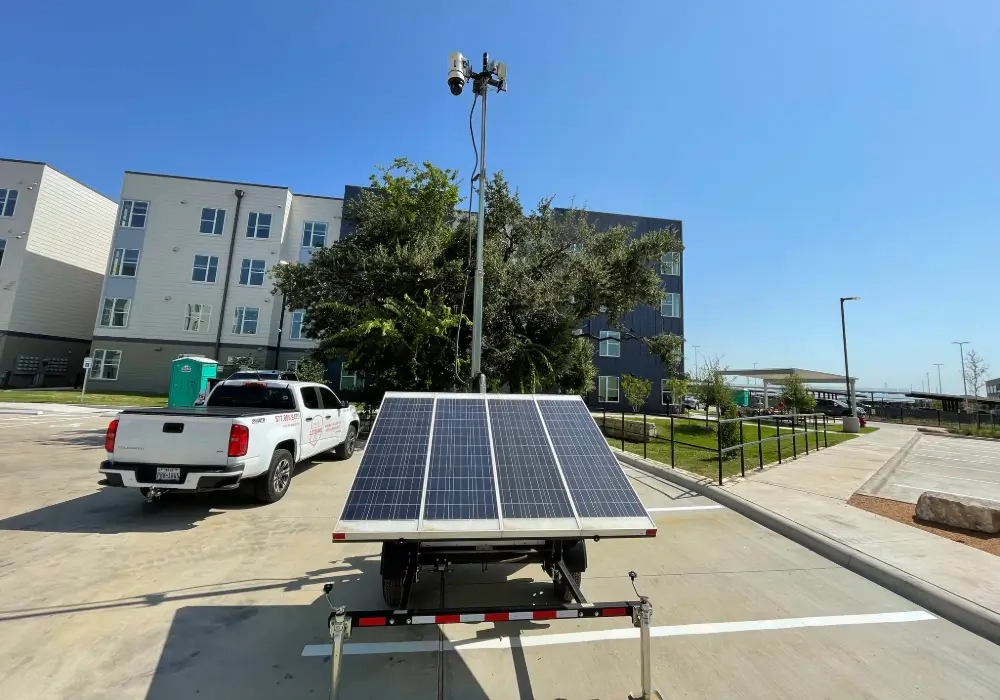
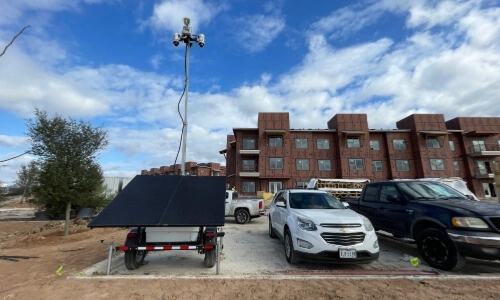
Invest in smart surveillance: Solar-powered mobile surveillance like the LotGuard PRO and MINI monitor vacant sites 24/7 using AI-detection and near-360° PTZ (Pan-Tilt-Zoom) cameras. Connected to live remote monitoring at Interactive Surveillance Operations Centers (ISOC), operators verify potential threats in real-time and initiate various responses on a property owner's behalf. With everything stored in cloud-based platforms (like Stellifii), this level of security gives you real-time visibility across multiple properties from a single platform.
-
Consider advanced integrations: Smart add-ons to LotGuard's mobile parking lot surveillance solutions, such as License Plate Recognition (LPR) cameras, track all vehicle movements (including make, model, and color) in the vicinity of vacant land. Providing a timestamped audit trail, the technology helps identify repeat suspicious activity and supports law enforcement investigations.
With headquarters in Texas and multiple hubs covering a wide deployment network across the US, LotGuard's mobile surface lot surveillance solutions are available to hire, giving property managers and owners scalable security at a fraction of the cost of on-site guard services.
Read more:
How to Evict Squatters from Empty Properties
If someone's already occupying your property, don't try to handle it yourself. Self-help evictions, such as changing locks, shutting off utilities, or removing belongings, are illegal in most states and can expose you to liability.
While eviction procedures may differ across the United States, here's a general breakdown of the process:
-
Confirm ownership: Gather your deed, title documents, and proof that you haven't authorized anyone to occupy the property.
-
Contact law enforcement: In states with recent anti-squatter legislation (California, Florida, Texas), you may be able to file a sworn complaint and have the sheriff remove unauthorized occupants within days.
-
Serve a formal eviction notice: If fast-track removal doesn't apply (particularly for residential buildings), you'll typically need to serve a written notice to remove squatters via certified mail (often a 3-day notice, though this varies by state).
-
File an "unlawful detainer" eviction lawsuit: Take the matter to the housing court if the squatter doesn't leave after notice. Bring all documentation (photos, police reports, notice proof) and consider hiring an eviction attorney to speed up the process.
-
Obtain a court order: Once the court rules in your favor, local law enforcement can enforce the eviction, and the sheriff will remove the unauthorized person/s on a stipulated date.
-
Secure the property immediately: Change locks, document the condition, and install surveillance the same day to protect your property, preventing squatters from targeting it again.
Proactively Prevent Squatting at Your Property
Squatter's rights apply in all 50 states, and they're not going away anytime soon. Even in states that have tightened their rules, the eviction process can still drain time and money. In states where 20 to 30-year adverse possession windows exist, a vacant property that goes unchecked for too long can lead to lengthy legal battles.
The most effective way to prevent squatting in vacant buildings? Make sure no one gets in undetected. Visible surveillance, monitored perimeters, and real-time response remove the opportunity that squatters look for.
LotGuard's mobile surface lot surveillance units are "Always Awake and Always on Guard", with autonomous security that deploys in minutes to any vacant lot across the US. Contact our security specialists today.

Contents
[hide]Related news

The State of Property Crime in the US (And How to Protect Yours)
Explore the current state of property crime in the US and learn how smarter security solutions can help protect your property. Read more
A Comprehensive Property Management Risk Mitigation Framework
Build a 4-step risk mitigation framework for property management, covering physical security, liability, and exterior monitoring. Read more

Environmental Risk Factors that Increase Property Crime Exposure
Property crime often comes down to opportunity. This guide explores the key environmental risk factors that make properties vulnerable, and how the right conditions can deter criminals before they act. Read more
Contact Us
Request a Quote for LotGuard
Ready to learn more about how LotGuard can protect your Parking Lots and Properties during the holidays? Get in touch today for a free quote.