
The Hidden Cost of Vacancy in Commercial Real Estate (Beyond Lost Rent)
Explore the hidden costs of vacancy in commercial real estate, from security risks to asset deterioration and operational impact.
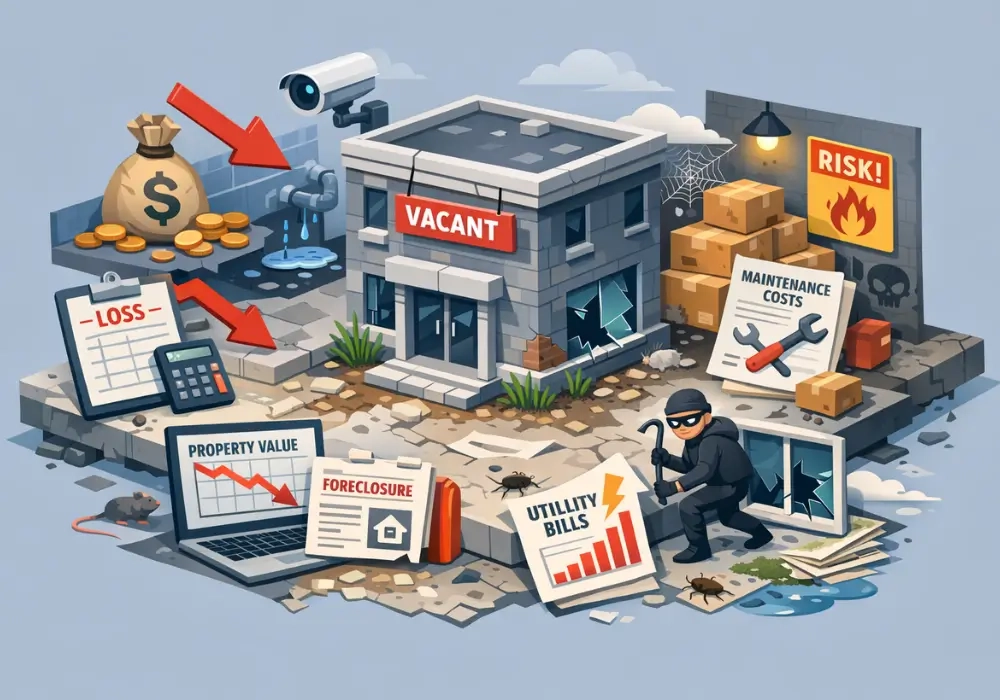
Every property owner knows that a vacant building means lost rent. What's far less obvious are the costs that build up in the background while a commercial space sits empty.
A prospective tenant drives past your listing and continues on because the parking lot appeared abandoned. Water damage spreads behind a wall for weeks because there's no active tenant around to report it. These costs are real, and for many property managers across the United States, they're accumulating faster than missed rental income.
As of January 2026, the national office vacancy rate was 18.2%, down 150 basis points year-over-year. Seattle recorded the highest rate at 27%, Austin followed closely at 26.4%, and Miami was at the lower end of the spectrum at 13.9%.
These numbers don't just show lower leasing demand, but rather represent millions of square feet of commercial real estate sitting idle and increasingly vulnerable each day. But lost rental income is just the tip of the iceberg. The longer a property sits empty, the more those risks (vandalism, trespassing, asset deterioration) compound, quietly eroding asset value, tenant confidence, and future financing terms.
This article breaks down the hidden costs of vacancy in commercial real estate in the US and how proactive monitoring solutions help property management teams and owners maintain visibility across outdoor areas during leasing gaps.
What Vacancy Costs Commercial Properties in the US
Lost rental and cash flow are the obvious costs most property owners/managers keep an eye on. But rent is just one item on a much longer list of expenses that tend to accelerate while a commercial property sits empty.
| Cost category | Description |
| Lost rental income | Zero revenue while fixed expenses (mortgage payments, property taxes, utility bills) remain unchanged |
| Property depreciation | A vacant property deteriorates faster without daily occupancy to address maintenance issues early |
| Utilities and upkeep | Payments for waste removal, landscaping, water, electricity, and pest control to prevent further degradation |
| Maintenance, security, and repairs | Routine upkeep during vacancy periods costs money, and damage from vandalism/trespassing/arson can drive unexpected repair bills |
| Leasing and marketing costs | Professional photography, listing fees, leasing commissions, and tenant incentives to fill vacancies faster |
| Property tax and insurance | Annual property taxes remain regardless of occupancy, and insurance policies often exclude vandalism and theft if empty for more than 60 days (depending on insurer) |
These costs run simultaneously and stack up over time. With lost income included, a single quarter (i.e., 3 months) of vacancy on a mid-size commercial (or residential) property can easily cost tens of thousands of dollars before you account for any physical damage or criminal activity, and that's the part most property management teams underestimate.
Read more:
Why Vacant Space Exposes Commercial Properties to Risk
Vacant properties are 3 to 5X times more likely to experience theft, vandalism, squatting, homeless encampments, and other types of property crime compared to occupied buildings.
This is not just because of the absence of tenants, but the visible signs of neglect that follow. Surface lots, retail loading zones, and perimeter areas are usually the first to show signs of deterioration. Overgrown landscaping, damaged lighting, piles of litter, and faded signage show a lack of oversight, signaling to both criminals and prospective tenants that no one's actively paying attention to the site.
For property management professionals overseeing commercial assets, the environmental risk factors your property communicates are largely within your control. By addressing these signals, property owners can reshape the environment around the building and significantly lower crime during vacancy windows.
Below, we take a closer look at the common risks threatening commercial properties in the US:
-
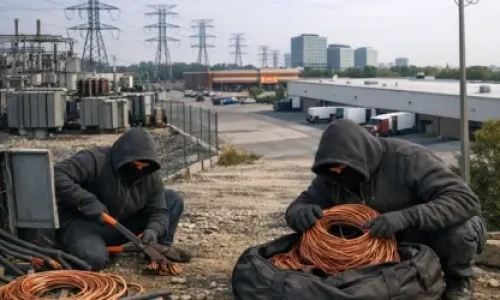
Copper and metal theft: Rising metal prices make vacant buildings prime targets for both opportunistic and organized crime. Copper cables, wiring, and HVAC systems are particularly targeted for their high resale value on illicit markets.
-
Vandalism and property damage: Graffiti, smashed windows, and damaged fixtures send a visible signal of neglect to the surrounding community and anyone considering leasing in the area. These damages create unnecessary expenses for property owners and managers alike.
-
Squatting: Once unauthorized occupants establish themselves in a vacant property, the legal and financial costs to remove them escalate fast. In Dallas, removing 11 squatters from a single complex took 6 months and cost $150,000 before the unit could even be secured.
-
Arson: The deliberate setting of fire is one of the most destructive risks facing vacant commercial properties, often resulting in massive losses far beyond missed rent. According to reports, a 3-story apartment block in California under construction caught fire in what investigators believed to be an act of arson, resulting in $21 million in damages.
-
Illegal dumping: Vacant lots and properties with limited visibility are frequent targets for illegal dumping, a serious problem in the US. Over time, dumping lowers property values and also poses risks to public health and safety, from exposure to hazardous materials to pest infestations.
Each of these incidents creates cascading operational and financial impacts for property owners and managers beyond missed rent. Emergency repairs, insurance claims, and legal fees can quickly eat into your bottom line. On top of this, visible signs of neglect damage the property's reputation and market position.
Read more:
The Economic Impact Beyond Losing Actual Rental Income
Vacancy affects how the asset is valued, financed, insured, and perceived by everyone, from prospective tenants to investors.
Lower property values
Vacant properties depreciate faster than occupied ones, both physically and in the eyes of the market. Visible deterioration (even something as simple as an unkept parking lot or boarded-up entrance) drags down the perceived value of the property, negatively influencing comparable properties in the process.
Lower ROI
Operating expenses don't decrease when rental income drops to zero. For investors holding commercial assets in markets with high development activity and significant property turnover, extended vacancy during repositioning or between tenants can quickly cause a drop in return performance.
NOI drop and lower appraisals
This is often where vacancy hurts the most. When a commercial property sits empty, net operating income (NOI) drops while expenses keep piling up. Because commercial property values are largely driven by income, that drop in NOI shows up quickly in appraisals. This results in a gap between what an owner believes the asset is worth and what lenders and buyers are willing to recognize.
Harder to secure financing
Extended vacancy raises red flags for lenders. It can reduce loan proceeds, trigger higher interest rates, and lead to less favorable terms during refinancing.
Reduced foot traffic and economic activity
For retail spaces, vacant units reduce the foot traffic that neighboring tenants depend on. A half-empty strip mall or office park doesn't just hurt the empty unit; it weakens the entire property's commercial appeal and can lower tenant retention.
Negative perception
This may be the most overlooked cost of all. The longer a space sits vacant, the more the market starts to wonder why. Why hasn't it been leased? Is there something wrong with the location or the building itself? Whether those concerns are justified or not, they quickly become an invisible barrier to potential tenants, and once doubt sets in, it's hard to undo.
Read more:
- How Crime Impacts Cap Rates and Valuation for Commercial Property
- Commonly Asked Security Questions From Property Managers
Why Proactive Monitoring Helps Protect Commercial Properties
Without active visibility over a vacant property's exterior (parking lots, perimeters, access points), small problems turn into expensive ones with nobody around to catch them early.
Proactive mobile surveillance changes that. Instead of reacting to damage after the fact, modern monitoring solutions provide a physical presence that deters criminal activity when sites stand open.
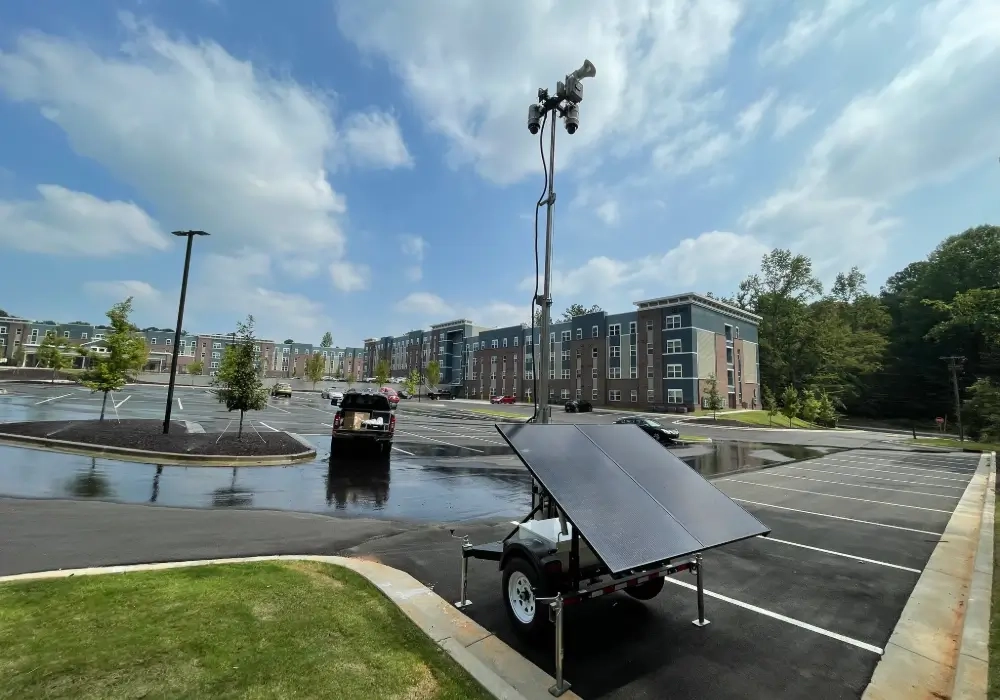
LotGuard's rapid deployment parking lot surveillance systems are designed specifically for commercial sites in the US:
-
LotGuard PRO: A fully autonomous solar surveillance solution that deploys in minutes, no fixed power or mounting infrastructure required. Standing up to 20-feet with near-360° coverage, warning lights, sirens, and live audio voice-down, it's a visible deterrent that signals active monitoring to anyone approaching the property.
-
LotGuard MINI: A compact, 4-camera rapid-deployment unit with AI detection, remote camera access, and live monitoring from a single unit. Securing parking lots, retail properties, and commercial sites, it maintains clear visibility across your entire property.
-
License Plate Recognition (LPR) cameras: Add-on camera units that log every vehicle entering and exiting your property with real-time, timestamped records. LPR systems help support investigations and insurance claims.
-
Live Monitoring: Trained security experts monitor alerts and review footage from your LotGuard units in real-time. By verifying live threats, they take near-immediate action such as issuing live audio challenges and/or contacting law enforcement to investigate further.
-
Stellifii: Our cloud-based platform connects every LotGuard unit into a single dashboard. Stellifii gives property owners/managers incident reports in one place and real-time visibility across multiple vacant spaces without being physically present.
Read more: Your Top Questions Answered: LotGuard Parking Lot Security Solutions
Protect Vacant Commercial Real Estate the Smart Way
A vacant property will always carry some level of risk. But how much that risk actually costs you depends almost entirely on how visible and protected the property remains during the gap.
The hidden cost of vacancy in commercial real estate goes far beyond the rent you're not collecting. It's higher insurance premiums, avoidable costly repairs after vandalism that goes unnoticed, and the missed opportunity of prospective tenants driving past your listing because the site looked abandoned.
Proactive mobile monitoring helps keep your vacant property visible, protected, and presentable, so when the right tenant or buyer comes along, the asset still reflects its true value.
Contact our parking lot security specialists to discuss how we can help secure your site today.

Contents
[hide]Related news

The State of Property Crime in the US (And How to Protect Yours)
Explore the current state of property crime in the US and learn how smarter security solutions can help protect your property. Read more
Top 10 Commercial Property Hotspots for Copper Theft Risk
Discover the top commercial property hotspots for copper theft risk and how businesses can better protect high-value assets. Read more

Environmental Risk Factors that Increase Property Crime Exposure
Property crime often comes down to opportunity. This guide explores the key environmental risk factors that make properties vulnerable, and how the right conditions can deter criminals before they act. Read more
Contact Us
Request a Quote for LotGuard
Ready to learn more about how LotGuard can protect your Parking Lots and Properties during the holidays? Get in touch today for a free quote.