
Smart Surveillance for Smarter Stores: Using LPR to Protect High-Traffic Parking Areas
Discover how LPR smart surveillance improves security in high-traffic retail parking areas through automated vehicle detection and actionable insights.
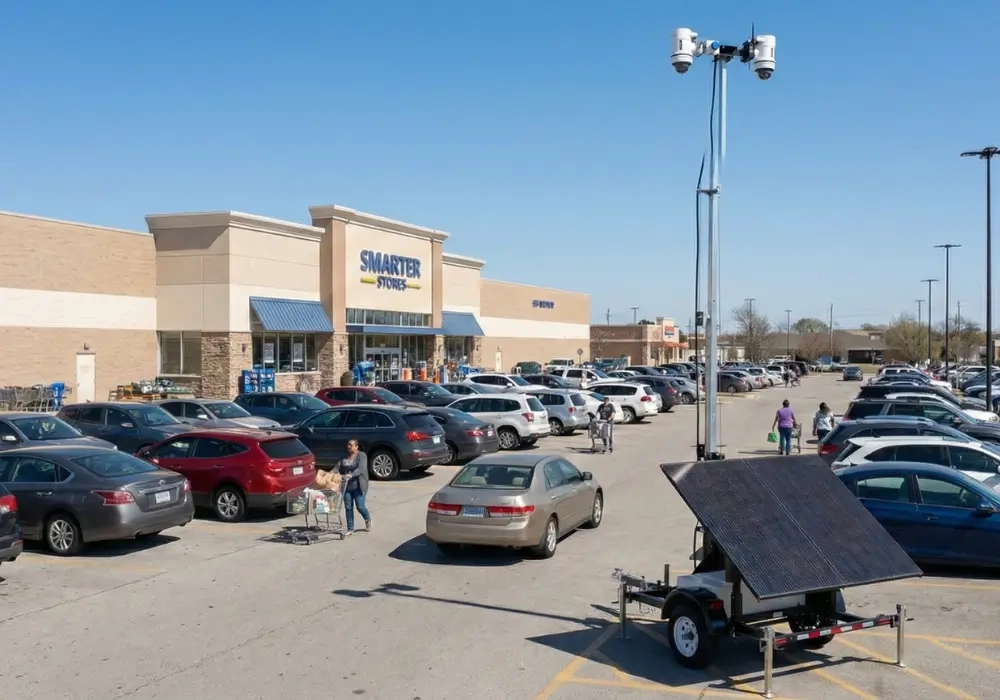
Retail parking lots see more activity than even that of what is seen in-store itself, however, these areas are often the least protected.
From vehicle, car component, and personal property theft to violent crimes and parking lot takeovers, high traffic locations create a wealth of opportunities for criminals to take advantage of.
Traditional fixed systems and security guards can easily miss potential threats, leading to costly consequences for retail stores. Hence the need for technological advancements like License Plate Recognition (LPR), which are helping transform manual oversight to proactive 24/7 monitoring and prevention.
The Unique Risks of High-Traffic Retail Parking Areas
Retail parking lots are high-traffic locations where vehicles will simply come and go in constant waves. This activity creates blind spots in which traditional surveillance can’t keep up with.
Even human oversight like security guards and on-site staff can be inconsistent in their coverage due to low visibility, poor concentration, and fatigue.
As a result, parking lots have become hotspots for security, safety, and liability risks that extend beyond the store itself.
-
Organized retail crime activity using parking lots to coordinate theft for quick entry and exit.
-
Repeat offenders and suspicious vehicles go amiss due to the high traffic appearing in constant waves.
-
Vehicle break-ins and theft, often being targeted when vehicles are left unattended during peak shopping hours.
-
Customer and employee safety incidents taking place outside of the store, commonly during closing hours where there’s lowered visibility and fewer individuals present.
-
Hit-and-run incidents and property damage due to limited identifiable evidence.
-
Fraudulent claims and liability disputes caused due to poor quality, unclear, and missing footage.
-
Limited effectiveness of traditional systems that cannot clearly capture and gather vehicle information such as, the vehicle type, license plate registration, and speed.
To mitigate these risks, retail stores require a smarter approach to parking lot security. This includes adopting LPR technology, helping provide real-time insight and actionable intelligence.
What Is License Plate Recognition (LPR) Technology?
License Plate Recognition (LPR) is an advanced video analytics technology designed to automatically capture, read, and log vehicle license plates that enter the monitored parking lot location.
Compared to traditional surveillance cameras that simply record footage, LPR systems pull usable data in real time, from the number plates themselves to vehicle images, timestamps, and direction of travel.
As technology has developed, modern LPR is built to perform in complex, busy environments like retail parking lots. Through the use of high-quality cameras, they can accurately identify vehicles in high-traffic locations, low-light conditions, poor weather, and at varying speeds.
This enhancement is transforming parking lot security into proactively monitored zones with actionable intelligence that helps predict patterns and implement additional measures where required.
How LPR Enhances Parking Lot Security for Retailers
LPR adds a powerful layer of visibility that traditional fixed camera systems and manual monitoring cannot provide.
These solutions automatically identify and track vehicles without the need for human oversight, and using this information, retailers can detect suspicious behavior patterns and vehicle activity. It can also help to flag known offenders and improve response time to incidents.
The benefit being that security teams, mobile keyholders, and/or store managers are notified immediately the moment a vehicle of interest or deemed a threat enters your lot. This enables proactive prevention rather than reactive response, which often occurs after an incident of theft, vandalism, or other parking lot crime.
Additionally, LPR data also supports investigations through the data and footage gathered. This can be used as clear evidence with time-stamped vehicle records that can be shared with law enforcement, and used to reduce store liability in claims, resolve disputes, and strengthen overall loss prevention strategies as a business.
In high-traffic locations like retail parking lots, LPR technology helps to ensure no vehicle activity goes amiss, especially during nighttime when they are at their most vulnerable.
Read More: True Cost of Nighttime Vandalism for Big Box Retailers
The Operational Benefits of LPR for Stores
LPR technology is a powerful and beneficial security tool, however, its impact extends beyond loss prevention alone.
The data gathered, from vehicle movements and repeat visits to license plate and ownership information can all be used by retailers to streamline operations, reduce crime, and make better-informed decisions about their parking lot safety and security to better customer experience.
We’ve broken down three of the main operational developments linked to the adoption of LPR technology by retail store parking lots.
Improving Incident Response Times
With any crime or urgent incident, time is of the essence and speed matters. The adoption of LPR alongside a mobile surveillance system helps to quickly identify vehicles present, confirm entry/exit times, and any individuals involved.
This removes the administrative burden of sifting through hours of footage manually to find the event, and instead presents it in a clear report on the incident.
Most importantly, advanced systems provide real-time alerts that flag teams of a developing or active incident, enabling them to intervene immediately. In turn, preventing escalation and improving coordination with on-site employees and law enforcement.
Reducing False Claims and Disputes
Unfortunately for retailers, customers and third-party claims ranging from alleged vehicle damage to pedestrian injuries. These can quickly add up, creating expensive legal bills and causing long-term reputational damage.
LPR prevents the occurrence of false claims by providing objective, time-stamped vehicle data and surveillance footage that helps identify the full incident, from what vehicle(s) were present, when they entered/exited, and how long they stayed.
It offers clarity on situations that can be complex to fight without clear evidence and ensures retailers resolve disputes quicker, minimize fraudulent claims, and protect business reputation.
Related Article: Improving Pedestrian Safety in a Parking Lot Environments
Gaining Insights Into Parking Lot Activity Patterns
Beyond individual incidents, LPR technology and its data can be used to establish broader patterns of parking lot usage and security levels.
Gathering 24/7 data on peak traffic times, crime hotspots, common dwell durations, recurring vehicle behavior, and security weak points which support retailers in understanding where to prioritize their efforts and how to best to strategize for this.
Overall, real-time insights gained from advanced LPR technology and surveillance support smarter employee and security staffing decisions, any additional surveillance measures required, and encourage proactive security planning. Most importantly from real-world data, not just assumptions.
These operational advantages only become more powerful in environments where vehicle volume is greater, speeds vary, and more complexity exists like high-traffic retail parking lots.
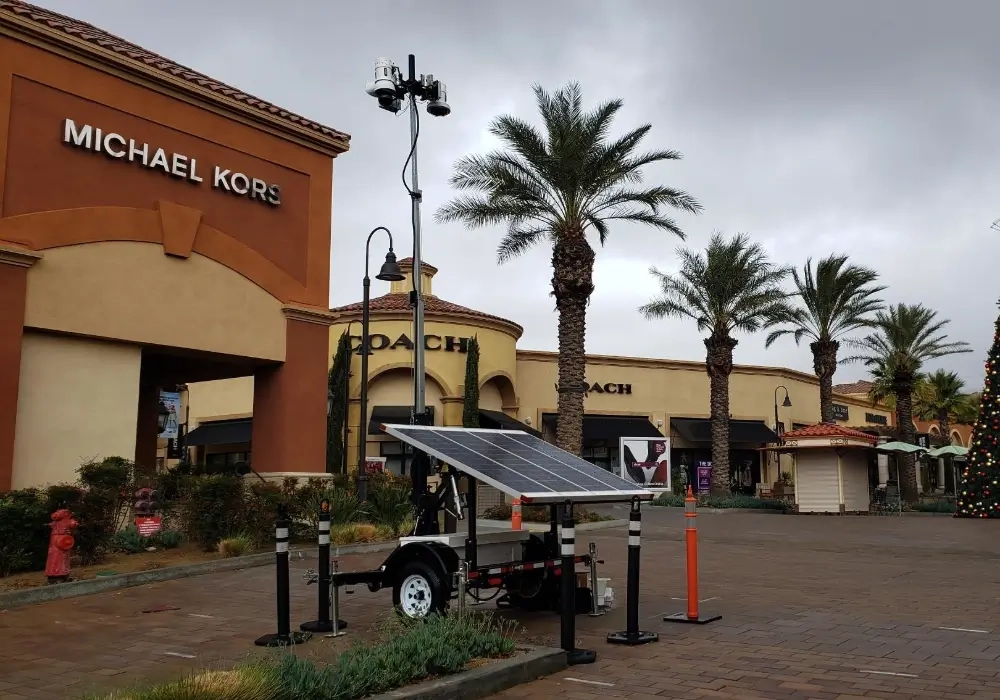
Why LPR Is Ideal for High-Traffic Locations
High-traffic parking lots place constant demands on surveillance systems. Their unique challenges expose the limitations and vulnerabilities of traditional systems.
LPR technology is specifically designed to meet these environments and their complex demands, transforming those challenges into operational advantages.
The table below breaks down how LPR is particularly suited to these environments and how these capabilities translate into real-world benefits for retailers.
| Why High-Traffic Parking Areas Need LPR | How It Benefits Retailers |
| High, continuous vehicle turnover means manual monitoring impractical | Automatically captures and logs every vehicle without the need for human intervention |
| Vehicles move quickly through entry and exit points | Accurately reads license plates at varying speed, even during peak hours |
| Traditional cameras produce large volumes of hard-to-search footage | Automatically logs vehicle information into easily searchable and accessible video with time-stamped data |
| Busy environments increase the risk of missed incidents | Provides consistent visibility, even in busy environments or where activity overlaps |
| Lighting changes throughout the day and night | Uses cameras that maintain accuracy in low light, glare, harsh weather, and nighttime conditions |
| High traffic creates opportunities for repeat offenders | Identifies recurring vehicles and suspicious patterns over time, keeping clear audit trails of repeated visitors |
| Large lots and multi-lane access points complicate coverage | Scales easily across wide areas and multiple camera locations |
The effectiveness of LPR depends on the technology and provider behind it, and how they integrate their solution into your parking lot. That’s where LotGuard's approach stands apart from its competitors.
LotGuard’s Approach to Smart Parking Lot Surveillance
In a saturated security market, especially in parking lot surveillance, many providers now offer LPR as a standalone product, however, this can create its own complexities.
LotGuard provides LPR as an add-on to its core parking lot surveillance solutions, allowing for seamless integration and multi-site coverage through the power of Stellifii, a cloud-based, connected system that brings all security camera feeds and LPR technology into one platform.
This purpose-built service for high-traffic parking lots ensures that our approach provides the proactive prevention and support that easily slots into any surveillance strategy.
Below explores how LotGuard’s approach doesn’t just capture vehicle data, but translates it into measurable operational value, and how this differentiates from others. However, most importantly, the benefits it brings to you as retailers:
| High-Traffic Retail Challenge | Typical Market Approach | LotGuard with LPR and Stellifii | Benefit for High-Volume Parking Lots |
| Managing security across multiple store locations | Fragmented systems, separate logins, multiple suppliers | Single platform that unifies surveillance feeds, LPR technology, and reporting into one easy-to-use dashboards | Centralized visibility that consolidates suppliers, logins, and costs |
| Correlating vehicle data with video footage | License plate registrations and video stored separately | License plate data will directly link to live and recorded surveillance feeds, as well as easy-to-use reporting tools | Enables early incident prevention and intervention, with clear incident reviews and relevant footage |
| Identifying repeat vehicles across sites | Often limited to single-location surveillance and reporting | Vehicle histories persist across all monitored locations | Helps detect repeated or organized criminal activity, including store to store crime (if you have multi-store coverage) |
| High volume of daily vehicle traffic | High volumes of raw footage that can overload during peak hours or be difficult to find | Stellifii structures activity into easy-to-access reports and searchable vehicle-based data and related footage | Removes the complexities of sifting through footage manually, instead highlighting key areas of concern |
| Speeding up investigations | Manually searching through hours of recorded, likely, unclear footage | Allows you to easily search by license plate, time, location, or behavior from a singular platform | Speeds up investigation processes from hours to minutes |
| Coordinating response and reporting | Fragmented systems lead to delays and inconsistency in response and reporting | Consolidates alerts, incident timelines, and evidence into one interface | Smoother internal response to incidents and liability claims, as well as with law enforcement |
| Scaling security without scaling staff | More sites means more manual work, often leading to slow incident response and reporting inconsistencies | Centralized monitoring supports growth without the administrative burden | Consistent protection as you scale, all reporting into the same platform to ease store management |
| Turning parking lot data into insight | Footage used only after an incident has occurred | Enables cross-site trend and pattern analysis, and active reporting for investigation purposes | Supports proactive security planning and smarter, better-informed decision making |
Related Articles:
Best Practices for Implementing LPR in Retail Parking Lots
Successfully deploying LPR technology into your retail parking lot requires more than just the cameras to be installed and left to work.
To ensure you receive the true operational benefits and value, you need to ensure they integrate into your broader security plan. This includes aligning them with the correct surveillance system, which often means using the same provider for both.
We’ve outlined the following three steps you should take for best practice to ensure automatic, clear data capture, effective incident response, and long-term, multi-store scalability.
Strategic Camera Placement
With any system, but most importantly, LPR supported systems, it’s crucial that cameras are positioned correctly and in the right locations for your parking lot layout.
Consider the natural areas of vehicle movement of your lot such as entry and exit lanes, driving aisles, and other locations unique to you where you’d tend to see this.
A strong camera and LPR placement relies on ensuring proper angling, height, and distance are appropriate to your requirements and can capture clear plate images without the risk of interference from weather, headlights, or obstructions.
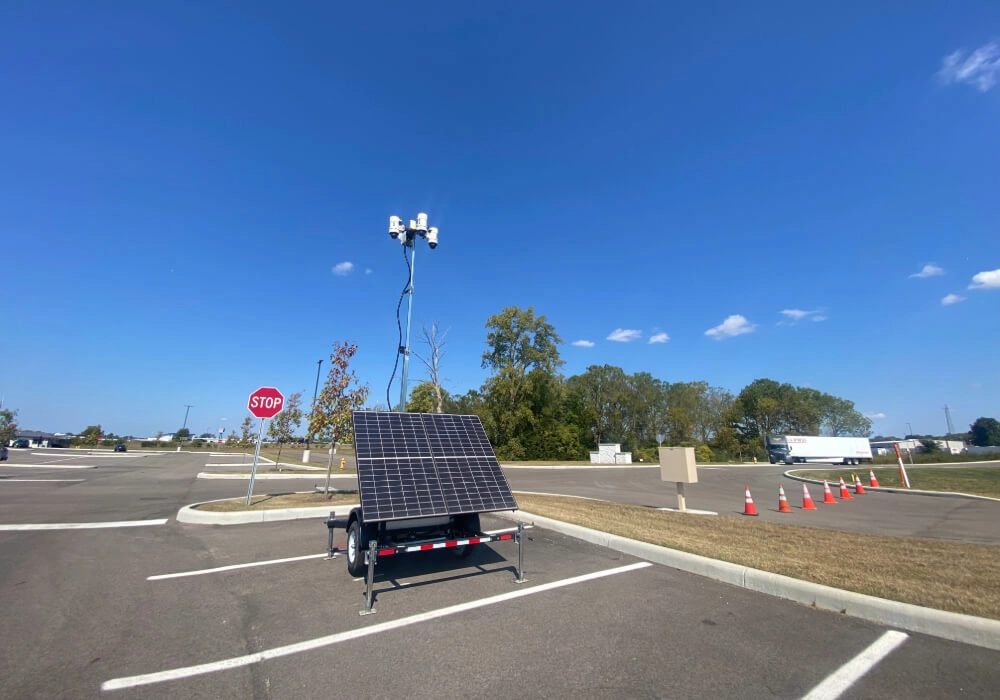
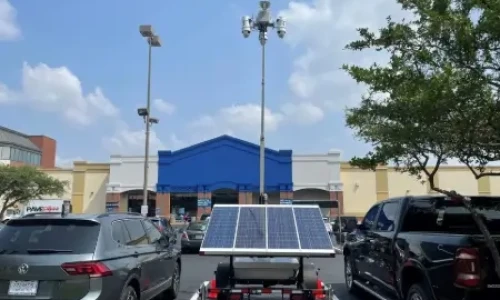
LPR cameras work best when integrated with parking lot security solutions like Surveillance Trailers. Whilst the LPR camera captures the vehicle data, the support of surveillance cameras is that they provide contextual footage of full incidents or near-incidents.
From pedestrian activity to surrounding events, this combination means that any data captured has supporting evidence, bettering investigations and defense records for claims.
Read More: The Role of Surveillance Cameras in Parking Lot Security
Privacy and Compliance Considerations
Although parking lot crime needs to be tackled, retailers must establish a balance between enhanced visibility with responsible data usage and storage.
Any data gathering system, including LPR systems should be configured to only collect necessary data, focusing on vehicle identification rather than personal behavior. Providers should preconfigure this for you, however, to fully protect your store, you should ensure the following:
-
Establish clear data retention policies in line with any relevant laws
-
Create employee training on data policies
-
Review your system regularly to ensure it still meets current laws
The benefit of integrating LPR with surveillance cameras and cloud-based, connected platforms like Stellifii is that it consolidates and simplifies compliance. Separating out data coverage into clear sectors and pulling this data into one platform ensures both secure data storage and clear compliance monitoring.
Essentially, centralized systems allow retailers to manage permissions, retention periods, and data usage consistently across all parking lot cameras and locations, reducing risk and improving accountability.
Staff Training and Alert Management
No matter how advanced a system is, they still require informed users. Security teams and store managers should receive comprehensive training on using LPR and surveillance technology, how they integrate, and how to use the platform that brings these together.
As well as system training, retailers should also have alert response policies. Some providers offer this through managed services through remote monitoring and mobile keyholders, however, any process or policy around this needs to be documented clearly and shown to employees.
When deciding upon alert threshold, configure them carefully with your provider to minimize operational disruption to the equipment.
By aligning LPR alerts with your operational priorities and tying them directly into existing monitoring workflows, it enables employees to focus on meaningful events rather than reacting to constant false alarms.
At LotGuard, we’ve built over 20-years of knowledge and understand the unique challenges presented to retailers. Alongside our technology and surveillance solutions, this expertise represents the future of parking lot security.
LotGuard: The Future of Retail Parking Lot Security
Retail parking lots contribute to customer experience, employee safety, and store financials. They are critical extensions of any store where several factors like operational insight, safety, and security all intersect.
By combining market-leading parking lot surveillance with License Plate Recognition, and Stellifii, a unified platform, LotGuard helps to deliver a smarter, more proactive, and connected approach to protecting high-traffic parking lot environments now and in the future.
See how LotGuard’s LPR and Stellifii-powered intelligence can protect your busiest locations. Schedule a consultation with our team today

Contents
[hide]Related news

A Rise in Retail Theft: How to Protect your Business Against This
A surge in retail theft has seen the number of incidents increase above that of the number reported in the same period before the COVID-19 pandemic. But what’s the reality of retail crime on businesses and communities? Find out below. Read more
Boosting Retail Security During Black Friday
Black Friday is one of the busiest, and most chaotic, days in the retail calendar. Learn how you can boost safety and security with crime prevention systems. Read more
How Parking Lot Security Cameras Improve Retail Customer Experience
Ensuring a positive customer experience is paramount for your business. Be sure to enhance it by securing your parking lots with LotGuard. Read more
Contact Us
Request a Quote for LotGuard
Ready to learn more about how LotGuard can protect your Parking Lots and Properties during the holidays? Get in touch today for a free quote.