
How Crime Impacts Cap Rates and Valuation for Commercial Property
High crime rates can quietly erode millions in property value. Learn how crime impacts cap rates and what it means for CRE investors.
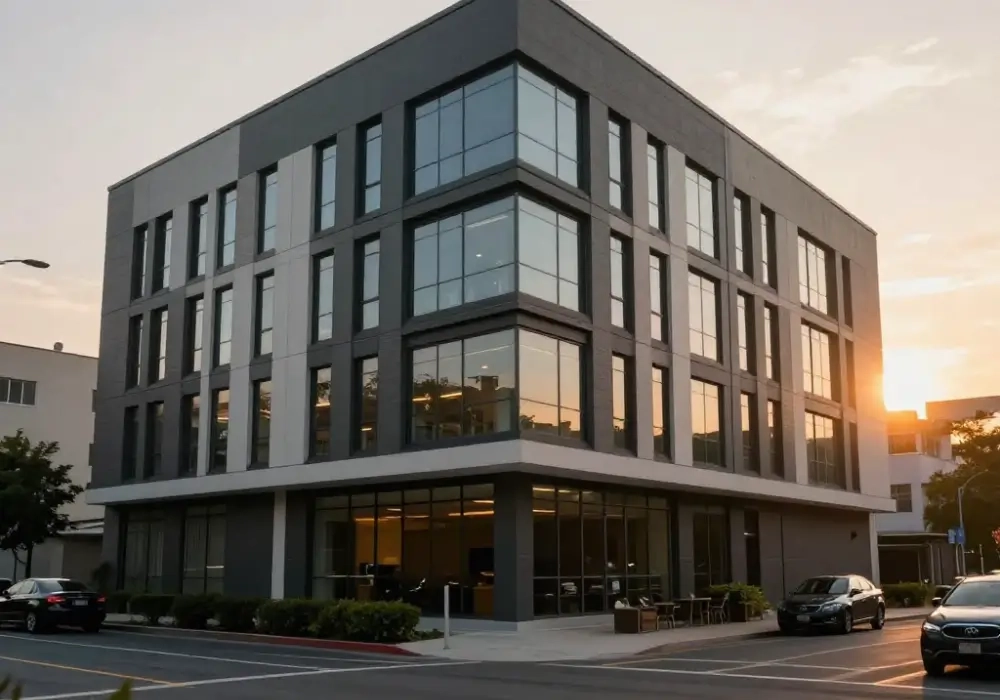
Safety is a big concern for anyone deciding where to invest or run a business, and many tenants are willing to pay more for the added peace of mind.
As a result, commercial properties in high-crime areas usually struggle to attract quality tenants and collect the rent they're worth, while those in safer locations see stronger demand and higher rentals.
The relationship between crime rates and market performance is directly influenced by how commercial real estate (CRE) investments are valued and what kind of returns a property can realistically generate.
In this article, we explain how crime affects cap rates and valuation for commercial property in the US, which property types feel it the most, and what property management teams can do to reduce that risk.
Commercial Cap Rates and Property Values: Explained
If you're managing or investing in commercial real estate, capitalization (cap) rates are one of the most important numbers you'll come across. Cap rates help you quickly understand what a property is worth and how it compares to other opportunities.
A cap rate measures the expected annual return on a commercial property, often shown as a percentage (%). It's calculated by dividing a property’s annual net operating income (NOI) by its current market value or purchase price.
Formula: Cap rate (%) = NOI ÷ Property value
NOI is the income a property generates after operating expenses (maintenance, property taxes, insurance) but before debt payments. So if a commercial building brings in $500,000 NOI annually and is valued at $10 million, the cap rate is 5%.
Here's the important bit: cap rates and property values move in opposite directions. A lower cap rate means the market sees the property as stable and low-risk, so it's worth more. A higher cap rate signals more perceived risk, so the value drops, even if income stays the same.
Location, safety, tenant quality, and vacancy all influence cap rates in the US. Properties in high-demand, low-crime areas typically trade at rates between 3% and 5%, while higher-risk locations (with higher crime rates) trade between 7% and 10%. It's this gap that represents millions in asset value.
Certain commercial properties feel these effects more than others. Research from New York Life Investment Management found that office and retail assets negatively correlate with violent crime (VC) rates, reducing property values. In the report, 92% of office and retail markets in Tampa (FL), El Paso (TX), and Atlanta (GA) had the highest negative correlations between 1985 and 2017.
The reason behind this? Customers and tenants are sensitive to safety and after-hours security. For instance, a retail center where shoppers don't feel safe in the parking lot at night will struggle, no matter how competitive the rents are.
Industrial properties can also be affected, especially where property crime like theft, vandalism, [squatting], and exterior security issues are common.
How Crime Affects Cap Rates and Valuation for Commercial Properties
Crime has a real impact on commercial real estate's cap rates and valuation. In higher crime areas, you often see slower economic activity, less foot traffic, and lower consumer spending. That makes it harder to attract and retain retail and service businesses.
From an investor’s (or prospective buyer's) perspective, crime signals increased risk. When risk goes up, buyers want a higher return to justify the investment, which typically means higher cap rates and lower property values.
Ongoing problems, such as copper theft or safety issues, can also affect leasing demand and typically drive insurance and operating costs higher.
Commercial property values are calculated using this formula: Value = NOI ÷ Cap Rate.
Higher crime rates push NOI down (through lost tenants and lower rental income) while cap rates rise because investors see the property as riskier.
Example:
A property generating $1M in NOI at 6% cap rate is worth roughly $16.7M. If crime rates push the cap rate to 8%, NOI drops to $900,000 (due to vacancy or higher operating costs), and the value falls to around $11.2M. That's more than $5M lost, directly impacted by higher levels of criminal activity and the risk that comes with it.
Where does most property crime actually happen?
In commercial properties, it usually starts outside. Parking lots, along facility perimeters, and/or behind buildings, where lighting is poor and foot traffic is minimal. These spaces are easier for criminals to access, harder to monitor, and often overlooked by management teams.
What's more, outside areas are generally the first places that a potential buyer or tenant looks to gauge safety. When your property has negative environmental factors (poor lighting, low occupancy, visible signs of neglect), criminals notice, too. When outdoor areas feel unsafe, crime tends to follow. Over time, those factors push cap rates up and property values down.
Read more:
-
Top Security Challenges for Property Managers and How to Overcome Them
-
Nighttime: The Biggest Security Threat for Property Managers
How to Mitigate Risk and Maintain Investor Confidence for Commercial Properties
The commercial properties that maintain higher value and lower cap rates are those that treat exterior security as a top priority and long-term investment, and the most effective way to do this starts with visibility.
Physical surveillance deterrents in parking areas and along building perimeters signal to potential intruders that real estate investments are actively monitored. The presence of surveillance alone helps deter crime before it begins. When the opportunity for crime is removed/reduced, criminals tend to move on elsewhere, where the risk of detection is significantly lower.
Solar-powered mobile surveillance trailers, like the LotGuard PRO, standing up to 20-feet tall and equipped with near-360° PTZ (Pan-Tilt-Zoom) cameras and AI detection, monitor commercial sites 24/7. When paired with rapid deployment pole cameras, like the LotGuard MINI, at targeted points (access points, behind buildings, rear lots), property teams close the visibility gaps that criminals exploit.
What separates reactive security from proactive crime prevention is what happens when something suspicious is detected.
Through LotGuard's remote monitoring services at Interactive Surveillance Operations Centers (ISOC), trained operators verify threats in real-time and initiate various responses on your behalf. This can include issuing live audio voice-down challenges, activating blue warning lights and sirens, or contacting law enforcement to investigate further.
Additional security integrations/add-ons, such as License Plate Recognition (LPR) technology, also work well in detecting and deterring crime. By logging every vehicle entering/exiting a commercial site, LPR cameras identify unusual behavior and help support police investigations and insurance claims.
Lastly, cloud-based platforms (like Stellifii) connect every LotGuard unit across your investment portfolio, consolidating site data into a single dashboard. This gives property owners and management teams real-time visibility across multiple commercial, residential, and vacant sites from one place.
This level of surveillance maintains confidence because investors take crime trends into account. A commercial building with visible security that has low incident rates and fewer insurance claims is the one that tends to have higher property values and is worth investing in. When sites lack surveillance and have obvious signs of neglect, it sends a very different message to investors and/or potential tenants.
Read more:
Comparison: Passive Security vs Mobile Surveillance
Commercial property managers and investment professionals with multiple properties in their portfolio should know that not all security delivers the same return.
Let's take a closer look at how traditional, passive surveillance compares to LotGuard's modern parking lot surveillance solutions:
|
Function |
Passive surveillance |
LotGuard's mobile surveillance |
|
Deterrence |
Limited; basic cameras with record-only function flag issues after the fact |
High; 20-foot-tall visible surveillance trailers reduce crime up to 87% |
|
Response time |
After the fact |
Real-time |
|
Coverage |
Fixed |
Near-360° |
|
Power/connectivity |
Requires permanent infrastructure and internet |
Autonomous, solar-powered with 4G/5G connectivity |
|
Scalability |
Expensive |
Cost-effective rentals |
|
Data and reporting |
Basic video footage storage |
AI analytics, cloud-based storage and reporting via Stellifii |
For property teams focused on protecting asset value and maintaining investor confidence, mobile surveillance offers the visibility, response capability, and flexibility that passive systems can't match.
Read more: Why Property Managers are Turning to LotGuard for Security
Safeguard Commercial Cap Rates and Property Valuation Today
Cap rates reflect risk, and high crime rates are the fastest way to increase perceived risk at a commercial property. When property crime, such as vandalism and squatting, is visible from the outside, market values plummet, and investors and potential buyers develop negative perceptions about your site.
Smart, modern mobile security changes this narrative. LotGuard's surface lot surveillance solutions give management teams something passive systems can't deliver: control.
You get proactive, autonomously-powered security backed by live video monitoring at a fraction of [on-site guards]. And when commercial properties are watched 24/7, crime rates naturally drop, leading to lower cap rates and higher valuations.
With headquarters in Texas and a nationwide deployment network, our units are available to hire, giving you scalable protection that's "Always Awake and Always on Guard".
Contact our security specialists to discuss how we can safeguard commercial cap rates and mitigate risks at your sites today.

Contents
[hide]Related news

The State of Property Crime in the US (And How to Protect Yours)
Explore the current state of property crime in the US and learn how smarter security solutions can help protect your property. Read more

Environmental Risk Factors that Increase Property Crime Exposure
Property crime often comes down to opportunity. This guide explores the key environmental risk factors that make properties vulnerable, and how the right conditions can deter criminals before they act. Read more
The Hidden Cost of Vacancy in Commercial Real Estate (Beyond Lost Rent)
Explore the hidden costs of vacancy in commercial real estate, from security risks to asset deterioration and operational impact. Read more
Contact Us
Request a Quote for LotGuard
Ready to learn more about how LotGuard can protect your Parking Lots and Properties during the holidays? Get in touch today for a free quote.