
A Year-Round Guide to Smarter, Safer Retail Parking Lots for Facilities Managers
Discover how facilities managers can improve retail parking lot safety and oversight year-round with smarter security and monitoring solutions.
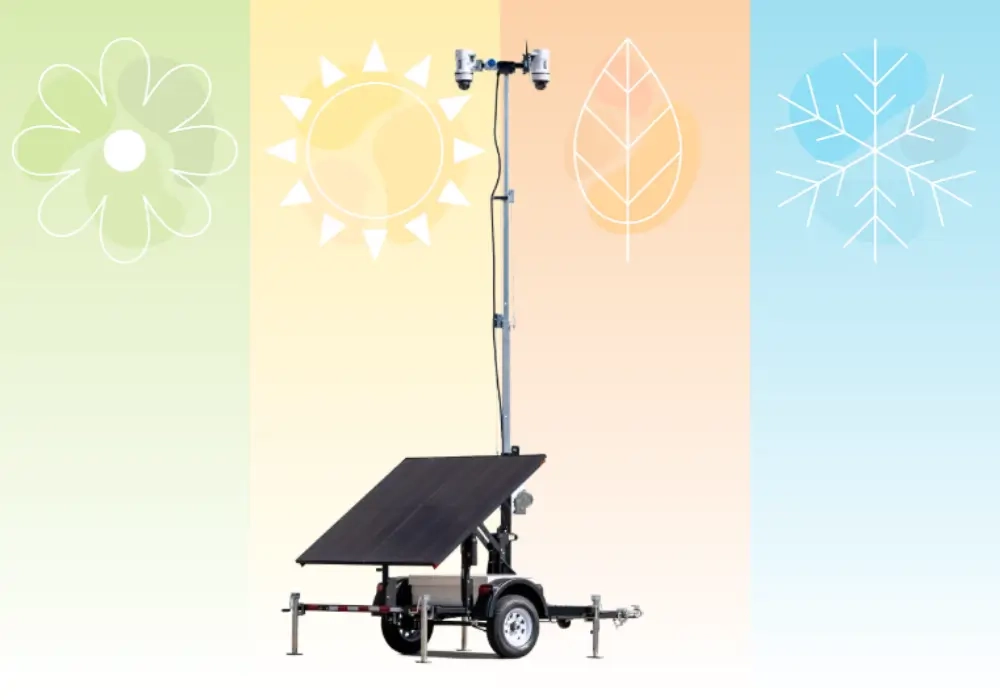
For facilities managers tasked with managing multiple high-traffic properties, the parking lot isn’t just an area for customers to park their vehicles or for pedestrians to cross. It’s the first entry point to your business, and the most exposed to vulnerabilities.
Whether it’s late-night loitering, vandalism, vehicle break-ins, or violent crimes on customers, risks present themselves all year-round.
We’ve created a comprehensive guide that outlines the seasonal dangers to be aware of, why parking lots draw criminal attention, and clear steps facilities managers can take to enhance their parking lots’ safety.
Parking Lots: The Most Overlooked Brand Asset for Your Retail Store
A parking lot cannot be considered an area simply designed to facilitate customers, but instead the first and last impression of a brand. Even before they enter your store, customers will already be forming their thoughts and opinions based on what they see, experience, and hear in the external areas of the property.
Taking this into consideration, facilities managers must prioritize parking lot security, transitioning it from just a maintenance responsibility to a brand asset that reinforces a positive customer experience.
In fact, parking lots matter more than most realize for several reasons:
- First and last impression points – From cleanliness and lighting to the visible security presence and crowd gathering, the parking lot sets the tone for your business, even prior to entering the internal areas of the store.
- High-risk, high-visibility areas – Parking lot are often large, open areas with limited employee coverage, especially at night. This creates opportunities for loitering, vandalism, and vehicle crime.
- Impact on customer perception – Having a poorly lit lot, disorganized layout, or high volumes of loitering can leave customers feeling unsafe, even if this does not escalate into any incidents.
- Reputational damage – Nowadays customers provide their feedback online, and rarely separate incidents that occurred in the external areas of the stores from the brand itself. For example, a vehicle theft would suggest to most that the store isn’t safe.
- Operational reflection on managers – Even if an incident occurs outside, the responsibility in managing this risk falls on the facilities manager to deal with, creating administrative burden and operational disruption to their day-to-day.
Now you’ve established the importance your parking lot plays as a brand asset, you’ll understand why protection follow a reactive approach, but rather offer proactive prevention that manages the year-round realities of parking lot dangers.
The Year-Round Reality of Parking Lot Security
Parking lot risks don’t conform to retail calendar. Just because peak season is over, it doesn’t mean that risks disappear as winter hits. In fact, these provide new opportunities for criminals to take advantage of.
For facilities managers responsible for overseeing multiple sites, risk exposure is a constant concern, even when one store has low incident rates, another could be experiencing record highs.
Every season comes with different challenges, and as part of a facilities manager’s role, they must manage these throughout the year as risks evolve.
Although, vulnerability to crime is a year-round concern, we’ve broken down the specific risks found to be more prominent throughout each season that facilities managers should be aware of.
Spring and Summer: Crowds and Loitering
Spring and summer bring longer daylight hours which tend to increase footfall and traffic, attracting more customers, especially at night and over weekends.
This high volume of traffic presents the following risks:
- Larger crowds due to lighter evenings and promotional events
- Higher vehicle density in parking lots due to increased traffic
- Young people loitering near entrances and storefronts
- Late-night gatherings and parking lot takeovers after store closing hours
Often, the more traffic and activity present, the more opportunity that crime like theft, vandalism, and disorderly behavior will occur in the external areas of your property, including the parking lot.
Fall: Event-Driven Traffic and Vehicle Incidents
Fall tends to bring seasonal events like Black Friday, holiday prepping, and extended shopping periods to manage customer demands. This combination of factors increases the risk of crime and other unwanted activity such as:
- High volumes of vehicles leading to a greater chance of vehicle crime
- Increased liability exposure surrounding pedestrian or trespassing incidents
- Higher frequency of minor accidents and disputes
- Increased risk of retail theft and organized retail crime
As lots become busier and fuller, visibility will often decrease for facilities managers and response times slow, meaning incidents could go completely amiss.
Read More: How to Tackle Retail Theft
Winter: Reduced Visibility and Nighttime Vulnerability
Winter brings shorter days and fewer hours of sunlight, shifting business into darker nights and unpredictable weather that can disturb working hours.
These seasonal changes, alongside varying environmental conditions, present the following challenges:
- Earlier nightfall increases crime vulnerability, particularly to theft
- Fewer security measures due to fewer promotional events and holidays
- Heavy rain, snowfall, increased dust, and debris reduce visibility
- Fewer staff available for exterior site monitoring
Customer traffic may lessen during the winter months, but that doesn’t mean that risk isn’t still present for retailers, it just means they’re more likely to go unnoticed.
Recognizing the year-round realities of parking lots and the risks presented to them is the first step towards enhancing its safety. The next is to create a system that helps to protect, predict, and control crime in your parking lot.
A Facilities Manager’s Guide to Building Smarter, Safer Retail Parking Lots
Managing a singular store is complex, but when you’re managing multiple of them across various regions requires consistency, reliability, and control.
Simply deploying security guards during peak periods or providing patch fixes following an incident isn’t enough to build a smarter, safer parking lot for customers and employees. It requires a clear security strategy that is repeatable and of high-quality throughout your stores.
Below we’ve provided a clear 5-step roadmap, aimed at guiding facilities managers in building a safe parking lot that can manage the high-traffic, high-visibility demands presented to retail environments.
Step 1: Acknowledge the Limits of Reactive Security
Without knowing, most retail stores tend to operate reactively to incidents and crimes on-site, meaning in most cases that the event has already occurred, and damage done. This is because they still utilize legacy systems like fixed surveillance or guards.
Traditional systems tend to provide record-only functionality, or for guards, can mean risks are missed, allowing for criminal to operate easily around their predictable patrols.
We’ve broken down various traditional surveillance methods adopted by retail parking lots and the operational consequences related to them:
|
Traditional Setup |
Operational Consequence |
|
Fixed cameras that only record incidents |
Damage is discovered too late to prevent loss, leading to repairs, claims, and customer complaints |
|
Security guards who follow predictable patrols and vary in performance |
Inconsistent deterrence creates security gaps and high-risk exposure, with patrols providing predictability that criminals can plan for |
|
Legacy review processes that follow complaints |
Delayed awareness allows incidents to escalate without intervention and provide the opportunity for more to occur following this |
|
Manual incident reporting that slows response |
Slower escalation, more administrative burden, and delayed communication to leadership |
|
Reactive monitoring model overall |
Incidents escalate before anyone can intervene, at times, completely missing the incident itself |
|
Legacy prevention metrics |
Leadership only sees problems, not successful deterrence |
|
Fragmented documentation and follow-up |
Facilities managers spend time explaining incidents instead of improving operations |
This step is about recognizing the security gaps that exist in many existing strategies, understanding that documentation does not deter and that recording incidents is not the same as preventing them.
Step 2: Centralize Oversight Across Every Location
Fragmented systems are one of the most common downfalls for regional facilities managers when it comes to security.
Multi-site management that uses fragmented systems pose the following challenges, different systems for each store, separate reporting, inconsistent escalation processes, and poor visibility outside of working hours.
By treating stores individually with their security, they face challenges around centralized oversight, leading to risks such as:
- Delayed incident awareness
- Increase in late-night calls to respond to incidents
- Higher administrative workload to compile documents
- Greater risk exposure across stores
All these consequences cost your retail stores money, from lost customers and direct loss through theft to repair costs and liability claims. Hence the need for centralization, aimed at transitioning multiple systems into one, easy-to-use platform.
Smart systems offer that centralization, combining mobile surveillance camera feeds across different stores into a singular platform like Stellifii, providing you with complete visibility, without needing to be present on-site.
Common features of smart systems include:
- One dashboard to view all stores
- Real-time alerts for every location
- Automated incident logging and documentation with surveillance footage to support
- Standardized monitoring of all cameras
When oversight is centralized, the unpredictability decreases, control grows, and incident response becomes quicker.
Related Article: Five Ways Mobile Surveillance Cameras Improve Safety Across Multiple Store Locations
Step 3: Prove the Financial and Operational ROI
Security measures commonly come under budget scrutiny, and the idea of upgrading your system tends to appear more costly than just sticking with your current legacy one.
However, not only can smart surveillance systems provide direct savings, but also several indirect savings that make them much more cost-effective than legacy systems. They deliver the following measurable benefits:
- Reduced vandalism repair costs
- Lowered dependency or a complete alternative to security guards
- Fewer insurance claims and lower long-term premiums
- Faster law enforcement support with clear, usable evidential footage
- Improved customer perception and retention
Beyond the cost savings and high potential ROI, centralized reporting helps compile incident/crime prevention numbers, store hotspots, and common crimes faced by your stores to share with leadership. In turn, displaying a proactive approach that isn’t just waiting for crime to happen, but stopping it before it can even take place.
This is a vital part of justifying investment through data-backed evidence, whilst also helping stores meet compliance requirements to avoid any regulatory scrutiny.
Related Article: True Cost of Nighttime Vandalism for Big Box Retailers
Step 4: See the Difference in a Real-World Scenario
Consider the common challenges your retail stores’ parking lots are likely to be presented with like theft, vehicle crime, and late-night vandalism.
There’s a large difference between reactive coverage and proactive deterrence, that only truly understood the next morning when your employees arrive to open up the store:
|
Reactive Security Model |
Proactive Security Model |
|
Damage is discovered the next morning |
AI detects suspicious movement as it begins, triggering audio deterrent features and contacting law enforcement if required |
|
Footage may be unclear or reviewed too late |
Live voice-down warning addresses individuals immediately whilst also recording the incident or near-incident to collect evidential footage |
|
No deterrent to interrupt the activity |
AI detects movements and acts when a threat is identified, without the need for human intervention. This is supported by remote monitoring teams who verify and assess the threat in real time to avoid false alarms |
|
Insurance claims are filed |
License plate recognition captures vehicle data for evidence and surveillance cameras capture all other identifiable information |
|
Customer complaints follow |
Activity is deterred or escalated before major damage occurs, protecting property, people, and assets |
|
Corporate asks what went wrong and question store security |
Leadership sees documented prevention and rapid response, helping to clarify accountability |
The major difference, one is managing damage and the other is managing prevention, with whatever decision you make affecting budgets, brand reputation, and credibility as a business.
Related Article: What to Look For in a Parking Lot Surveillance Solution?
Step 5: Implement a Scalable, Unified Solution
The final, most important step is ensuring security standardization.
Smart systems are built to be scaled across stores whilst maintaining high-quality security throughout the region. This means no store suffers from worse security than another.
However, understanding what you need in a smart system to provide this standardization can be difficult, especially in such a saturated market. We’ve broken down the key features you should be looking for:
- Visible deterrence that discourages loitering and vandalism
- AI-powered detection for early intervention
- 24/7 remote monitoring for consistent coverage
- License plate recognition for investigation support
- Centralized dashboards for multi-site oversight
- Automated reporting to reduce administrative workload
By combining these elements together, security becomes standardized and predictable which for facilities managers mean:
- Fewer late-night callouts
- Reduced chance of burnout
- Stronger operational control
- Demonstrable and measurable performance across your region
Building smarter parking lots isn’t about adding more security personnel, it’s about aligning deterrence, technology, and centralized oversight into one easy-to-use platform.
This helps to stop recurring crime and the operational consequences related to this, instead providing your retail stores with a competitive edge.
When prevention becomes measurable, oversight becomes centralized, and incidents are intercepted over being investigated after they’ve occurred, security shifts from being considered a liability to becoming a leadership asset.
At LotGuard, this is held at the core of our offering, ensuring that facilities managers receive the security and peace of mind needed with their property and people.
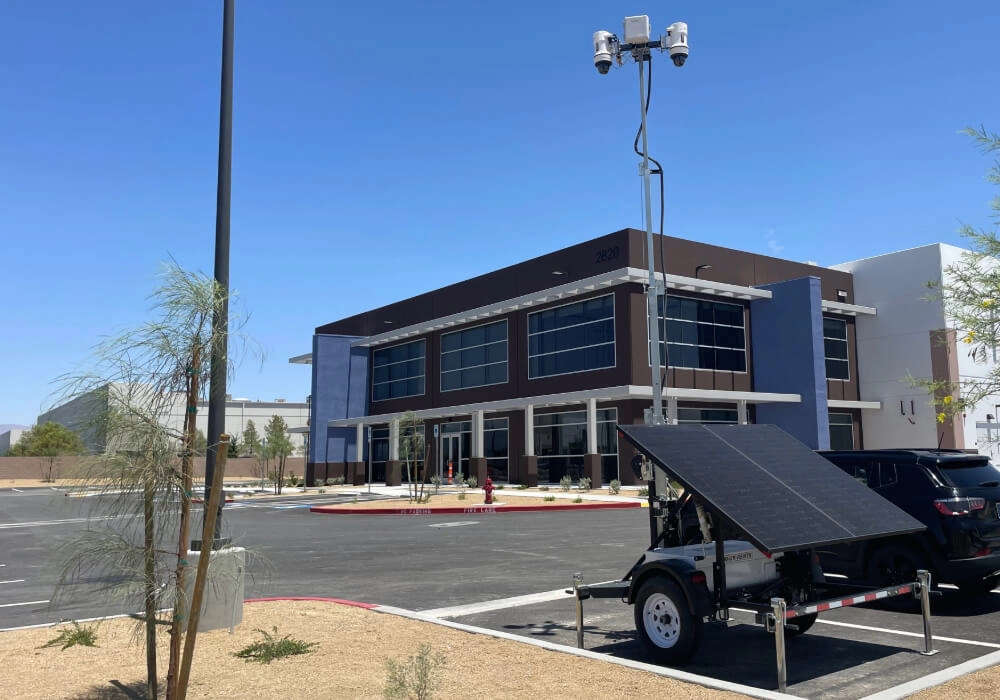
The LotGuard Advantage for Regional Facilities Managers
For regional managers overseeing multiple retail stores, the challenge presented is not only one of preventing incidents, but also maintaining consistent standards, proving ROI, and reducing operational strain.
Traditional methods only work independently of one another meaning that whilst one store receives good coverage, another may be receiving inconsistent coverage relying solely upon guards. This results in surveillance unpredictability and increased administrative workload.
LotGuard aims to shift that model by combining visible deterrence, AI-powered video analytics, live video monitoring, and centralized reporting through one system, all through the support of Stellifii.
Whether it’s our Surveillance Trailers or Cameras, out software transforms isolated security systems into a unified platform that allows you to access live and recorded video feeds, incident reports, and LPR data to be accessed via any device, anywhere.
Below outlines the key differences between traditional methods to LotGuard solutions powered by Stellifii:
|
Traditional Methods |
LotGuard + Stellifii Advantage |
|
Passive CCTV records incidents with no intervention functionality |
AI-powered detection identifies suspicious activity in real time, providing live audio warnings, triggering sirens, or calling law enforcement if required |
|
Guards vary in performance by shift and location |
24/7 US-based remote monitoring ensures consistent oversight, as well as utilizing the power of AI to initially identify threats and prompt appropriate action following this |
|
No real-time active deterrence |
Live voice-down warnings interrupt loitering and vandalism immediately, with additional visual and audio deterrents to further prevent incidents taking place or escalating any further |
|
Footage reviewed only after complaints or when an incident has occurred |
Real-time alerts pushed to a centralized dashboard, allowing for swift incident response and improved chance of preventing crime impacting your store or customers. Full incident reporting provided after any event or near-event which can be used for criminal investigations or claims |
|
Isolated camera systems at each store |
Stellifii unifies live video feeds across all locations, making them visible for facilities managers via the app, wherever they are |
|
No cross-property pattern tracking |
Centralized analytics identify trends across regions, establishing common crimes, store hotspots, and locational patterns |
|
Limited evidence in vehicle-related incidents |
Integrated LPR captures and logs license plate data, providing this information alongside surveillance footage of the incident or near-incident in full |
|
Manual incident reporting |
Automated reporting and compliance-ready documentation at the click of a button, providing full incident reports following any event |
|
Escalation handled locally and inconsistently |
Standardized response protocols across every site, ensuring complete transparency and maintaining high-quality parking lot surveillance across all regions |
By integrating smart technology into your security strategy, regional facilities managers can replace fragmented, reactive systems with a proactive, unified approach like LotGuard to support this goal.
This transformation not only protects your stores and its assets, but your customers, employees, and brand reputation across multiple locations. Whilst also delivering data insights backed by clear evidence, helping to prove ROI, display due diligence, and support better-informed decision-making.
Ultimately, LotGuard relieves the burden faced by regional facilities managers by shifting your approach to parking lot security from a logistical headache to a seamless operational asset.
Related Articles: Your Top Questions Answered: LotGuard Parking Lot Surveillance Solutions
Bringing it All Together: Safer Lots, Stronger Operations
Simply adding more cameras or guards is not the answer for improving multi-store management, it centers around building a unified, proactive security system that can protect every aspect of your external store and its parking lot.
Combining deterrence, AI intelligence, centralized oversight, and real-time monitoring together, incidents decrease and operational control increases.
For spaces like parking lots, crime prevention is vital to maintaining a good customer experience as their first and last impression of your business.
Building a safer lot is more important than the cost saving it provides; it offers reassurance and creates strong community relationships with other stores and local communities.
If you’re ready to move from reacting to incidents to preventing them, it’s time to rethink how your parking lots are protected.
Discover how LotGuard, powered by centralized monitoring through Stellifii, can help you secure every store with confidence. Contact us today to build smarter, safer parking lots across your entire portfolio.

Contents
[hide]Related news
How Parking Lot Security Cameras Improve Retail Customer Experience
Ensuring a positive customer experience is paramount for your business. Be sure to enhance it by securing your parking lots with LotGuard. Read more

5 Proven Ways to Reduce Retail Theft This Holiday Season
Here at LotGuard, we have invested our expert knowledge to bring you our top five proven ways to protect your profits and fight against retail crime. Read more

The 8 Most Commonly Stolen Retail Products in the United States
Are you aware of what products are most at risk of theft in your store? Well, LotGuard has you covered as we reveal the 8 most commonly stolen retail products in the United States. Read more
Contact Us
Request a Quote for LotGuard
Ready to learn more about how LotGuard can protect your Parking Lots and Properties during the holidays? Get in touch today for a free quote.